Nouveauté
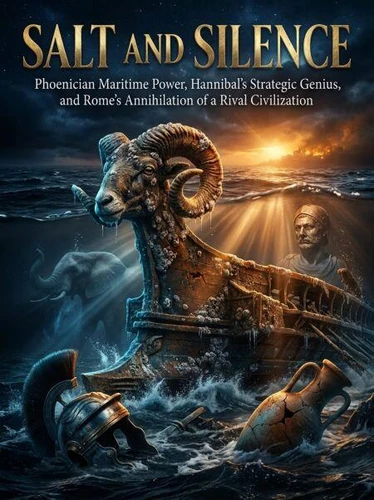
Salt and Silence. Phoenician Maritime Power, Hannibal's Strategic Genius, and Rome's Annihilation of a Rival Civilization
Par :Formats :
Disponible dans votre compte client Decitre ou Furet du Nord dès validation de votre commande. Le format ePub est :
- Compatible avec une lecture sur My Vivlio (smartphone, tablette, ordinateur)
- Compatible avec une lecture sur liseuses Vivlio
- Pour les liseuses autres que Vivlio, vous devez utiliser le logiciel Adobe Digital Edition. Non compatible avec la lecture sur les liseuses Kindle, Remarkable et Sony
 , qui est-ce ?
Notre partenaire de plateforme de lecture numérique où vous retrouverez l'ensemble de vos ebooks gratuitement
Pour en savoir plus sur nos ebooks, consultez notre aide en ligne ici
C'est si simple ! Lisez votre ebook avec l'app Vivlio sur votre tablette, mobile ou ordinateur :

- Nombre de pages506
- FormatePub
- ISBN978-3-565-63509-2
- EAN9783565635092
- Date de parution11/08/2026
- Protection num.pas de protection
- Taille1 Mo
- Infos supplémentairesepub
- ÉditeurEmphaloz Publishing House
Résumé
Before Rome became eternal, another civilization built its world at sea. Carthage was not merely a city - it was a system: a commercial intelligence mapped across the entire Mediterranean basin, threading Phoenician colonies from Tyre to Cadiz into a living network of metal, grain, and purple dye. Its harbors did not exist for the glory of conquest but for the discipline of exchange. Understanding Carthage means understanding a form of power that Rome could never fully comprehend - and therefore could never fully tolerate.
When Hannibal Barca crossed the Alps in 218 BC, he did not simply surprise Rome with elephants on a mountain passage.
He executed a logistical doctrine centuries in the making, born of Phoenician commercial precision translated into military science. At Cannae in 216 BC, his double-envelopment annihilated an army of nearly 70, 000 men - not through brute force, but through geometry, patience, and the studied manipulation of Roman tactical assumptions. Cannae was not a battle. It was a lesson Rome survived but never forgave. What followed was not war.
It was erasure. The Third Punic War saw Rome impose a blockade of deliberate totality - strangling supply, burning fleets, dismantling walls stone by stone - until a city of half a million was reduced to ash and its survivors sold into slavery. Cato's repetitive demand, Carthago delenda est, was not military advice. It was cultural anxiety crystallized into policy. Rome did not simply defeat Carthage.
He executed a logistical doctrine centuries in the making, born of Phoenician commercial precision translated into military science. At Cannae in 216 BC, his double-envelopment annihilated an army of nearly 70, 000 men - not through brute force, but through geometry, patience, and the studied manipulation of Roman tactical assumptions. Cannae was not a battle. It was a lesson Rome survived but never forgave. What followed was not war.
It was erasure. The Third Punic War saw Rome impose a blockade of deliberate totality - strangling supply, burning fleets, dismantling walls stone by stone - until a city of half a million was reduced to ash and its survivors sold into slavery. Cato's repetitive demand, Carthago delenda est, was not military advice. It was cultural anxiety crystallized into policy. Rome did not simply defeat Carthage.