Nouveauté
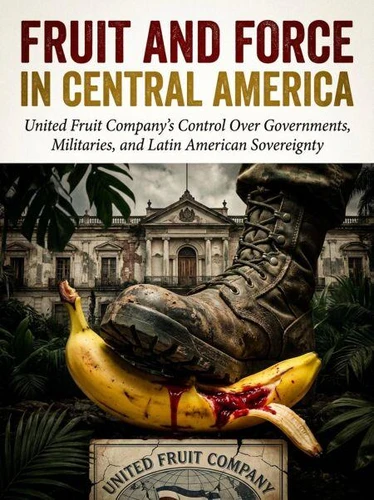
Fruit and Force in Central America. United Fruit Company's Control Over Governments, Militaries, and Latin American Sovereignty
Par :Formats :
Disponible dans votre compte client Decitre ou Furet du Nord dès validation de votre commande. Le format ePub est :
- Compatible avec une lecture sur My Vivlio (smartphone, tablette, ordinateur)
- Compatible avec une lecture sur liseuses Vivlio
- Pour les liseuses autres que Vivlio, vous devez utiliser le logiciel Adobe Digital Edition. Non compatible avec la lecture sur les liseuses Kindle, Remarkable et Sony
 , qui est-ce ?
Notre partenaire de plateforme de lecture numérique où vous retrouverez l'ensemble de vos ebooks gratuitement
Pour en savoir plus sur nos ebooks, consultez notre aide en ligne ici
C'est si simple ! Lisez votre ebook avec l'app Vivlio sur votre tablette, mobile ou ordinateur :

- Nombre de pages170
- FormatePub
- ISBN978-3-565-63084-4
- EAN9783565630844
- Date de parution10/08/2026
- Protection num.pas de protection
- Taille1 Mo
- Infos supplémentairesepub
- ÉditeurEmphaloz Publishing House
Résumé
At its peak, United Fruit Company governed more territory than most sovereign states - not through diplomacy, but through land monopoly, bribed legislatures, and gunboats dispatched on corporate schedules. This is a history of how a single fruit trade reshaped the political geography of Central America.
Between 1900 and 1954, United Fruit held effective veto power over the laws of Guatemala, Honduras, and Costa Rica.
It negotiated tax exemptions that drained national treasuries, controlled railroad and telegraph infrastructure, and maintained standing relationships with U. S. State Department officials who viewed corporate interests as indistinguishable from national ones. Declassified documents from the Eisenhower administration reveal how the 1954 CIA-backed coup in Guatemala - Operation PBSUCCESS - was partly engineered to protect United Fruit's land holdings from agrarian reform.
The company's lobbying apparatus in Washington functioned as an informal foreign policy office, and its executives moved fluidly between corporate boardrooms and diplomatic posts. The resulting legal framework - what historians call "banana republic" governance - was not metaphor but architecture: constitutional clauses were drafted to protect corporate property, labor rights were suppressed with state force, and striking plantation workers were shot.
This is the structural history of how commercial imperatives became instruments of geopolitical coercion, and how a corporation turned sovereign weakness into extractable profit. For European readers, the Banana Wars offer a mirror: a case study in how capital, when unconstrained by democratic accountability, replicates colonial logic in formally independent states.
It negotiated tax exemptions that drained national treasuries, controlled railroad and telegraph infrastructure, and maintained standing relationships with U. S. State Department officials who viewed corporate interests as indistinguishable from national ones. Declassified documents from the Eisenhower administration reveal how the 1954 CIA-backed coup in Guatemala - Operation PBSUCCESS - was partly engineered to protect United Fruit's land holdings from agrarian reform.
The company's lobbying apparatus in Washington functioned as an informal foreign policy office, and its executives moved fluidly between corporate boardrooms and diplomatic posts. The resulting legal framework - what historians call "banana republic" governance - was not metaphor but architecture: constitutional clauses were drafted to protect corporate property, labor rights were suppressed with state force, and striking plantation workers were shot.
This is the structural history of how commercial imperatives became instruments of geopolitical coercion, and how a corporation turned sovereign weakness into extractable profit. For European readers, the Banana Wars offer a mirror: a case study in how capital, when unconstrained by democratic accountability, replicates colonial logic in formally independent states.