He explores historical insight, modern business thinking, and personal development in a clean and authoritative style.
Nouveauté
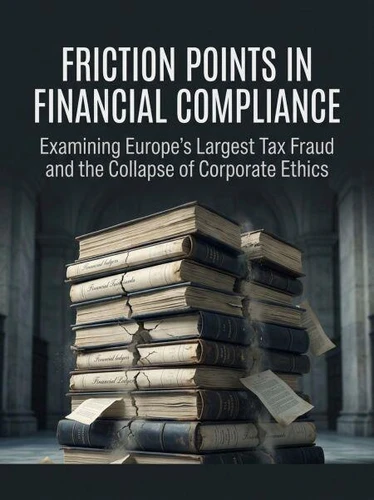
Friction Points in Financial Compliance. Examining Europe's Largest Tax Fraud and the Collapse of Corporate Ethics
Par :Formats :
Disponible dans votre compte client Decitre ou Furet du Nord dès validation de votre commande. Le format ePub est :
- Compatible avec une lecture sur My Vivlio (smartphone, tablette, ordinateur)
- Compatible avec une lecture sur liseuses Vivlio
- Pour les liseuses autres que Vivlio, vous devez utiliser le logiciel Adobe Digital Edition. Non compatible avec la lecture sur les liseuses Kindle, Remarkable et Sony
 , qui est-ce ?
Notre partenaire de plateforme de lecture numérique où vous retrouverez l'ensemble de vos ebooks gratuitement
Pour en savoir plus sur nos ebooks, consultez notre aide en ligne ici
C'est si simple ! Lisez votre ebook avec l'app Vivlio sur votre tablette, mobile ou ordinateur :

- Nombre de pages567
- FormatePub
- ISBN978-3-565-60224-7
- EAN9783565602247
- Date de parution30/07/2026
- Protection num.pas de protection
- Taille989 Ko
- Infos supplémentairesepub
- ÉditeurEmphaloz Publishing House
Résumé
The Cum/Ex scandal exposed a structural vulnerability in European financial markets-one that allowed billions in tax revenue to vanish through coordinated exploitation of regulatory gaps. This is not a story of rogue actors, but of systemic design flaws that rewarded complexity over transparency.
At its core, the scandal reveals how legal arbitrage, regulatory fragmentation, and institutional complacency converge to enable large-scale fraud.
The mechanics were sophisticated: dividend stripping across jurisdictions, multiple tax refund claims on a single withholding event, and a network of banks, lawyers, and advisors who treated compliance as negotiable. What failed was not just oversight, but the ethical architecture that should have constrained behavior before legal intervention became necessary. For financial institutions operating across Europe, the implications extend beyond reputational damage.
The scandal forces a reckoning with how compliance functions are structured, how moral responsibility is distributed in complex organizations, and whether current governance models can detect coordinated malfeasance before it scales. The question is not whether such schemes can be designed-they can-but whether institutional culture and regulatory frameworks are equipped to prevent them.
The mechanics were sophisticated: dividend stripping across jurisdictions, multiple tax refund claims on a single withholding event, and a network of banks, lawyers, and advisors who treated compliance as negotiable. What failed was not just oversight, but the ethical architecture that should have constrained behavior before legal intervention became necessary. For financial institutions operating across Europe, the implications extend beyond reputational damage.
The scandal forces a reckoning with how compliance functions are structured, how moral responsibility is distributed in complex organizations, and whether current governance models can detect coordinated malfeasance before it scales. The question is not whether such schemes can be designed-they can-but whether institutional culture and regulatory frameworks are equipped to prevent them.