Nouveauté
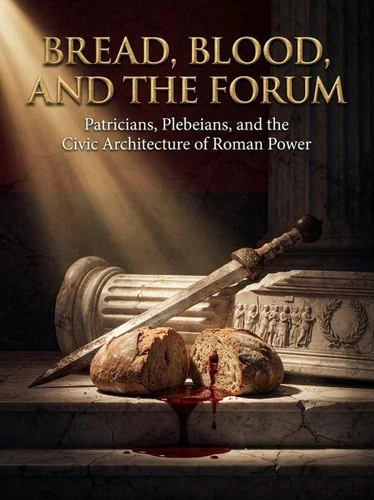
Bread, Blood, and the Forum. Patricians, Plebeians, and the Civic Architecture of Roman Power
Par :Formats :
Disponible dans votre compte client Decitre ou Furet du Nord dès validation de votre commande. Le format ePub est :
- Compatible avec une lecture sur My Vivlio (smartphone, tablette, ordinateur)
- Compatible avec une lecture sur liseuses Vivlio
- Pour les liseuses autres que Vivlio, vous devez utiliser le logiciel Adobe Digital Edition. Non compatible avec la lecture sur les liseuses Kindle, Remarkable et Sony
 , qui est-ce ?
Notre partenaire de plateforme de lecture numérique où vous retrouverez l'ensemble de vos ebooks gratuitement
Pour en savoir plus sur nos ebooks, consultez notre aide en ligne ici
C'est si simple ! Lisez votre ebook avec l'app Vivlio sur votre tablette, mobile ou ordinateur :

- Nombre de pages561
- FormatePub
- ISBN978-3-565-63440-8
- EAN9783565634408
- Date de parution11/08/2026
- Protection num.pas de protection
- Taille1 Mo
- Infos supplémentairesepub
- ÉditeurEmphaloz Publishing House
Résumé
Rome did not simply conquer the ancient world. It absorbed it - through law, through street-level negotiation, and through a social grammar so deeply engineered that even its tensions became instruments of stability. To understand Rome is to understand how a city of overcrowded tenements and open sewers also produced the most durable legal framework in Western history. The Roman social order rested on a network of patron-client relationships that operated less like a feudal hierarchy and more like a living contract.
A patron offered legal protection, political access, and economic favor; a client returned loyalty, public endorsement, and labor. This was not charity. It was Roman civic architecture - informal, adaptive, and pervasive enough to function as a parallel government beneath the Senate's marble columns. The conflict between patricians and plebeians was not merely a class war. It was a sustained constitutional negotiation, producing the Twelve Tables, the Tribunate of the Plebs, and eventually the gradual opening of magistracies to non-patrician families - a sequence of concessions that Rome never quite called reform, but reform they were.
What made Rome structurally unprecedented was the portability of its citizenship. As Roman authority extended beyond the Italian peninsula, the question of who belonged became a question of empire.
A patron offered legal protection, political access, and economic favor; a client returned loyalty, public endorsement, and labor. This was not charity. It was Roman civic architecture - informal, adaptive, and pervasive enough to function as a parallel government beneath the Senate's marble columns. The conflict between patricians and plebeians was not merely a class war. It was a sustained constitutional negotiation, producing the Twelve Tables, the Tribunate of the Plebs, and eventually the gradual opening of magistracies to non-patrician families - a sequence of concessions that Rome never quite called reform, but reform they were.
What made Rome structurally unprecedented was the portability of its citizenship. As Roman authority extended beyond the Italian peninsula, the question of who belonged became a question of empire.