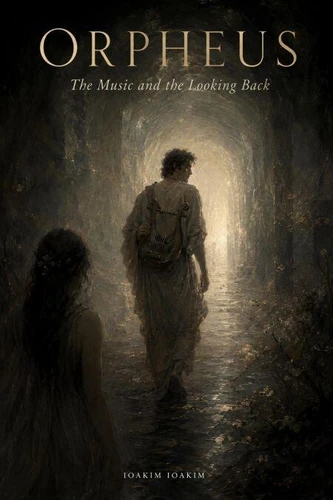
He heard the world as sound. Not metaphor - literally. The world arrived in Orpheus as sound before it arrived as anything else. He heard the grief in a room before he saw the face that was carrying it. He heard the note the Clashing Rocks made in the moment before they moved and he played it back to them and the rocks heard themselves and paused. He went into the underworld with only the lyre and the grief and he played and the Furies wept.
He had the gift and the gift was real and the gift was everything. The gift was also the problem. He had spent his whole life being confirmed - the music going out and the world moving toward it, the rocks and the rivers and the dead and the living all confirming the hearing, all telling him that what he heard was true. He had never been wrong. The world had always confirmed him. In the passage between the underworld and the world above, with Eurydice behind him and the permission given and the agreement made - the agreement to walk without looking back - the world went silent.
He could not hear her. And the man who had always been confirmed could not hold the not-confirming. He turned. ORPHEUS: The Music and the Looking Back is not the story of the failure. It is the story of the gift and the woman who understood the gift more completely than the man who had it - who gave him the inside view, the inward direction, the gift's other way, across three years in the Thracian valley before the snake and the dying and the passage and the turning.
It is the story of what she built in him. What he did with what she built. What the building made possible in the world - the inside hearing, the capacity for the inside account, the music that came from within as well as without. The turning was the gift's failure. The gift's other direction was her gift. Both are permanent. Both are in the music. The seventh book in the Olympus Cycle - literary fiction set in the world of ancient Greece, where the interior lives of its characters are the territory, the dialogue makes them live, and the myths are the bones of something that has always been about us.
He heard the world as sound. Not metaphor - literally. The world arrived in Orpheus as sound before it arrived as anything else. He heard the grief in a room before he saw the face that was carrying it. He heard the note the Clashing Rocks made in the moment before they moved and he played it back to them and the rocks heard themselves and paused. He went into the underworld with only the lyre and the grief and he played and the Furies wept.
He had the gift and the gift was real and the gift was everything. The gift was also the problem. He had spent his whole life being confirmed - the music going out and the world moving toward it, the rocks and the rivers and the dead and the living all confirming the hearing, all telling him that what he heard was true. He had never been wrong. The world had always confirmed him. In the passage between the underworld and the world above, with Eurydice behind him and the permission given and the agreement made - the agreement to walk without looking back - the world went silent.
He could not hear her. And the man who had always been confirmed could not hold the not-confirming. He turned. ORPHEUS: The Music and the Looking Back is not the story of the failure. It is the story of the gift and the woman who understood the gift more completely than the man who had it - who gave him the inside view, the inward direction, the gift's other way, across three years in the Thracian valley before the snake and the dying and the passage and the turning.
It is the story of what she built in him. What he did with what she built. What the building made possible in the world - the inside hearing, the capacity for the inside account, the music that came from within as well as without. The turning was the gift's failure. The gift's other direction was her gift. Both are permanent. Both are in the music. The seventh book in the Olympus Cycle - literary fiction set in the world of ancient Greece, where the interior lives of its characters are the territory, the dialogue makes them live, and the myths are the bones of something that has always been about us.


 , qui est-ce ?