
[Ioakim] spent years researching and imagining a world on the brink. When not writing, they can be found exploring forgotten archives, debating current events, or dreaming up the next big story. He live "in a quiet town near the sea with his family
Nouveauté
Asteria
Par :Formats :
Disponible dans votre compte client Decitre ou Furet du Nord dès validation de votre commande. Le format ePub est :
- Compatible avec une lecture sur My Vivlio (smartphone, tablette, ordinateur)
- Compatible avec une lecture sur liseuses Vivlio
- Pour les liseuses autres que Vivlio, vous devez utiliser le logiciel Adobe Digital Edition. Non compatible avec la lecture sur les liseuses Kindle, Remarkable et Sony
 , qui est-ce ?
Notre partenaire de plateforme de lecture numérique où vous retrouverez l'ensemble de vos ebooks gratuitement
Pour en savoir plus sur nos ebooks, consultez notre aide en ligne ici
C'est si simple ! Lisez votre ebook avec l'app Vivlio sur votre tablette, mobile ou ordinateur :

- FormatePub
- ISBN8235858299
- EAN9798235858299
- Date de parution22/07/2026
- Protection num.pas de protection
- Infos supplémentairesepub
- ÉditeurIoakim Ioakim
Résumé
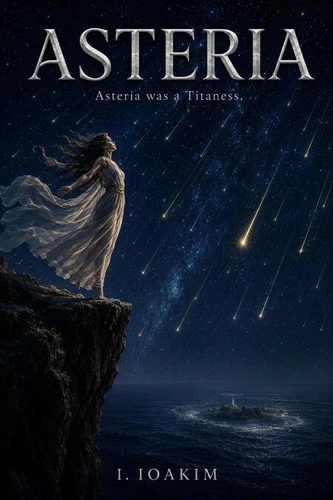
She refused Zeus. That single refusal set everything in motion. Asteria was a Titaness - daughter of Coeus and Phoebe, sister of Leto, keeper of nocturnal oracles and falling stars - and when Zeus pursued her, she leaped. She transformed into a quail and threw herself into the sea rather than submit to the most powerful god in the Olympian order, and the leap became something that no one, including Asteria herself, had fully anticipated: an island.
Asteria follows the interior of one of the ancient world's most overlooked divine beings - from her existence as the starry Titaness who governed falling stars and night oracles, through the dramatic transformation that her refusal of Zeus produced, to her long existence as Delos, the sacred island at the center of the Aegean world on whose surface her sister Leto gave birth to Apollo and Artemis.
This is the story the tradition preserved only in fragments - the nocturnal goddess whose oracles came through falling stars and dreams, whose daughter was Hecate, whose leap into the sea produced the most sacred island in the Greek world. Told now from the inside, with the full weight of what it meant to be a Titaness who survived by becoming the ground itself. She did not escape. She transformed.
The transformation was its own kind of answer.
Asteria follows the interior of one of the ancient world's most overlooked divine beings - from her existence as the starry Titaness who governed falling stars and night oracles, through the dramatic transformation that her refusal of Zeus produced, to her long existence as Delos, the sacred island at the center of the Aegean world on whose surface her sister Leto gave birth to Apollo and Artemis.
This is the story the tradition preserved only in fragments - the nocturnal goddess whose oracles came through falling stars and dreams, whose daughter was Hecate, whose leap into the sea produced the most sacred island in the Greek world. Told now from the inside, with the full weight of what it meant to be a Titaness who survived by becoming the ground itself. She did not escape. She transformed.
The transformation was its own kind of answer.
A propos de IOAKIM IOAKIM
The Lost Worlds
E-book
8,99 €
11,49 €
Gods of Olympus Volume 3
E-book
11,49 €
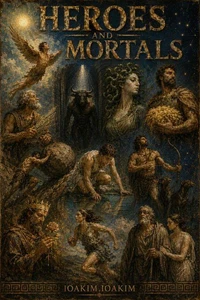
Heroes and Mortals
E-book
11,49 €
11,49 €
11,49 €
The Things we Carry
E-book
11,49 €
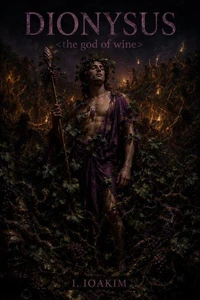
Dionysus
E-book
4,49 €
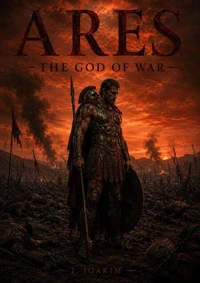
Ares
E-book
3,99 €
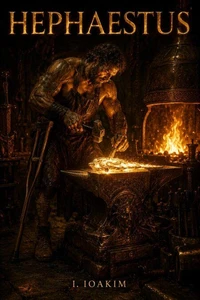
Hephaestus
E-book
3,99 €
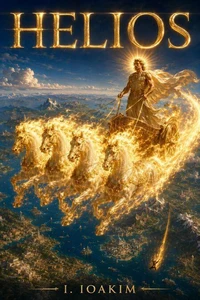
Helios
E-book
3,99 €
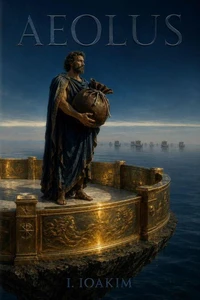
Aeolus
E-book
3,49 €
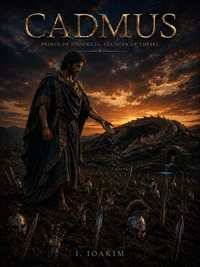
Cadmus
E-book
3,99 €
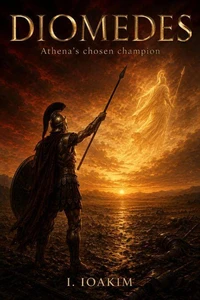
Diomedes
E-book
3,49 €
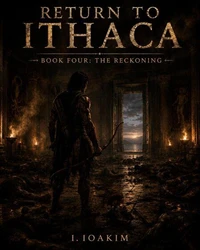
3,49 €
3,49 €
3,49 €
3,49 €
The Garden of Hecate
E-book
4,49 €