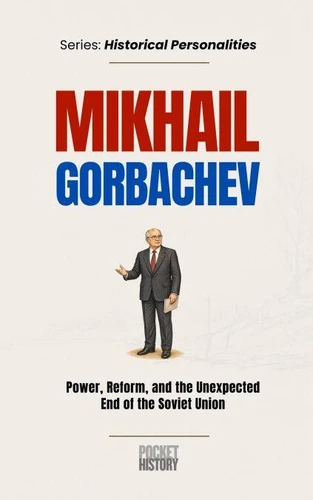
Mikhail Gorbachev entered the highest office of the Soviet Union determined to reform a system that had shaped global politics for generations. Instead, the changes he unleashed helped transform Europe, redefine relations between East and West, and accompany the dramatic disappearance of the Soviet state itself. This compelling biography traces Gorbachev's life from his rural upbringing in southern Russia and his rise through the Communist Party to his emergence as Soviet leader in 1985.
It explores the origins and consequences of perestroika and glasnost, the revolutionary policies that encouraged economic restructuring, greater openness, political debate, and unprecedented challenges to Communist authority. Readers will follow Gorbachev through crucial encounters with Western leaders, nuclear arms negotiations, the weakening of Soviet control over Eastern Europe, the fall of the Berlin Wall, and the final years of the Cold War.
His international achievements culminated in the 1990 Nobel Peace Prize, awarded for his leading role in the transformation of East-West relations. The book also examines the growing crises inside the USSR, nationalist movements, political opposition, the failed August 1991 coup, and Gorbachev's resignation as the Soviet Union ceased to exist. Was Gorbachev the visionary who helped end decades of dangerous confrontation, or the reformer whose policies destroyed the system he intended to save? This accessible account presents the achievements, contradictions, controversies, and enduring legacy of a leader who changed the course of modern history.
Mikhail Gorbachev entered the highest office of the Soviet Union determined to reform a system that had shaped global politics for generations. Instead, the changes he unleashed helped transform Europe, redefine relations between East and West, and accompany the dramatic disappearance of the Soviet state itself. This compelling biography traces Gorbachev's life from his rural upbringing in southern Russia and his rise through the Communist Party to his emergence as Soviet leader in 1985.
It explores the origins and consequences of perestroika and glasnost, the revolutionary policies that encouraged economic restructuring, greater openness, political debate, and unprecedented challenges to Communist authority. Readers will follow Gorbachev through crucial encounters with Western leaders, nuclear arms negotiations, the weakening of Soviet control over Eastern Europe, the fall of the Berlin Wall, and the final years of the Cold War.
His international achievements culminated in the 1990 Nobel Peace Prize, awarded for his leading role in the transformation of East-West relations. The book also examines the growing crises inside the USSR, nationalist movements, political opposition, the failed August 1991 coup, and Gorbachev's resignation as the Soviet Union ceased to exist. Was Gorbachev the visionary who helped end decades of dangerous confrontation, or the reformer whose policies destroyed the system he intended to save? This accessible account presents the achievements, contradictions, controversies, and enduring legacy of a leader who changed the course of modern history.

 , qui est-ce ?