
Nouveauté
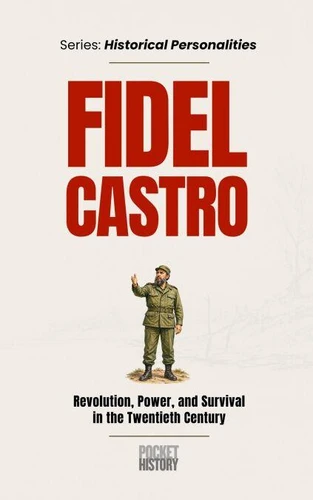
Fidel Castro. Historical Personalities, #0
Par :Formats :
Disponible dans votre compte client Decitre ou Furet du Nord dès validation de votre commande. Le format ePub est :
- Compatible avec une lecture sur My Vivlio (smartphone, tablette, ordinateur)
- Compatible avec une lecture sur liseuses Vivlio
- Pour les liseuses autres que Vivlio, vous devez utiliser le logiciel Adobe Digital Edition. Non compatible avec la lecture sur les liseuses Kindle, Remarkable et Sony
 , qui est-ce ?
Notre partenaire de plateforme de lecture numérique où vous retrouverez l'ensemble de vos ebooks gratuitement
Pour en savoir plus sur nos ebooks, consultez notre aide en ligne ici
C'est si simple ! Lisez votre ebook avec l'app Vivlio sur votre tablette, mobile ou ordinateur :

- FormatePub
- ISBN8233984846
- EAN9798233984846
- Date de parution24/08/2026
- Protection num.pas de protection
- Infos supplémentairesepub
- ÉditeurLinda Balsamo
Résumé
Fidel Castro remains one of the most recognizable, influential, and controversial political leaders of the twentieth century. From the mountains of the Sierra Maestra to decades at the center of global Cold War politics, his rise transformed Cuba and placed the small Caribbean nation at the heart of an international struggle between competing political systems. This biography follows Castro from his early years and political awakening to the revolutionary campaign against Fulgencio Batista and the triumph of the Cuban Revolution in 1959.
It explores the consolidation of the new government, Cuba's growing relationship with the Soviet Union, confrontation with the United States, the Bay of Pigs invasion, and the Cuban Missile Crisis that brought the world dangerously close to nuclear conflict. The book also examines Castro's ideology, leadership style, international ambitions, economic policies, speeches, and influence on revolutionary movements across Latin America and beyond.
It considers both the social achievements celebrated by his supporters and the political repression, restrictions on dissent, and authoritarian rule emphasized by his critics. Following Cuba through the collapse of the Soviet Union and the difficult years that followed, this accessible account provides readers with historical context for understanding Castro's extraordinary political longevity and enduring legacy.
It is an introduction not only to one man's life, but also to revolution, communism, Cold War rivalry, and the turbulent modern history of Cuba.
It explores the consolidation of the new government, Cuba's growing relationship with the Soviet Union, confrontation with the United States, the Bay of Pigs invasion, and the Cuban Missile Crisis that brought the world dangerously close to nuclear conflict. The book also examines Castro's ideology, leadership style, international ambitions, economic policies, speeches, and influence on revolutionary movements across Latin America and beyond.
It considers both the social achievements celebrated by his supporters and the political repression, restrictions on dissent, and authoritarian rule emphasized by his critics. Following Cuba through the collapse of the Soviet Union and the difficult years that followed, this accessible account provides readers with historical context for understanding Castro's extraordinary political longevity and enduring legacy.
It is an introduction not only to one man's life, but also to revolution, communism, Cold War rivalry, and the turbulent modern history of Cuba.
A propos de Pocket History
5,49 €

5,49 €
5,49 €

5,49 €

5,49 €

5,49 €
5,49 €
5,49 €
5,49 €
5,49 €
5,49 €
5,49 €
5,49 €
5,49 €

4,49 €

4,49 €

5,49 €