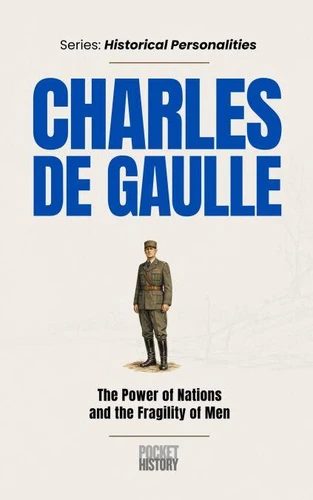
Charles de Gaulle believed that France possessed a historic mission and should never accept submission. A soldier, resistance leader, president, and founder of the Fifth Republic, he became one of the most influential European figures of the twentieth century. This biography follows his journey from military training and imprisonment during World War I to the decisive events of 1940, when he rejected France's defeat and traveled to London.
From there, he called upon the French people to continue fighting the Nazi occupation and assumed leadership of the Free French Forces. The book explores his role in the liberation of France, his tensions with the Allied powers, and his participation in the country's political reconstruction. It also examines his return to power in 1958 during the crisis caused by the Algerian War and his creation of a new Constitution that strengthened the French presidency.
The narrative covers decolonization, the development of France's nuclear force, his independent foreign policy, and his vision of a Europe composed of sovereign states. Determined, controversial, and deeply patriotic, de Gaulle inspired both admiration and opposition. His life offers a fascinating examination of leadership, courage, national identity, and political power during times of war and transformation.
Charles de Gaulle believed that France possessed a historic mission and should never accept submission. A soldier, resistance leader, president, and founder of the Fifth Republic, he became one of the most influential European figures of the twentieth century. This biography follows his journey from military training and imprisonment during World War I to the decisive events of 1940, when he rejected France's defeat and traveled to London.
From there, he called upon the French people to continue fighting the Nazi occupation and assumed leadership of the Free French Forces. The book explores his role in the liberation of France, his tensions with the Allied powers, and his participation in the country's political reconstruction. It also examines his return to power in 1958 during the crisis caused by the Algerian War and his creation of a new Constitution that strengthened the French presidency.
The narrative covers decolonization, the development of France's nuclear force, his independent foreign policy, and his vision of a Europe composed of sovereign states. Determined, controversial, and deeply patriotic, de Gaulle inspired both admiration and opposition. His life offers a fascinating examination of leadership, courage, national identity, and political power during times of war and transformation.

 , qui est-ce ?