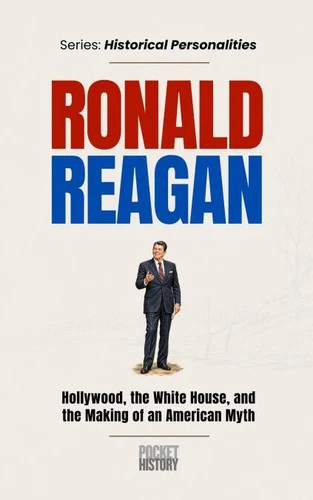
Ronald Reagan rose from a small-town American childhood and a successful Hollywood career to become one of the most consequential presidents of the twentieth century. His journey through entertainment, organized labor, California politics, and the White House reflected a remarkable ability to communicate ideas, inspire supporters, and reshape the direction of American conservatism. This biography follows Reagan's transformation from actor to political leader, exploring the beliefs, experiences, and ambitions that guided his rise to national prominence.
It examines his presidential campaigns, economic agenda, tax policies, military expansion, relationship with Congress, and determination to confront the Soviet Union during a decisive period of the Cold War. Readers will also explore Reagan's distinctive communication style, his partnership and negotiations with Soviet leader Mikhail Gorbachev, and the political philosophy that became closely associated with his name.
Alongside his achievements, the book considers the controversies, criticism, and difficult episodes that complicated his presidency. More than the story of one president, this is an introduction to a transformative period in American political history. It offers readers a clear and engaging look at Reagan's leadership, ideas, challenges, and enduring influence on the Republican Party, conservative politics, and the United States.
Ronald Reagan rose from a small-town American childhood and a successful Hollywood career to become one of the most consequential presidents of the twentieth century. His journey through entertainment, organized labor, California politics, and the White House reflected a remarkable ability to communicate ideas, inspire supporters, and reshape the direction of American conservatism. This biography follows Reagan's transformation from actor to political leader, exploring the beliefs, experiences, and ambitions that guided his rise to national prominence.
It examines his presidential campaigns, economic agenda, tax policies, military expansion, relationship with Congress, and determination to confront the Soviet Union during a decisive period of the Cold War. Readers will also explore Reagan's distinctive communication style, his partnership and negotiations with Soviet leader Mikhail Gorbachev, and the political philosophy that became closely associated with his name.
Alongside his achievements, the book considers the controversies, criticism, and difficult episodes that complicated his presidency. More than the story of one president, this is an introduction to a transformative period in American political history. It offers readers a clear and engaging look at Reagan's leadership, ideas, challenges, and enduring influence on the Republican Party, conservative politics, and the United States.

 , qui est-ce ?