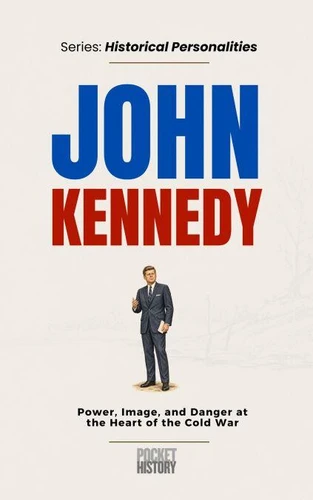
John F. Kennedy entered the White House at one of the most dangerous and transformative moments in modern American history. Young, charismatic, and politically ambitious, he became a symbol of a new generation while confronting challenges that could reshape the world. This engaging biography traces Kennedy's path from his privileged childhood and wartime military service to Congress, the presidency, and his enduring place in American memory.
Discover the political battles, personal struggles, family influences, and historic events that defined his remarkable journey. Explore his leadership during the Cold War and Cuban Missile Crisis, the growing struggle for civil rights, the space race, relations with the Soviet Union, and America's expanding involvement in Vietnam. The book also examines Kennedy beyond the carefully constructed public image, revealing the complexities, contradictions, strengths, and weaknesses of the man behind the presidency.
His assassination in Dallas in November 1963 shocked the world and ensured that questions surrounding his life and legacy would continue for generations. For readers interested in American history, presidential leadership, political biography, and the Kennedy era, this book offers an accessible exploration of a president whose brief time in power left a lasting mark on history.
John F. Kennedy entered the White House at one of the most dangerous and transformative moments in modern American history. Young, charismatic, and politically ambitious, he became a symbol of a new generation while confronting challenges that could reshape the world. This engaging biography traces Kennedy's path from his privileged childhood and wartime military service to Congress, the presidency, and his enduring place in American memory.
Discover the political battles, personal struggles, family influences, and historic events that defined his remarkable journey. Explore his leadership during the Cold War and Cuban Missile Crisis, the growing struggle for civil rights, the space race, relations with the Soviet Union, and America's expanding involvement in Vietnam. The book also examines Kennedy beyond the carefully constructed public image, revealing the complexities, contradictions, strengths, and weaknesses of the man behind the presidency.
His assassination in Dallas in November 1963 shocked the world and ensured that questions surrounding his life and legacy would continue for generations. For readers interested in American history, presidential leadership, political biography, and the Kennedy era, this book offers an accessible exploration of a president whose brief time in power left a lasting mark on history.

 , qui est-ce ?