SOLDES
Jusqu'à -70% sur une sélection d'articles*

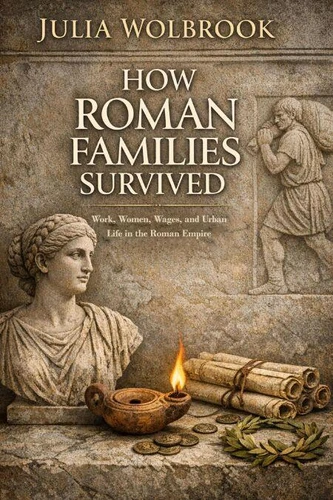
How Roman Families Survived Work, Women, Wages, and Urban Life in the Roman Empire
Par :Formats :
Disponible dans votre compte client Decitre ou Furet du Nord dès validation de votre commande. Le format ePub est :
- Compatible avec une lecture sur My Vivlio (smartphone, tablette, ordinateur)
- Compatible avec une lecture sur liseuses Vivlio
- Pour les liseuses autres que Vivlio, vous devez utiliser le logiciel Adobe Digital Edition. Non compatible avec la lecture sur les liseuses Kindle, Remarkable et Sony
 , qui est-ce ?
Notre partenaire de plateforme de lecture numérique où vous retrouverez l'ensemble de vos ebooks gratuitement
Pour en savoir plus sur nos ebooks, consultez notre aide en ligne ici
C'est si simple ! Lisez votre ebook avec l'app Vivlio sur votre tablette, mobile ou ordinateur :

- FormatePub
- ISBN8233898082
- EAN9798233898082
- Date de parution07/04/2026
- Protection num.pas de protection
- Infos supplémentairesepub
- ÉditeurLinda Balsamo
Résumé
How did ordinary Roman families survive in one of history's greatest empires?When most people think of ancient Rome, they imagine emperors, gladiators, senators, and military conquest. But behind the marble monuments and imperial grandeur lived millions of ordinary people, women, laborers, children, widows, artisans, migrants, and struggling households, whose daily fight for survival shaped the real Roman world.
How Roman Families Survived: Work, Women, Wages, and Urban Life in the Roman Empire takes readers beyond the palaces and battlefields to uncover the intimate economic and social realities of Roman family life. Through a rich exploration of labor, household survival, women's work, wages, food, housing, family strategies, and the pressures of urban living, this book reveals how common people navigated poverty, opportunity, risk, and resilience in the cities of the Roman Empire.
Far from being passive figures in the background of history, Roman women and working families emerge here as central actors in the struggle to build, sustain, and protect household life under difficult and often unstable conditions. From crowded apartments and uncertain incomes to caregiving, informal labor, and the constant balancing of necessity and dignity, this book paints a compelling portrait of survival in the ancient city.
Blending social history, economic insight, and vivid human detail, How Roman Families Survived offers a fresh and deeply engaging look at the Roman Empire from the ground up, not from the perspective of the elite, but from the kitchens, workshops, alleyways, and rented rooms where life was actually lived. This is not just a book about ancient Rome. It is a book about family, labor, inequality, adaptation, and endurance, themes as urgent today as they were two thousand years ago.
For anyone who has ever wondered how ordinary people lived, not just how empires ruled, this book opens a powerful and unforgettable window into the human heart of ancient Rome.
How Roman Families Survived: Work, Women, Wages, and Urban Life in the Roman Empire takes readers beyond the palaces and battlefields to uncover the intimate economic and social realities of Roman family life. Through a rich exploration of labor, household survival, women's work, wages, food, housing, family strategies, and the pressures of urban living, this book reveals how common people navigated poverty, opportunity, risk, and resilience in the cities of the Roman Empire.
Far from being passive figures in the background of history, Roman women and working families emerge here as central actors in the struggle to build, sustain, and protect household life under difficult and often unstable conditions. From crowded apartments and uncertain incomes to caregiving, informal labor, and the constant balancing of necessity and dignity, this book paints a compelling portrait of survival in the ancient city.
Blending social history, economic insight, and vivid human detail, How Roman Families Survived offers a fresh and deeply engaging look at the Roman Empire from the ground up, not from the perspective of the elite, but from the kitchens, workshops, alleyways, and rented rooms where life was actually lived. This is not just a book about ancient Rome. It is a book about family, labor, inequality, adaptation, and endurance, themes as urgent today as they were two thousand years ago.
For anyone who has ever wondered how ordinary people lived, not just how empires ruled, this book opens a powerful and unforgettable window into the human heart of ancient Rome.
A propos de Julia Wolbrook









2,99 €