Nouveauté
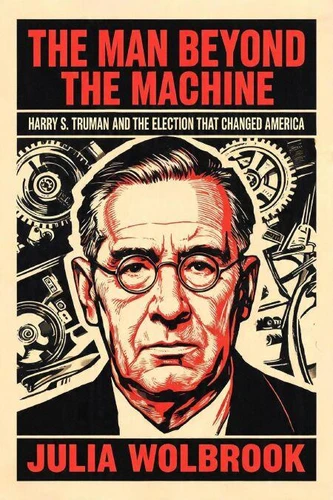
The Man Beyond the Machine Harry S. Truman and the Election That Changed America
Par :Formats :
Disponible dans votre compte client Decitre ou Furet du Nord dès validation de votre commande. Le format ePub est :
- Compatible avec une lecture sur My Vivlio (smartphone, tablette, ordinateur)
- Compatible avec une lecture sur liseuses Vivlio
- Pour les liseuses autres que Vivlio, vous devez utiliser le logiciel Adobe Digital Edition. Non compatible avec la lecture sur les liseuses Kindle, Remarkable et Sony
 , qui est-ce ?
Notre partenaire de plateforme de lecture numérique où vous retrouverez l'ensemble de vos ebooks gratuitement
Pour en savoir plus sur nos ebooks, consultez notre aide en ligne ici
C'est si simple ! Lisez votre ebook avec l'app Vivlio sur votre tablette, mobile ou ordinateur :

- FormatePub
- ISBN8233756399
- EAN9798233756399
- Date de parution14/06/2026
- Protection num.pas de protection
- Infos supplémentairesepub
- ÉditeurLinda Balsamo
Résumé
Before he was President, before the atomic bomb, before the Berlin Airlift and the Truman Doctrine, and before the defining crises of the American century, Harry S. Truman was a machine politician from Missouri who everyone agreed was finished. They were wrong. The Man Beyond the Machine tells the story of the most consequential political upset you have never heard of, the brutal, byzantine 1940 Missouri Democratic primary that pitted a disgraced senator against a celebrated reform governor and a celebrated federal prosecutor, in a race that would determine not merely who represented Missouri in Washington, but who would stand next to Franklin Roosevelt when the world caught fire.
At the center of it all was Tom Pendergast, the cigar-chomping Kansas City boss who built the most powerful and corrupt political machine in American history, sent Truman to the Senate on a wave of ghost votes and manufactured majorities, and then watched from a federal penitentiary as the men he had made turned on each other in the most savage primary Missouri had ever seen. On one side stood Lloyd Stark, the polished, ambitious reform governor who had dismantled Pendergast's empire brick by brick, commanded the loyalty of Missouri's press and the quiet favor of the Roosevelt White House, and entered the race as the prohibitive frontrunner.
On another stood Maurice Milligan, the relentless federal prosecutor who had put Pendergast behind bars and had built an entire political identity on the prosecution. Between them, they represented everything the moment seemed to demand: righteousness, reform, and the clean break from a corrupt past that Missouri's voters appeared ready to embrace. And then there was Truman. Broke. Abandoned by his President.
Vilified by every major newspaper in the state. A man whose only political patron was sitting in Leavenworth. A man whose closest friends told him, to his face, that he could not win. He ran anyway. What followed was forty of the most extraordinary days in American political history, a campaign of back-room deals and labor union newspapers, of ghost voters and vacant lots listed as home addresses for a hundred registered voters, of a governor who chased the Vice Presidency to Chicago and came home empty-handed, of a federal prosecutor whose very presence in the race mathematically guaranteed his own defeat, of a party chairman who made a single phone call four days before the election and set in motion a career trajectory that would end in the cabinet of the man he had just helped save.
Seven thousand, nine hundred and seventy-six votes separated Harry Truman from political oblivion on August 6, 1940. Four years later, he was Vice President of the United States. Eighty-three days after that, he was President. History turns on the narrowest of margins. This is the story of one of them.
At the center of it all was Tom Pendergast, the cigar-chomping Kansas City boss who built the most powerful and corrupt political machine in American history, sent Truman to the Senate on a wave of ghost votes and manufactured majorities, and then watched from a federal penitentiary as the men he had made turned on each other in the most savage primary Missouri had ever seen. On one side stood Lloyd Stark, the polished, ambitious reform governor who had dismantled Pendergast's empire brick by brick, commanded the loyalty of Missouri's press and the quiet favor of the Roosevelt White House, and entered the race as the prohibitive frontrunner.
On another stood Maurice Milligan, the relentless federal prosecutor who had put Pendergast behind bars and had built an entire political identity on the prosecution. Between them, they represented everything the moment seemed to demand: righteousness, reform, and the clean break from a corrupt past that Missouri's voters appeared ready to embrace. And then there was Truman. Broke. Abandoned by his President.
Vilified by every major newspaper in the state. A man whose only political patron was sitting in Leavenworth. A man whose closest friends told him, to his face, that he could not win. He ran anyway. What followed was forty of the most extraordinary days in American political history, a campaign of back-room deals and labor union newspapers, of ghost voters and vacant lots listed as home addresses for a hundred registered voters, of a governor who chased the Vice Presidency to Chicago and came home empty-handed, of a federal prosecutor whose very presence in the race mathematically guaranteed his own defeat, of a party chairman who made a single phone call four days before the election and set in motion a career trajectory that would end in the cabinet of the man he had just helped save.
Seven thousand, nine hundred and seventy-six votes separated Harry Truman from political oblivion on August 6, 1940. Four years later, he was Vice President of the United States. Eighty-three days after that, he was President. History turns on the narrowest of margins. This is the story of one of them.
A propos de Julia Wolbrook

2,99 €