Nouveauté
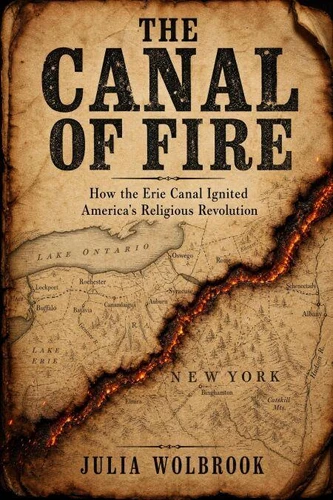
The Canal of Fire How the Erie Canal Ignited America's Religious Revolution
Par :Formats :
Disponible dans votre compte client Decitre ou Furet du Nord dès validation de votre commande. Le format ePub est :
- Compatible avec une lecture sur My Vivlio (smartphone, tablette, ordinateur)
- Compatible avec une lecture sur liseuses Vivlio
- Pour les liseuses autres que Vivlio, vous devez utiliser le logiciel Adobe Digital Edition. Non compatible avec la lecture sur les liseuses Kindle, Remarkable et Sony
 , qui est-ce ?
Notre partenaire de plateforme de lecture numérique où vous retrouverez l'ensemble de vos ebooks gratuitement
Pour en savoir plus sur nos ebooks, consultez notre aide en ligne ici
C'est si simple ! Lisez votre ebook avec l'app Vivlio sur votre tablette, mobile ou ordinateur :

- FormatePub
- ISBN8235176959
- EAN9798235176959
- Date de parution04/07/2026
- Protection num.pas de protection
- Infos supplémentairesepub
- ÉditeurIoakim Ioakim
Résumé
In 1817, a governor with more ambition than allies staked his career on an impossible idea: cut a 363-mile channel through solid rock and wilderness, by hand, with no engineers who had ever built a canal before. His critics called it "Clinton's Folly." They were wrong. Eight years later, when the Erie Canal opened from Buffalo to Albany, it didn't just move grain and lumber. It moved something far more combustible, faith.
Almost overnight, the muddy towns strung along its banks became the most intensely revived religious landscape in American history, a region so scorched by preaching and conversion that it earned a name still used today: the Burned-Over District. The Canal of Fire tells the story no one has fully told before, how a piece of infrastructure became a spiritual detonator. As barges brought merchants, migrants, and money flooding into a region that had been isolated wilderness a generation earlier, they also brought something unstoppable: revivalists, reformers, and a whole new way of being American.
Charles Finney preached to packed halls along the towpath. Joseph Smith found his golden plates a few miles from the canal's route. The Fox sisters heard rappings that birthed Spiritualism. Frederick Douglass, Susan B. Anthony, and Elizabeth Cady Stanton built the abolition and suffrage movements in the canal towns of Rochester and Seneca Falls. None of it happened by accident. All of it happened here, along this one waterway, in one astonishingly compressed generation.
Drawing on forgotten sermons, canal ledgers, personal letters, and the private correspondence of the men who dug the ditch and the ones who prayed over it, this is a book about how commerce and conviction became inseparable in the American mind, how New Yorkers came to believe that building a canal was itself an act of faith, and that God had personally carved a path through the Appalachians just for them.
Part engineering epic, part religious history, part origin story for modern America, The Canal of Fire argues that you cannot understand American revivalism, American reform, or American self-belief without first understanding a ditch dug by farmers, judges, and immigrants who had never built anything like it, and never would again. This is the story of how a canal built a country's body, and, in the same stroke, remade its soul.
Almost overnight, the muddy towns strung along its banks became the most intensely revived religious landscape in American history, a region so scorched by preaching and conversion that it earned a name still used today: the Burned-Over District. The Canal of Fire tells the story no one has fully told before, how a piece of infrastructure became a spiritual detonator. As barges brought merchants, migrants, and money flooding into a region that had been isolated wilderness a generation earlier, they also brought something unstoppable: revivalists, reformers, and a whole new way of being American.
Charles Finney preached to packed halls along the towpath. Joseph Smith found his golden plates a few miles from the canal's route. The Fox sisters heard rappings that birthed Spiritualism. Frederick Douglass, Susan B. Anthony, and Elizabeth Cady Stanton built the abolition and suffrage movements in the canal towns of Rochester and Seneca Falls. None of it happened by accident. All of it happened here, along this one waterway, in one astonishingly compressed generation.
Drawing on forgotten sermons, canal ledgers, personal letters, and the private correspondence of the men who dug the ditch and the ones who prayed over it, this is a book about how commerce and conviction became inseparable in the American mind, how New Yorkers came to believe that building a canal was itself an act of faith, and that God had personally carved a path through the Appalachians just for them.
Part engineering epic, part religious history, part origin story for modern America, The Canal of Fire argues that you cannot understand American revivalism, American reform, or American self-belief without first understanding a ditch dug by farmers, judges, and immigrants who had never built anything like it, and never would again. This is the story of how a canal built a country's body, and, in the same stroke, remade its soul.
A propos de Julia Wolbrook



2,99 €