SOLDES
Jusqu'à -70% sur une sélection d'articles*

Nouveauté
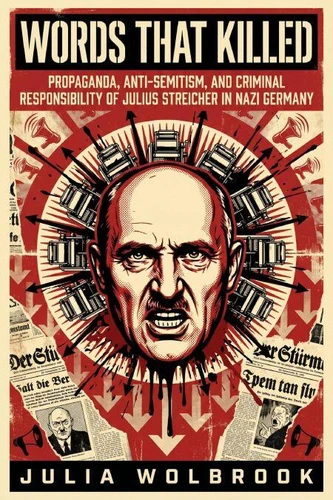
Words That Killed Propaganda, Anti-Semitism, and Criminal Responsibility of Julius Streicher in Nazi Germany
Par :Formats :
Disponible dans votre compte client Decitre ou Furet du Nord dès validation de votre commande. Le format ePub est :
- Compatible avec une lecture sur My Vivlio (smartphone, tablette, ordinateur)
- Compatible avec une lecture sur liseuses Vivlio
- Pour les liseuses autres que Vivlio, vous devez utiliser le logiciel Adobe Digital Edition. Non compatible avec la lecture sur les liseuses Kindle, Remarkable et Sony
 , qui est-ce ?
Notre partenaire de plateforme de lecture numérique où vous retrouverez l'ensemble de vos ebooks gratuitement
Pour en savoir plus sur nos ebooks, consultez notre aide en ligne ici
C'est si simple ! Lisez votre ebook avec l'app Vivlio sur votre tablette, mobile ou ordinateur :

- FormatePub
- ISBN8235226616
- EAN9798235226616
- Date de parution10/06/2026
- Protection num.pas de protection
- Infos supplémentairesepub
- ÉditeurIoakim Ioakim
Résumé
Some books recount history, while others confront the machinery that made atrocity possible. Words That Killed is a piercing investigation into one of the most disturbing truths of the twentieth century: that genocide was not only carried out with weapons, but also engineered through language. At the center stands Julius Streicher, publisher of the incendiary Nazi newspaper Der Stürmer, whose relentless propaganda did not merely reflect hatred; it helped normalize it, amplify it, and embed it into the moral collapse of a society.
This book traces how rhetoric becomes radicalization, how repetition becomes belief, and how print becomes complicity. It examines Streicher's role not as a passive ideologue, but as an active architect of dehumanization whose words echoed far beyond the page, into classrooms, homes, courtrooms, and ultimately, into the infrastructure of genocide. But Words That Killed is more than a historical account.
It is a forensic moral inquiry into responsibility itself. Where does free expression end and incitement begin? Can a publisher be guilty of murder without ever lifting a hand? And what does justice mean when language becomes a weapon of mass destruction?Drawing from trial records, historical archives, and contemporary scholarship on propaganda and mass persuasion, this work reconstructs the legal and ethical reckoning that followed the fall of Nazi Germany, while forcing readers to confront uncomfortable continuities in our own time.
Unflinching, deeply researched, and urgently relevant, Words That Killed reveals how societies are not only destroyed by violence, but first by stories that teach them who deserves to be human.
This book traces how rhetoric becomes radicalization, how repetition becomes belief, and how print becomes complicity. It examines Streicher's role not as a passive ideologue, but as an active architect of dehumanization whose words echoed far beyond the page, into classrooms, homes, courtrooms, and ultimately, into the infrastructure of genocide. But Words That Killed is more than a historical account.
It is a forensic moral inquiry into responsibility itself. Where does free expression end and incitement begin? Can a publisher be guilty of murder without ever lifting a hand? And what does justice mean when language becomes a weapon of mass destruction?Drawing from trial records, historical archives, and contemporary scholarship on propaganda and mass persuasion, this work reconstructs the legal and ethical reckoning that followed the fall of Nazi Germany, while forcing readers to confront uncomfortable continuities in our own time.
Unflinching, deeply researched, and urgently relevant, Words That Killed reveals how societies are not only destroyed by violence, but first by stories that teach them who deserves to be human.
A propos de Julia Wolbrook

2,99 €