SOLDES
Jusqu'à -70% sur une sélection d'articles*

Nouveauté
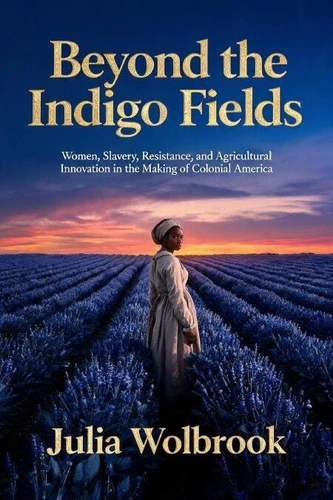
Beyond the Indigo Fields Women, Slavery, Resistance, and Agricultural Innovation in the Making of Colonial America
Par :Formats :
Disponible dans votre compte client Decitre ou Furet du Nord dès validation de votre commande. Le format ePub est :
- Compatible avec une lecture sur My Vivlio (smartphone, tablette, ordinateur)
- Compatible avec une lecture sur liseuses Vivlio
- Pour les liseuses autres que Vivlio, vous devez utiliser le logiciel Adobe Digital Edition. Non compatible avec la lecture sur les liseuses Kindle, Remarkable et Sony
 , qui est-ce ?
Notre partenaire de plateforme de lecture numérique où vous retrouverez l'ensemble de vos ebooks gratuitement
Pour en savoir plus sur nos ebooks, consultez notre aide en ligne ici
C'est si simple ! Lisez votre ebook avec l'app Vivlio sur votre tablette, mobile ou ordinateur :

- FormatePub
- ISBN8235268319
- EAN9798235268319
- Date de parution30/06/2026
- Protection num.pas de protection
- Infos supplémentairesepub
- ÉditeurIoakim Ioakim
Résumé
The history books remember the men who signed the documents. This book is about everyone else. In the rice fields and counting houses of colonial South Carolina, three lives intersected in ways that would shape a colony, transform an economy, and quietly rewrite the boundaries of who mattered in early America. Ann Drayton, a widow who seized control of a plantation empire at a moment when the law said she shouldn't.
Eliza Lucas, a teenager who ran three plantations, cultivated a cash crop that would generate millions, and did it all while convincing a patriarchal society she was being a dutiful daughter. And Quash, carpenter, fugitive, freedman, an enslaved man whose hands built the vats that made the indigo industry possible, whose knowledge outperformed every white artisan put against him, and whose extraordinary journey from bondage to freedom illuminates everything the official history of colonial America has spent three centuries trying not to say.
Beyond the Indigo Fields is the story of the people who held the colonial world together while being denied credit for it. It is the story of what a woman could accomplish when necessity stripped away the polite fictions about what women were capable of. It is the story of what enslaved people actually knew, about agriculture, about law, about geopolitics, about survival, and how that knowledge shaped the very society that sought to erase it.
It is, above all, the story of how power really worked in early America: not handed down from above by the men whose portraits hang in museums, but negotiated daily, on plantation grounds and in courtrooms and in the margins of a slave colony's anxious legislation, by women and Black Americans whose contributions have been footnoted, minimized, and quietly forgotten. Until now. Drawing on letters, legal records, plantation documents, and newspaper archives, Beyond the Indigo Fields reconstructs these three lives with the intimacy of biography and the sweep of social history.
It asks what the story of colonial America looks like when we follow the indigo dye back to the vat, and the vat back to the man who built it. What it reveals will change the way you understand who built this country, and at what cost. The fields were blue because of what they grew. The colony was rich because of who they owned. The story was incomplete because of who they forgot. Not anymore.
Eliza Lucas, a teenager who ran three plantations, cultivated a cash crop that would generate millions, and did it all while convincing a patriarchal society she was being a dutiful daughter. And Quash, carpenter, fugitive, freedman, an enslaved man whose hands built the vats that made the indigo industry possible, whose knowledge outperformed every white artisan put against him, and whose extraordinary journey from bondage to freedom illuminates everything the official history of colonial America has spent three centuries trying not to say.
Beyond the Indigo Fields is the story of the people who held the colonial world together while being denied credit for it. It is the story of what a woman could accomplish when necessity stripped away the polite fictions about what women were capable of. It is the story of what enslaved people actually knew, about agriculture, about law, about geopolitics, about survival, and how that knowledge shaped the very society that sought to erase it.
It is, above all, the story of how power really worked in early America: not handed down from above by the men whose portraits hang in museums, but negotiated daily, on plantation grounds and in courtrooms and in the margins of a slave colony's anxious legislation, by women and Black Americans whose contributions have been footnoted, minimized, and quietly forgotten. Until now. Drawing on letters, legal records, plantation documents, and newspaper archives, Beyond the Indigo Fields reconstructs these three lives with the intimacy of biography and the sweep of social history.
It asks what the story of colonial America looks like when we follow the indigo dye back to the vat, and the vat back to the man who built it. What it reveals will change the way you understand who built this country, and at what cost. The fields were blue because of what they grew. The colony was rich because of who they owned. The story was incomplete because of who they forgot. Not anymore.
A propos de Julia Wolbrook
2,99 €