SOLDES
Jusqu'à -70% sur une sélection d'articles*

Nouveauté
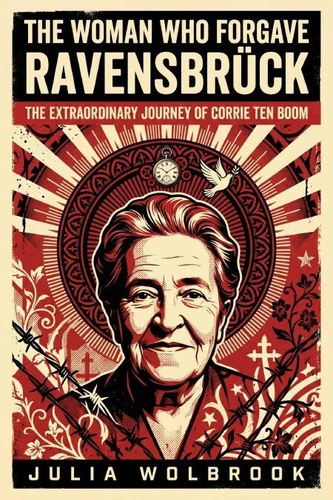
The Woman Who Forgave Ravensbrück The Extraordinary Journey of Corrie ten Boom
Par :Formats :
Disponible dans votre compte client Decitre ou Furet du Nord dès validation de votre commande. Le format ePub est :
- Compatible avec une lecture sur My Vivlio (smartphone, tablette, ordinateur)
- Compatible avec une lecture sur liseuses Vivlio
- Pour les liseuses autres que Vivlio, vous devez utiliser le logiciel Adobe Digital Edition. Non compatible avec la lecture sur les liseuses Kindle, Remarkable et Sony
 , qui est-ce ?
Notre partenaire de plateforme de lecture numérique où vous retrouverez l'ensemble de vos ebooks gratuitement
Pour en savoir plus sur nos ebooks, consultez notre aide en ligne ici
C'est si simple ! Lisez votre ebook avec l'app Vivlio sur votre tablette, mobile ou ordinateur :

- FormatePub
- ISBN8235156807
- EAN9798235156807
- Date de parution12/06/2026
- Protection num.pas de protection
- Infos supplémentairesepub
- ÉditeurIoakim Ioakim
Résumé
They took everything. Her home. Her family. Her freedom. They could not take her faith. In the winter of 1944, Cornelia "Corrie" ten Boom entered the iron gates of Ravensbrück, Nazi Germany's most feared concentration camp for women. She arrived as prisoner 66730. She would leave as something the Reich had never anticipated: a witness. A vessel of grace. An impossibility. This is not merely a story of survival.
Survival is animal. What Corrie ten Boom achieved was something rarer, more demanding, and more shattering: forgiveness. Not the polite, distant kind offered from the safety of years and miles. But the raw, trembling, face-to-face forgiveness extended to the very men who had operated the showers, guarded the barracks, and watched her sister Betsie die on the frozen ground of Barrack 28. The Woman Who Forgave Ravensbrück traces the extraordinary arc of a watchmaker's daughter from Haarlem who hid Jewish families beneath the floorboards of her father's clock shop, and paid for that love in the currency of suffering.
It follows her through the labyrinth of Scheveningen Prison, the processing horrors of Vught, and finally into the grey, starving darkness of Ravensbrück itself, where faith was either buried or forged into something unbreakable. But the journey does not end at liberation. The real pilgrimage begins after the gates open, when Corrie must carry Betsie's dying words into a world still raw with hatred: "There is no pit so deep that God's love is not deeper still." When she must stand in postwar Germany and build rehabilitation homes for the broken.
And when she must one day reach across a crowded room and take the hand of a former SS guard who does not deserve it, and give it anyway. This is the account of a woman who refused the comfortable martyrdom of bitterness. Who understood, at tremendous personal cost, that forgiveness is not the absolution of evil; it is the liberation of the self from evil's lasting power. Corrie ten Boom did not survive Ravensbrück.
She transcended it. For readers of Viktor Frankl, Elie Wiesel, and Dietrich Bonhoeffer, a testament to the most radical act a human being can perform.
Survival is animal. What Corrie ten Boom achieved was something rarer, more demanding, and more shattering: forgiveness. Not the polite, distant kind offered from the safety of years and miles. But the raw, trembling, face-to-face forgiveness extended to the very men who had operated the showers, guarded the barracks, and watched her sister Betsie die on the frozen ground of Barrack 28. The Woman Who Forgave Ravensbrück traces the extraordinary arc of a watchmaker's daughter from Haarlem who hid Jewish families beneath the floorboards of her father's clock shop, and paid for that love in the currency of suffering.
It follows her through the labyrinth of Scheveningen Prison, the processing horrors of Vught, and finally into the grey, starving darkness of Ravensbrück itself, where faith was either buried or forged into something unbreakable. But the journey does not end at liberation. The real pilgrimage begins after the gates open, when Corrie must carry Betsie's dying words into a world still raw with hatred: "There is no pit so deep that God's love is not deeper still." When she must stand in postwar Germany and build rehabilitation homes for the broken.
And when she must one day reach across a crowded room and take the hand of a former SS guard who does not deserve it, and give it anyway. This is the account of a woman who refused the comfortable martyrdom of bitterness. Who understood, at tremendous personal cost, that forgiveness is not the absolution of evil; it is the liberation of the self from evil's lasting power. Corrie ten Boom did not survive Ravensbrück.
She transcended it. For readers of Viktor Frankl, Elie Wiesel, and Dietrich Bonhoeffer, a testament to the most radical act a human being can perform.
A propos de Julia Wolbrook







2,99 €