Thalia Brookstone is a nonfiction author known for writing reflective books on psychology, personal growth, and emotional balance. Her work blends modern behavioral insights with calm, thoughtful storytelling, encouraging readers to approach life with greater self-awareness, resilience, and clarity.
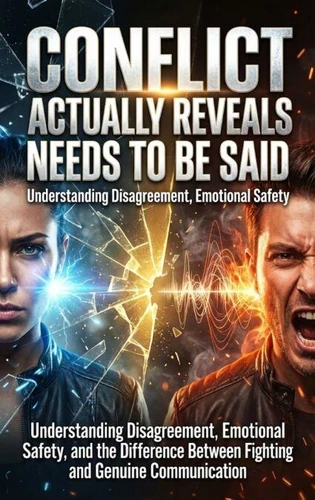
Conflict Actually Reveals What Needs to Be Said. Understanding Disagreement, Emotional Safety, and the Difference Between Fighting and Genuine Communication
Par :Formats :
Disponible dans votre compte client Decitre ou Furet du Nord dès validation de votre commande. Le format ePub est :
- Compatible avec une lecture sur My Vivlio (smartphone, tablette, ordinateur)
- Compatible avec une lecture sur liseuses Vivlio
- Pour les liseuses autres que Vivlio, vous devez utiliser le logiciel Adobe Digital Edition. Non compatible avec la lecture sur les liseuses Kindle, Remarkable et Sony
 , qui est-ce ?
Notre partenaire de plateforme de lecture numérique où vous retrouverez l'ensemble de vos ebooks gratuitement
Pour en savoir plus sur nos ebooks, consultez notre aide en ligne ici
C'est si simple ! Lisez votre ebook avec l'app Vivlio sur votre tablette, mobile ou ordinateur :

- Nombre de pages162
- FormatePub
- ISBN978-3-565-20816-6
- EAN9783565208166
- Date de parution29/01/2026
- Protection num.pas de protection
- Taille1 Mo
- Infos supplémentairesepub
- ÉditeurEmphaloz Publishing House
Résumé
This book explores conflict not as relationship damage to avoid, but as information surfacing about unmet needs, misaligned expectations, or suppressed truths. It examines the patterns beneath conflict avoidance, destructive arguments, and the fear of honest disagreement, reframing conflict as an opportunity for deeper understanding rather than proof of incompatibility.
Rather than offering communication scripts or conflict resolution techniques, this book invites you to understand what actually happens in your nervous system during disagreement-why some people shut down while others escalate, and how early relational patterns shape your capacity to stay present when tension arises.
It explores the difference between conflict that damages connection and conflict that clarifies needs both people were afraid to name. Through psychological insight into communication patterns, emotional regulation during disagreement, and the role of repair after rupture, this book offers a compassionate alternative to both conflict avoidance and destructive fighting. It examines how healthy conflict requires the ability to tolerate discomfort, speak difficult truths without weaponizing them, and recognize when disagreement signals genuine incompatibility versus simply unfamiliar intimacy.
The goal isn't eliminating conflict-it's learning to disagree without abandoning yourself or damaging the other person.
It explores the difference between conflict that damages connection and conflict that clarifies needs both people were afraid to name. Through psychological insight into communication patterns, emotional regulation during disagreement, and the role of repair after rupture, this book offers a compassionate alternative to both conflict avoidance and destructive fighting. It examines how healthy conflict requires the ability to tolerate discomfort, speak difficult truths without weaponizing them, and recognize when disagreement signals genuine incompatibility versus simply unfamiliar intimacy.
The goal isn't eliminating conflict-it's learning to disagree without abandoning yourself or damaging the other person.