Thalia Brookstone is a nonfiction author known for writing reflective books on psychology, personal growth, and emotional balance. Her work blends modern behavioral insights with calm, thoughtful storytelling, encouraging readers to approach life with greater self-awareness, resilience, and clarity.
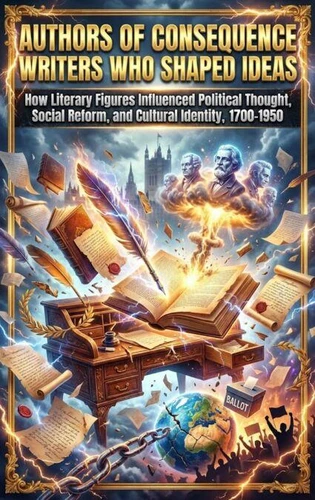
Authors of Consequence: Writers Who Shaped Ideas. How Literary Figures Influenced Political Thought, Social Reform, and Cultural Identity, 1700-1950
Par :Formats :
Disponible dans votre compte client Decitre ou Furet du Nord dès validation de votre commande. Le format ePub est :
- Compatible avec une lecture sur My Vivlio (smartphone, tablette, ordinateur)
- Compatible avec une lecture sur liseuses Vivlio
- Pour les liseuses autres que Vivlio, vous devez utiliser le logiciel Adobe Digital Edition. Non compatible avec la lecture sur les liseuses Kindle, Remarkable et Sony
 , qui est-ce ?
Notre partenaire de plateforme de lecture numérique où vous retrouverez l'ensemble de vos ebooks gratuitement
Pour en savoir plus sur nos ebooks, consultez notre aide en ligne ici
C'est si simple ! Lisez votre ebook avec l'app Vivlio sur votre tablette, mobile ou ordinateur :

- Nombre de pages236
- FormatePub
- ISBN978-3-565-25271-8
- EAN9783565252718
- Date de parution16/02/2026
- Protection num.pas de protection
- Taille2 Mo
- Infos supplémentairesepub
- ÉditeurEmphaloz Publishing House
Résumé
Certain writers transcended literary fame to become intellectual forces whose ideas reshaped politics, morality, and social structures. This exploration examines authors whose works catalyzed movements beyond literature, using correspondence, publication histories, and contemporary reception to reconstruct how individual writers achieved influence that extended from private reading to public policy.
From Voltaire's challenge to religious authority to Mary Wollstonecraft's case for women's rights, from Émile Zola's intervention in the Dreyfus Affair to George Orwell's critique of totalitarianism, discover how these figures positioned themselves as public intellectuals addressing urgent social questions.
Examine the networks they cultivated-salons, publishing houses, political movements, international correspondences-that amplified their influence beyond their immediate audiences. Documentary evidence-private letters, censorship records, critical reviews, political speeches citing their work-reveals how writers navigated the tension between artistic autonomy and political engagement. Contemporary responses show how different audiences appropriated their ideas, sometimes transforming authorial intentions into movements writers never anticipated or endorsed. Each case study analyzes specific mechanisms of intellectual influence.
Understand how writers gained credibility through literary achievement before leveraging that authority for political intervention, how controversial works generated publicity that expanded readership, how translation networks carried ideas across linguistic boundaries, and how educational canonization ensured lasting impact beyond authors' lifetimes.
Examine the networks they cultivated-salons, publishing houses, political movements, international correspondences-that amplified their influence beyond their immediate audiences. Documentary evidence-private letters, censorship records, critical reviews, political speeches citing their work-reveals how writers navigated the tension between artistic autonomy and political engagement. Contemporary responses show how different audiences appropriated their ideas, sometimes transforming authorial intentions into movements writers never anticipated or endorsed. Each case study analyzes specific mechanisms of intellectual influence.
Understand how writers gained credibility through literary achievement before leveraging that authority for political intervention, how controversial works generated publicity that expanded readership, how translation networks carried ideas across linguistic boundaries, and how educational canonization ensured lasting impact beyond authors' lifetimes.