Specializes in historical investigations covering political intrigue, exploration, and forgotten turning points in world history.
Nouveauté
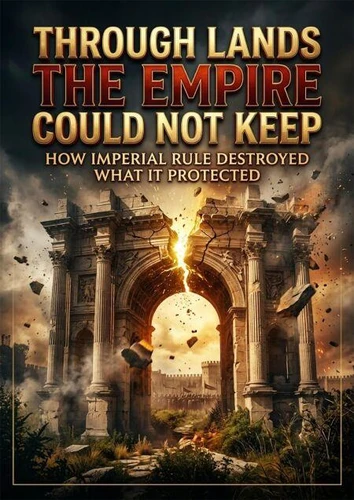
Through lands the empire could not keep. How imperial rule destroyed what it protected
Par :Formats :
Disponible dans votre compte client Decitre ou Furet du Nord dès validation de votre commande. Le format ePub est :
- Compatible avec une lecture sur My Vivlio (smartphone, tablette, ordinateur)
- Compatible avec une lecture sur liseuses Vivlio
- Pour les liseuses autres que Vivlio, vous devez utiliser le logiciel Adobe Digital Edition. Non compatible avec la lecture sur les liseuses Kindle, Remarkable et Sony
 , qui est-ce ?
Notre partenaire de plateforme de lecture numérique où vous retrouverez l'ensemble de vos ebooks gratuitement
Pour en savoir plus sur nos ebooks, consultez notre aide en ligne ici
C'est si simple ! Lisez votre ebook avec l'app Vivlio sur votre tablette, mobile ou ordinateur :

- Nombre de pages151
- FormatePub
- ISBN978-3-565-59041-4
- EAN9783565590414
- Date de parution26/07/2026
- Protection num.pas de protection
- Taille1 Mo
- Infos supplémentairesepub
- ÉditeurEmphaloz Publishing House
Résumé
The Roman Empire did not fall because of barbarians. It fell because its own administrative machinery became too heavy for the body it governed. This book examines the transformation of Western civilization through the lens of Roman political and economic institutions-tax systems that crushed provincial farmers, legal codes that favored the rich, and bureaucratic overspill that turned citizens into subjects.
It argues that the empire's greatest enemy was its own success: the scale required to manage a Mediterranean superstate created inefficiencies that no emperor could fix. By looking at how local elites abandoned imperial service, how currency debasement wrecked trade, and how frontier defense became a drain on the treasury, the book reveals a system that exhausted itself before any enemy could claim victory.
The legacy of this collapse shaped medieval Europe's decentralized power structures and the modern state's obsession with control. For readers of Roman history, political science, and institutional theory.
It argues that the empire's greatest enemy was its own success: the scale required to manage a Mediterranean superstate created inefficiencies that no emperor could fix. By looking at how local elites abandoned imperial service, how currency debasement wrecked trade, and how frontier defense became a drain on the treasury, the book reveals a system that exhausted itself before any enemy could claim victory.
The legacy of this collapse shaped medieval Europe's decentralized power structures and the modern state's obsession with control. For readers of Roman history, political science, and institutional theory.