Specializes in historical investigations covering political intrigue, exploration, and forgotten turning points in world history.
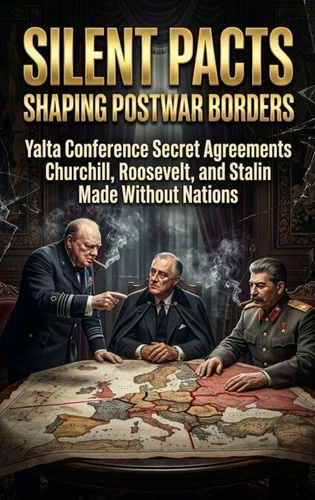
Silent Pacts Shaping Postwar Borders. Yalta Conference Secret Agreements Churchill, Roosevelt, and Stalin Made Without Nations
Par :Formats :
Disponible dans votre compte client Decitre ou Furet du Nord dès validation de votre commande. Le format ePub est :
- Compatible avec une lecture sur My Vivlio (smartphone, tablette, ordinateur)
- Compatible avec une lecture sur liseuses Vivlio
- Pour les liseuses autres que Vivlio, vous devez utiliser le logiciel Adobe Digital Edition. Non compatible avec la lecture sur les liseuses Kindle, Remarkable et Sony
 , qui est-ce ?
Notre partenaire de plateforme de lecture numérique où vous retrouverez l'ensemble de vos ebooks gratuitement
Pour en savoir plus sur nos ebooks, consultez notre aide en ligne ici
C'est si simple ! Lisez votre ebook avec l'app Vivlio sur votre tablette, mobile ou ordinateur :

- Nombre de pages187
- FormatePub
- ISBN978-3-565-45190-6
- EAN9783565451906
- Date de parution21/05/2026
- Protection num.pas de protection
- Taille1 Mo
- Infos supplémentairesepub
- ÉditeurEmphaloz Publishing House
Résumé
This book investigates how silent pacts shape postwar borders when secret agreements are made among Allied leaders without the participation of affected nations. The Yalta Conference produced private arrangements that altered territorial expectations and influenced the subsequent division of Europe and Asia, raising questions about legitimacy and lasting stability.
The flow of sensitive information remained confined to a small inner circle of leaders and advisors, limiting broader scrutiny while enabling swift agreement on confidential points.
This compartmentalization meant that military diplomats and foreign offices operated without knowledge of the secret protocols, creating a gap between public negotiations and private commitments. Leaders exercised top-down authority to approve clandestine arrangements, binding their administrations to outcomes that had not undergone open parliamentary or cabinet debate. Once ratified at the highest level, lower-level officials implemented the territorial shifts even when they conflicted with prior understandings or public statements. Each participant pursued distinct strategic gains: the United States sought Soviet entry into the Pacific war to offset anticipated casualties, the Soviet Union secured territorial concessions and a sphere of influence in East Asia, and the United Kingdom aimed to preserve its postwar influence despite being excluded from the Pacific negotiation.
This compartmentalization meant that military diplomats and foreign offices operated without knowledge of the secret protocols, creating a gap between public negotiations and private commitments. Leaders exercised top-down authority to approve clandestine arrangements, binding their administrations to outcomes that had not undergone open parliamentary or cabinet debate. Once ratified at the highest level, lower-level officials implemented the territorial shifts even when they conflicted with prior understandings or public statements. Each participant pursued distinct strategic gains: the United States sought Soviet entry into the Pacific war to offset anticipated casualties, the Soviet Union secured territorial concessions and a sphere of influence in East Asia, and the United Kingdom aimed to preserve its postwar influence despite being excluded from the Pacific negotiation.