SOLDES
Jusqu'à -70% sur une sélection d'articles*

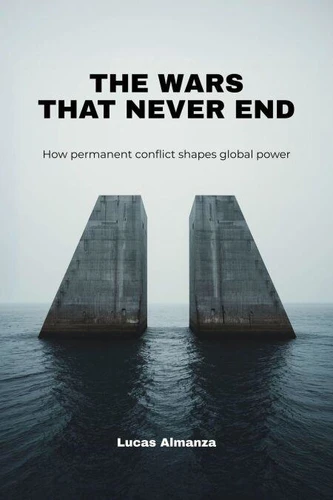
The Wars That Never End: How Permanent Conflict Shapes Global Power
Par :Formats :
Disponible dans votre compte client Decitre ou Furet du Nord dès validation de votre commande. Le format ePub est :
- Compatible avec une lecture sur My Vivlio (smartphone, tablette, ordinateur)
- Compatible avec une lecture sur liseuses Vivlio
- Pour les liseuses autres que Vivlio, vous devez utiliser le logiciel Adobe Digital Edition. Non compatible avec la lecture sur les liseuses Kindle, Remarkable et Sony
 , qui est-ce ?
Notre partenaire de plateforme de lecture numérique où vous retrouverez l'ensemble de vos ebooks gratuitement
Pour en savoir plus sur nos ebooks, consultez notre aide en ligne ici
C'est si simple ! Lisez votre ebook avec l'app Vivlio sur votre tablette, mobile ou ordinateur :

- FormatePub
- ISBN8233923951
- EAN9798233923951
- Date de parution23/01/2026
- Protection num.pas de protection
- Infos supplémentairesepub
- ÉditeurLinda Balsamo
Résumé
"Some wars are not meant to be won. They are meant to be kept alive." In a world that prizes resolution and peace treaties, why do so many conflicts remain frozen for decades? In The Wars That Never End, Lucas Almanza provides a cold, strategically literate re-examination of the modern international system, arguing that frozen conflicts are not diplomatic failures-they are deliberate strategic outcomes.
From the Caucasus to the South China Sea, permanent, unresolved war has become a highly effective tool of power, allowing great powers to manage borders, discipline allies, and control escalation without the costs of total victory or the risks of a settled peace. Moving with the analytical sweep of The Tragedy of Great Power Politics and the clarity of a Caspian Report briefing, Almanza dismantles the humanitarian myth of war.
He explores the "Strategic Value of Permanent War, " revealing how undefined borders act as a deterrent to foreign investment and a permanent anchor for national insecurity. Through chapters on "Great Powers and Managed Instability" and "The Economy of Stalemate, " the book investigates how local elites and international institutions often find the "process" of negotiation more useful-and safer-than the finality of a settlement.
The Wars That Never End is a vital roadmap for a multipolar world where decisive endings are increasingly rare. Almanza analyzes how modern technology-drones, precision strikes, and total surveillance-allows states to calibrate violence with surgical accuracy, keeping conflicts alive without letting them tip into total war. By understanding that uncertainty is a strategic asset, we can see the world not as a series of failed peace processes, but as a governed system of controlled instability.
This is an essential inquiry for anyone ready to look past the headlines and understand the silent instruments of power that shape our world long after the shooting stops.
From the Caucasus to the South China Sea, permanent, unresolved war has become a highly effective tool of power, allowing great powers to manage borders, discipline allies, and control escalation without the costs of total victory or the risks of a settled peace. Moving with the analytical sweep of The Tragedy of Great Power Politics and the clarity of a Caspian Report briefing, Almanza dismantles the humanitarian myth of war.
He explores the "Strategic Value of Permanent War, " revealing how undefined borders act as a deterrent to foreign investment and a permanent anchor for national insecurity. Through chapters on "Great Powers and Managed Instability" and "The Economy of Stalemate, " the book investigates how local elites and international institutions often find the "process" of negotiation more useful-and safer-than the finality of a settlement.
The Wars That Never End is a vital roadmap for a multipolar world where decisive endings are increasingly rare. Almanza analyzes how modern technology-drones, precision strikes, and total surveillance-allows states to calibrate violence with surgical accuracy, keeping conflicts alive without letting them tip into total war. By understanding that uncertainty is a strategic asset, we can see the world not as a series of failed peace processes, but as a governed system of controlled instability.
This is an essential inquiry for anyone ready to look past the headlines and understand the silent instruments of power that shape our world long after the shooting stops.
A propos de Lucas Almanza
3,49 €
4,49 €

4,49 €