SOLDES
Jusqu'à -70% sur une sélection d'articles*

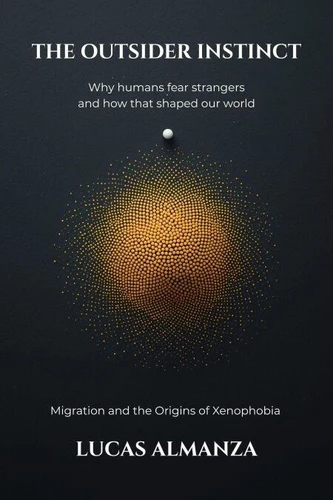
The Outsider Instinct: Why Humans Fear Strangers and How That Shaped Our World. Migration and the Origins of Xenophobia
Par :Formats :
Disponible dans votre compte client Decitre ou Furet du Nord dès validation de votre commande. Le format ePub est :
- Compatible avec une lecture sur My Vivlio (smartphone, tablette, ordinateur)
- Compatible avec une lecture sur liseuses Vivlio
- Pour les liseuses autres que Vivlio, vous devez utiliser le logiciel Adobe Digital Edition. Non compatible avec la lecture sur les liseuses Kindle, Remarkable et Sony
 , qui est-ce ?
Notre partenaire de plateforme de lecture numérique où vous retrouverez l'ensemble de vos ebooks gratuitement
Pour en savoir plus sur nos ebooks, consultez notre aide en ligne ici
C'est si simple ! Lisez votre ebook avec l'app Vivlio sur votre tablette, mobile ou ordinateur :

- FormatePub
- ISBN8232854157
- EAN9798232854157
- Date de parution22/01/2026
- Protection num.pas de protection
- Infos supplémentairesepub
- ÉditeurDraft2Digital
Résumé
"The human brain evolved for tribes, not mass societies." Fear of the outsider is one of our oldest survival mechanisms-a reflex shaped by thousands of generations of resource scarcity, disease risk, and intergroup competition. In Why Humans Fear Outsiders, Lucas Almanza provides a calm, non-judgmental re-examination of xenophobia, arguing that it is not primarily a moral failure or a political choice, but an ancient evolutionary adaptation.
By stepping away from modern ideological shouting, Almanza reveals how the "Stranger Near the Fire" continues to activate the same psychological systems that once protected small hunter-gatherer groups from uncertainty. Moving with the analytical sweep of Sapiens and the neurological precision of Behave, this book explores the "Tribal Brain" and the default cognition of us-versus-them categorization.
Almanza investigates the "Behavioral Immune System"-the fascinating link between pathogen avoidance and the primal fear of unfamiliar groups-and explains why abundance reduces fear while scarcity amplifies it. He argues that modern migration acts as a psychological stress test; because humans evolved for gradual change, the unprecedented scale and speed of 21st-century demographic shifts can overwhelm our biological capacity for adaptation.
Why Humans Fear Outsiders is a vital roadmap for a crowded world. Almanza challenges the notion that shaming an instinct can eliminate it, proposing instead that stable societies are built by structuring systems around human nature rather than ignoring it. From managing tribal instincts to building identity without hostility, this investigation offers a way to think about migration that is rooted in realism rather than slogans.
Understanding our ancient fears is not about excusing harm-it is the first necessary step to reducing conflict in a globalized era where our future depends on understanding the mind that made us.
By stepping away from modern ideological shouting, Almanza reveals how the "Stranger Near the Fire" continues to activate the same psychological systems that once protected small hunter-gatherer groups from uncertainty. Moving with the analytical sweep of Sapiens and the neurological precision of Behave, this book explores the "Tribal Brain" and the default cognition of us-versus-them categorization.
Almanza investigates the "Behavioral Immune System"-the fascinating link between pathogen avoidance and the primal fear of unfamiliar groups-and explains why abundance reduces fear while scarcity amplifies it. He argues that modern migration acts as a psychological stress test; because humans evolved for gradual change, the unprecedented scale and speed of 21st-century demographic shifts can overwhelm our biological capacity for adaptation.
Why Humans Fear Outsiders is a vital roadmap for a crowded world. Almanza challenges the notion that shaming an instinct can eliminate it, proposing instead that stable societies are built by structuring systems around human nature rather than ignoring it. From managing tribal instincts to building identity without hostility, this investigation offers a way to think about migration that is rooted in realism rather than slogans.
Understanding our ancient fears is not about excusing harm-it is the first necessary step to reducing conflict in a globalized era where our future depends on understanding the mind that made us.
A propos de Lucas Almanza






3,49 €

4,49 €


4,49 €