SOLDES
Jusqu'à -70% sur une sélection d'articles*

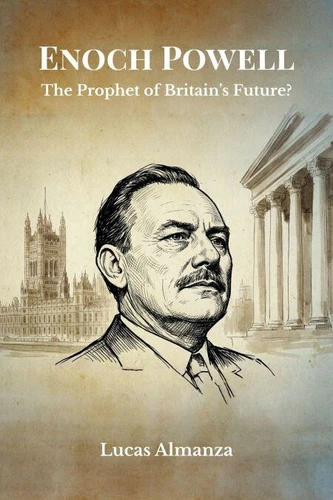
Enoch Powell: The Prophet of Britain’s Future?
Par :Formats :
Disponible dans votre compte client Decitre ou Furet du Nord dès validation de votre commande. Le format ePub est :
- Compatible avec une lecture sur My Vivlio (smartphone, tablette, ordinateur)
- Compatible avec une lecture sur liseuses Vivlio
- Pour les liseuses autres que Vivlio, vous devez utiliser le logiciel Adobe Digital Edition. Non compatible avec la lecture sur les liseuses Kindle, Remarkable et Sony
 , qui est-ce ?
Notre partenaire de plateforme de lecture numérique où vous retrouverez l'ensemble de vos ebooks gratuitement
Pour en savoir plus sur nos ebooks, consultez notre aide en ligne ici
C'est si simple ! Lisez votre ebook avec l'app Vivlio sur votre tablette, mobile ou ordinateur :

- FormatePub
- ISBN8233269639
- EAN9798233269639
- Date de parution14/01/2026
- Protection num.pas de protection
- Infos supplémentairesepub
- ÉditeurLinda Balsamo
Résumé
"He believed he was giving a prophecy. Britain heard an outrage." April 1968: Enoch Powell stands at a podium in Birmingham and delivers the "Rivers of Blood" speech-a forensic, classically-charged detonation that instantly ended his career while making him the most popular man in England. In Enoch Powell: The Prophet of Britain's Future?, Lucas Almanza provides a cerebral and balanced re-examination of a man who was more than a caricature of a racist demagogue.
Powell was a brilliant classicist, a brigadier at 32, and a formidable intellect who viewed the modern world through the tragic lens of Thucydides and the fragile destiny of nations. Moving beyond the tribal left/right narratives, Almanza explores the "Prophet of Identity" who warned that multiculturalism and the erosion of national sovereignty would fracture Britain's emotional unity. While the establishment reviled him, polls at the time suggested that between 67% and 82% of the British population agreed with his sentiments, highlighting a massive "confidence gap" between the elite and the public.
This biography treats Powell as a historian of decline, tracing his path from an obsessed scholar of the British Empire to the intellectual father of Euroscepticism-foreshadowing the arguments that would eventually lead to Brexit decades before the term existed. Enoch Powell: The Prophet of Britain's Future? does not seek to redeem or condemn, but to understand. It asks the uncomfortable question: Were Powell's warnings about community fragmentation and the loss of a "shared grammar of belonging" accurate predictions or self-fulfilling prophecies? By comparing Powell's 1968 projections-where he estimated the Commonwealth-descended population would reach 5 to 7 million by the year 2000-with the reality of 21st-century demographics, Almanza offers a masterclass in political theory and cultural criticism.
This is a literary, morally serious roadmap for anyone ready to examine the man who spoke like a poet to a world that wanted an accountant.
Powell was a brilliant classicist, a brigadier at 32, and a formidable intellect who viewed the modern world through the tragic lens of Thucydides and the fragile destiny of nations. Moving beyond the tribal left/right narratives, Almanza explores the "Prophet of Identity" who warned that multiculturalism and the erosion of national sovereignty would fracture Britain's emotional unity. While the establishment reviled him, polls at the time suggested that between 67% and 82% of the British population agreed with his sentiments, highlighting a massive "confidence gap" between the elite and the public.
This biography treats Powell as a historian of decline, tracing his path from an obsessed scholar of the British Empire to the intellectual father of Euroscepticism-foreshadowing the arguments that would eventually lead to Brexit decades before the term existed. Enoch Powell: The Prophet of Britain's Future? does not seek to redeem or condemn, but to understand. It asks the uncomfortable question: Were Powell's warnings about community fragmentation and the loss of a "shared grammar of belonging" accurate predictions or self-fulfilling prophecies? By comparing Powell's 1968 projections-where he estimated the Commonwealth-descended population would reach 5 to 7 million by the year 2000-with the reality of 21st-century demographics, Almanza offers a masterclass in political theory and cultural criticism.
This is a literary, morally serious roadmap for anyone ready to examine the man who spoke like a poet to a world that wanted an accountant.
A propos de Lucas Almanza



3,49 €


4,49 €