SOLDES
Jusqu'à -70% sur une sélection d'articles*

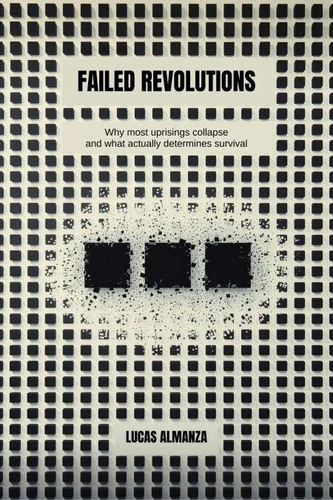
Failed Revolutions: Why most uprisings collapse — and what actually determines survival
Par :Formats :
Disponible dans votre compte client Decitre ou Furet du Nord dès validation de votre commande. Le format ePub est :
- Compatible avec une lecture sur My Vivlio (smartphone, tablette, ordinateur)
- Compatible avec une lecture sur liseuses Vivlio
- Pour les liseuses autres que Vivlio, vous devez utiliser le logiciel Adobe Digital Edition. Non compatible avec la lecture sur les liseuses Kindle, Remarkable et Sony
 , qui est-ce ?
Notre partenaire de plateforme de lecture numérique où vous retrouverez l'ensemble de vos ebooks gratuitement
Pour en savoir plus sur nos ebooks, consultez notre aide en ligne ici
C'est si simple ! Lisez votre ebook avec l'app Vivlio sur votre tablette, mobile ou ordinateur :

- FormatePub
- ISBN8233314933
- EAN9798233314933
- Date de parution23/01/2026
- Protection num.pas de protection
- Infos supplémentairesepub
- ÉditeurLinda Balsamo
Résumé
"Revolutions rarely fail because people lack courage. They fail because power structures survive shock." We live in an era of unprecedented global mobilization, yet most uprisings today end not in liberation, but in restoration, repression, or state collapse. In Failed Revolutions, Lucas Almanza provides a cold, unsensational, and structural re-examination of why the energy of the street so rarely dismantles the systems beneath.
Moving beyond the romantic myths of "People Power, " Almanza argues that a revolution is not an explosion of anger-it is a transfer of authority-and history is moved not by crowds alone, but by whoever controls the administrative machinery once the square empties. Moving with the analytical clarity of a Caspian Report briefing and the historical weight of The Anatomy of Revolution, this book dismantles the "Romance of Spontaneity." Almanza investigates the "Protest Trap" of the 21st century, revealing how modern surveillance and preemptive repression allow states to see uprisings forming before they even arrive.
Through a forensic look at the "Elite Defection Threshold, " he explains why the security services-not the protesters-are the ultimate arbiters of change. If the guns don't change sides and the bureaucracy doesn't shift its loyalty, the regime will almost always absorb the chaos. Failed Revolutions is a vital roadmap for anyone trying to understand the disconnect between visibility and power. Almanza explores why "leaderless" movements are genetically incapable of seizing a state and why the most successful revolutions are, ironically, the most conservative in their preservation of institutions.
From the frozen conflicts of the Middle East to the burnout cycles of modern activism, this investigation reveals that hope alone cannot defeat structure. This is an essential inquiry for those ready to confront the sober truth: the state remains long after the protest ends, and only those who understand its architecture can hope to change it.
Moving beyond the romantic myths of "People Power, " Almanza argues that a revolution is not an explosion of anger-it is a transfer of authority-and history is moved not by crowds alone, but by whoever controls the administrative machinery once the square empties. Moving with the analytical clarity of a Caspian Report briefing and the historical weight of The Anatomy of Revolution, this book dismantles the "Romance of Spontaneity." Almanza investigates the "Protest Trap" of the 21st century, revealing how modern surveillance and preemptive repression allow states to see uprisings forming before they even arrive.
Through a forensic look at the "Elite Defection Threshold, " he explains why the security services-not the protesters-are the ultimate arbiters of change. If the guns don't change sides and the bureaucracy doesn't shift its loyalty, the regime will almost always absorb the chaos. Failed Revolutions is a vital roadmap for anyone trying to understand the disconnect between visibility and power. Almanza explores why "leaderless" movements are genetically incapable of seizing a state and why the most successful revolutions are, ironically, the most conservative in their preservation of institutions.
From the frozen conflicts of the Middle East to the burnout cycles of modern activism, this investigation reveals that hope alone cannot defeat structure. This is an essential inquiry for those ready to confront the sober truth: the state remains long after the protest ends, and only those who understand its architecture can hope to change it.
A propos de Lucas Almanza




3,49 €

4,49 €


4,49 €