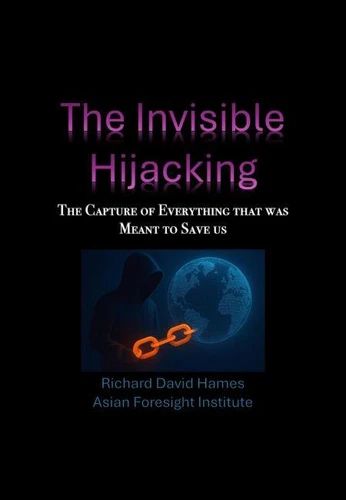
For well over fifty years, we've gathered at summits, signed accords, and launched initiatives-yet the crises keep deepening. Not because we lack good ideas, but because our world-system doesn't simply resist change; it absorbs it. That's the hijacking syndrome: genuinely transformative ideas are stripped of their disruptive core, repackaged in the language of industrial economism, and sold back as progress.
The Invisible Hijacking offers a way out. It introduces the three orders of change-first-order tweaks and second-order redesigns aren't enough. What's needed is metamorphosis: dissolving the foundational assumptions of our predatory paradigm so that something genuinely new can emerge. That something is already present, carried by imaginal cells-the communities, practices, and initiatives quietly building a different world beneath the surface of the old one.
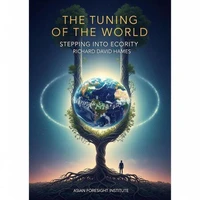
That new orientation is Ecority: a civilisational compass and operating system rooted in six interwoven domains-politics, economics, culture, society, spirituality, and our relationship with the living world. At its heart is the Trimunia, three simple questions to guide every decision: Is it good for the children (all generations)? Is it good for the biosphere? Is it good for each other?This isn't another book on public policy or a list of incremental fixes.
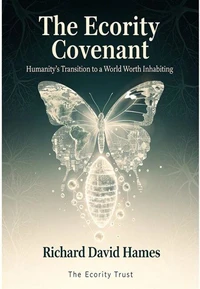
It's a map of the assumptions that keep us stuck and a portrait of what becomes possible when we finally let go of the story that "more" is always better. The caterpillar doesn't become a better caterpillar. It surrenders its form to become a butterfly. Our civilisational metamorphosis has already begun.
For well over fifty years, we've gathered at summits, signed accords, and launched initiatives-yet the crises keep deepening. Not because we lack good ideas, but because our world-system doesn't simply resist change; it absorbs it. That's the hijacking syndrome: genuinely transformative ideas are stripped of their disruptive core, repackaged in the language of industrial economism, and sold back as progress.
The Invisible Hijacking offers a way out. It introduces the three orders of change-first-order tweaks and second-order redesigns aren't enough. What's needed is metamorphosis: dissolving the foundational assumptions of our predatory paradigm so that something genuinely new can emerge. That something is already present, carried by imaginal cells-the communities, practices, and initiatives quietly building a different world beneath the surface of the old one.
That new orientation is Ecority: a civilisational compass and operating system rooted in six interwoven domains-politics, economics, culture, society, spirituality, and our relationship with the living world. At its heart is the Trimunia, three simple questions to guide every decision: Is it good for the children (all generations)? Is it good for the biosphere? Is it good for each other?This isn't another book on public policy or a list of incremental fixes.
It's a map of the assumptions that keep us stuck and a portrait of what becomes possible when we finally let go of the story that "more" is always better. The caterpillar doesn't become a better caterpillar. It surrenders its form to become a butterfly. Our civilisational metamorphosis has already begun.

 , qui est-ce ?