SOLDES
Jusqu'à -70% sur une sélection d'articles*
- Accueil /
- Richard David Hames
Richard David Hames

Dernière sortie
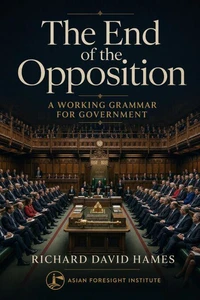
The End Of The Opposition
Switch on the parliament during a sitting evening and watch for an hour. What you are watching is a combat - choreographed, rehearsed, performed for the cameras - and somewhere inside it, almost invisible, the actual business of running a country. We have worn one word, politics, over two different activities for so long that we no longer notice they have come apart: the contest for power, and the work of governing.
And we have mistaken the decay of the first for the failure of the second. The End of the Opposition argues that what we lament about public life is not politics behaving badly but a structure behaving exactly as it was built to behave. The adversarial arrangement - the facing benches, the capital-letter Opposition, the binary that turns every question into two warring sides - is not the natural shape of democracy.
It's a set of inherited and largely accidental practices, most of them younger than we imagine, that breed division as reliably as a fertile soil breeds its own kind. None of it is essential to government. All of it can be redesigned. Drawing on a working life spent inside the machinery of collective decision - in government, in institutions, and in the building of MiVote, an ambitious attempt at democratic renewal whose failure taught him more than success could have - Richard David Hames separates the visible franchise of democracy from the living substrate beneath it: the shared reality, the common language, the trust to lose an election and remain, the sense of a single people with problems held in common.
The franchise can stand intact while the substrate quietly erodes - which is, he argues, the actual condition of much of the democratic world, and one our entire political vocabulary is ill-equipped to describe. The book traces that erosion across three figures who have grasped what the political class has not: the authoritarian state that manufactures unity by abolishing the contest, the populist who manufactures it by inflaming the contest, and the reformer who tries, and fails, to rebuild the common ground itself.
Two of these cures are toxic; the third is only unfinished. From the honest failure of the third comes a different way of thinking about government altogether - not as a machine to be engineered but as a soil to be cultivated, not as conquest but as navigation into a future no one can yet see. What follows is concrete: retire the Opposition and keep the scrutiny; replace debate with inquiry; reshape the room and loosen the whip; starve the economy of sensation of the conflict it mines.
And, hardest of all, learn to grow the common ground a people governs from rather than only mourn its loss. Hames offers no perfect system - he distrusts anyone who claims one - but a set of tests by which any cure for our politics can be judged, the reader's to keep long after the book is closed. Neither lament nor reassurance, The End of the Opposition is an argument written to be of equal use to the citizen who senses something mean and pointless conducted in their name, the capable insider who knows the theatre is hollow, and the scholar of how we govern ourselves.
It ends not where the reader expects to be taken - with the death of one concept of democracy, and the possible beginning of its recovery.
And we have mistaken the decay of the first for the failure of the second. The End of the Opposition argues that what we lament about public life is not politics behaving badly but a structure behaving exactly as it was built to behave. The adversarial arrangement - the facing benches, the capital-letter Opposition, the binary that turns every question into two warring sides - is not the natural shape of democracy.
It's a set of inherited and largely accidental practices, most of them younger than we imagine, that breed division as reliably as a fertile soil breeds its own kind. None of it is essential to government. All of it can be redesigned. Drawing on a working life spent inside the machinery of collective decision - in government, in institutions, and in the building of MiVote, an ambitious attempt at democratic renewal whose failure taught him more than success could have - Richard David Hames separates the visible franchise of democracy from the living substrate beneath it: the shared reality, the common language, the trust to lose an election and remain, the sense of a single people with problems held in common.
The franchise can stand intact while the substrate quietly erodes - which is, he argues, the actual condition of much of the democratic world, and one our entire political vocabulary is ill-equipped to describe. The book traces that erosion across three figures who have grasped what the political class has not: the authoritarian state that manufactures unity by abolishing the contest, the populist who manufactures it by inflaming the contest, and the reformer who tries, and fails, to rebuild the common ground itself.
Two of these cures are toxic; the third is only unfinished. From the honest failure of the third comes a different way of thinking about government altogether - not as a machine to be engineered but as a soil to be cultivated, not as conquest but as navigation into a future no one can yet see. What follows is concrete: retire the Opposition and keep the scrutiny; replace debate with inquiry; reshape the room and loosen the whip; starve the economy of sensation of the conflict it mines.
And, hardest of all, learn to grow the common ground a people governs from rather than only mourn its loss. Hames offers no perfect system - he distrusts anyone who claims one - but a set of tests by which any cure for our politics can be judged, the reader's to keep long after the book is closed. Neither lament nor reassurance, The End of the Opposition is an argument written to be of equal use to the citizen who senses something mean and pointless conducted in their name, the capable insider who knows the theatre is hollow, and the scholar of how we govern ourselves.
It ends not where the reader expects to be taken - with the death of one concept of democracy, and the possible beginning of its recovery.
Switch on the parliament during a sitting evening and watch for an hour. What you are watching is a combat - choreographed, rehearsed, performed for the cameras - and somewhere inside it, almost invisible, the actual business of running a country. We have worn one word, politics, over two different activities for so long that we no longer notice they have come apart: the contest for power, and the work of governing.
And we have mistaken the decay of the first for the failure of the second. The End of the Opposition argues that what we lament about public life is not politics behaving badly but a structure behaving exactly as it was built to behave. The adversarial arrangement - the facing benches, the capital-letter Opposition, the binary that turns every question into two warring sides - is not the natural shape of democracy.
It's a set of inherited and largely accidental practices, most of them younger than we imagine, that breed division as reliably as a fertile soil breeds its own kind. None of it is essential to government. All of it can be redesigned. Drawing on a working life spent inside the machinery of collective decision - in government, in institutions, and in the building of MiVote, an ambitious attempt at democratic renewal whose failure taught him more than success could have - Richard David Hames separates the visible franchise of democracy from the living substrate beneath it: the shared reality, the common language, the trust to lose an election and remain, the sense of a single people with problems held in common.
The franchise can stand intact while the substrate quietly erodes - which is, he argues, the actual condition of much of the democratic world, and one our entire political vocabulary is ill-equipped to describe. The book traces that erosion across three figures who have grasped what the political class has not: the authoritarian state that manufactures unity by abolishing the contest, the populist who manufactures it by inflaming the contest, and the reformer who tries, and fails, to rebuild the common ground itself.
Two of these cures are toxic; the third is only unfinished. From the honest failure of the third comes a different way of thinking about government altogether - not as a machine to be engineered but as a soil to be cultivated, not as conquest but as navigation into a future no one can yet see. What follows is concrete: retire the Opposition and keep the scrutiny; replace debate with inquiry; reshape the room and loosen the whip; starve the economy of sensation of the conflict it mines.
And, hardest of all, learn to grow the common ground a people governs from rather than only mourn its loss. Hames offers no perfect system - he distrusts anyone who claims one - but a set of tests by which any cure for our politics can be judged, the reader's to keep long after the book is closed. Neither lament nor reassurance, The End of the Opposition is an argument written to be of equal use to the citizen who senses something mean and pointless conducted in their name, the capable insider who knows the theatre is hollow, and the scholar of how we govern ourselves.
It ends not where the reader expects to be taken - with the death of one concept of democracy, and the possible beginning of its recovery.
And we have mistaken the decay of the first for the failure of the second. The End of the Opposition argues that what we lament about public life is not politics behaving badly but a structure behaving exactly as it was built to behave. The adversarial arrangement - the facing benches, the capital-letter Opposition, the binary that turns every question into two warring sides - is not the natural shape of democracy.
It's a set of inherited and largely accidental practices, most of them younger than we imagine, that breed division as reliably as a fertile soil breeds its own kind. None of it is essential to government. All of it can be redesigned. Drawing on a working life spent inside the machinery of collective decision - in government, in institutions, and in the building of MiVote, an ambitious attempt at democratic renewal whose failure taught him more than success could have - Richard David Hames separates the visible franchise of democracy from the living substrate beneath it: the shared reality, the common language, the trust to lose an election and remain, the sense of a single people with problems held in common.
The franchise can stand intact while the substrate quietly erodes - which is, he argues, the actual condition of much of the democratic world, and one our entire political vocabulary is ill-equipped to describe. The book traces that erosion across three figures who have grasped what the political class has not: the authoritarian state that manufactures unity by abolishing the contest, the populist who manufactures it by inflaming the contest, and the reformer who tries, and fails, to rebuild the common ground itself.
Two of these cures are toxic; the third is only unfinished. From the honest failure of the third comes a different way of thinking about government altogether - not as a machine to be engineered but as a soil to be cultivated, not as conquest but as navigation into a future no one can yet see. What follows is concrete: retire the Opposition and keep the scrutiny; replace debate with inquiry; reshape the room and loosen the whip; starve the economy of sensation of the conflict it mines.
And, hardest of all, learn to grow the common ground a people governs from rather than only mourn its loss. Hames offers no perfect system - he distrusts anyone who claims one - but a set of tests by which any cure for our politics can be judged, the reader's to keep long after the book is closed. Neither lament nor reassurance, The End of the Opposition is an argument written to be of equal use to the citizen who senses something mean and pointless conducted in their name, the capable insider who knows the theatre is hollow, and the scholar of how we govern ourselves.
It ends not where the reader expects to be taken - with the death of one concept of democracy, and the possible beginning of its recovery.
Les livres de Richard David Hames

21,49 €

1,49 €

21,49 €

8,99 €

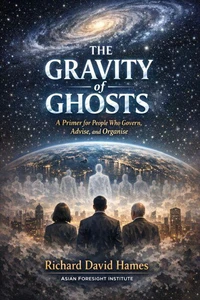
THE GRAVITY OF GHOSTS: A Primer for those who Govern, Advise, and Organise
Richard David Hames
E-book
17,49 €

17,49 €

17,49 €

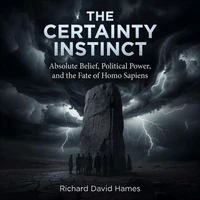
The Certainty Instinct: Absolute Belief, Political Power, and the Fate of Homo Sapiens
Richard David Hames
E-book
17,49 €

The Invisible Hijacking: The Capture of Everything that was Meant to Save Us
Richard David Hames
E-book
17,49 €

8,49 €

8,49 €

8,49 €

6,99 €

Absolution Without Remission: The psychic contract of a dying civilisation
Richard David Hames
E-book
8,99 €

4,99 €

4,99 €