Nova Fairchild is an English-language author recognized for lyrical contemporary writing that blends emotional insight with themes of reinvention, creativity, and human connection. Her work often explores the quiet complexities of identity and ambition, combining elegant prose with reflective storytelling that feels both intimate and cinematic.
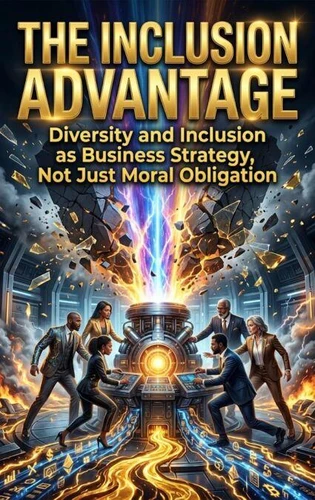
The Inclusion Advantage. Diversity and Inclusion as Business Strategy, Not Just Moral Obligation
Par :Formats :
Disponible dans votre compte client Decitre ou Furet du Nord dès validation de votre commande. Le format ePub est :
- Compatible avec une lecture sur My Vivlio (smartphone, tablette, ordinateur)
- Compatible avec une lecture sur liseuses Vivlio
- Pour les liseuses autres que Vivlio, vous devez utiliser le logiciel Adobe Digital Edition. Non compatible avec la lecture sur les liseuses Kindle, Remarkable et Sony
 , qui est-ce ?
Notre partenaire de plateforme de lecture numérique où vous retrouverez l'ensemble de vos ebooks gratuitement
Pour en savoir plus sur nos ebooks, consultez notre aide en ligne ici
C'est si simple ! Lisez votre ebook avec l'app Vivlio sur votre tablette, mobile ou ordinateur :

- Nombre de pages151
- FormatePub
- ISBN978-3-565-45504-1
- EAN9783565455041
- Date de parution23/05/2026
- Protection num.pas de protection
- Taille2 Mo
- Infos supplémentairesepub
- ÉditeurEmphaloz Publishing House
Résumé
This book examines how diversity and inclusion function as a business strategy beyond mere compliance or moral obligation, exploring the mechanisms through which inclusive practices strengthen organizational performance in German and European markets. It investigates the tension between ethical responsibility and economic advantage, asking how firms can embed DEI into core strategy without reducing it to a symbolic checklist.
First, talent systems benefit from inclusive hiring and retention practices that broaden access to skills, perspectives, and experience while reducing turnover costs.
When employees feel respected and valued, organizations often experience stronger engagement, higher productivity, and greater long term commitment. Inclusion therefore becomes not only a cultural principle but also a structural advantage in competitive labor markets. Second, decision making and innovation are strengthened by the presence of varied perspectives. Diverse teams challenge assumptions more effectively, identify risks earlier, and generate broader ranges of solutions.
Organizations with inclusive leadership structures are often better positioned to translate these perspectives into innovation, adaptability, and sustained market relevance. Third, leadership accountability embeds DEI into governance systems by linking executive responsibility to measurable inclusion goals and cultural outcomes. When leaders actively reinforce psychological safety and equitable participation, teams become more resilient and responsive during periods of uncertainty and change.
In this context, inclusion supports not only fairness but also organizational adaptability and strategic resilience. Together, these mechanisms illustrate how diversity and inclusion operate as long term strategic capabilities that shape talent development, innovation capacity, and institutional stability rather than functioning as isolated compliance initiatives.
When employees feel respected and valued, organizations often experience stronger engagement, higher productivity, and greater long term commitment. Inclusion therefore becomes not only a cultural principle but also a structural advantage in competitive labor markets. Second, decision making and innovation are strengthened by the presence of varied perspectives. Diverse teams challenge assumptions more effectively, identify risks earlier, and generate broader ranges of solutions.
Organizations with inclusive leadership structures are often better positioned to translate these perspectives into innovation, adaptability, and sustained market relevance. Third, leadership accountability embeds DEI into governance systems by linking executive responsibility to measurable inclusion goals and cultural outcomes. When leaders actively reinforce psychological safety and equitable participation, teams become more resilient and responsive during periods of uncertainty and change.
In this context, inclusion supports not only fairness but also organizational adaptability and strategic resilience. Together, these mechanisms illustrate how diversity and inclusion operate as long term strategic capabilities that shape talent development, innovation capacity, and institutional stability rather than functioning as isolated compliance initiatives.