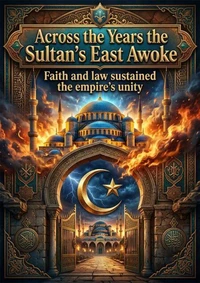
The Ottoman Empire ruled for more than six hundred years not through sheer force alone, but through a system that turned conquered peoples into collaborators, soldiers into administrators, and faith into a tool of state. This book examines how the empire held together such a vast mosaic of languages, religions, and loyalties by designing institutions that made obedience feel like opportunity. The devshirme system took Christian boys and made them the empire's elite.
The millet system let communities govern themselves so long as they paid and prayed in line. And the sultan's law sat above sharia, claiming divine authority while acting with brutal pragmatism. When this architecture began to crack in the nineteenth century, reforms came too fast and too late. The Tanzimat tried to remake the empire as a modern state, but instead revealed how deeply the old contract between ruler and ruled had frayed.
What emerges is not a story of decline, but of a system that worked so well for so long that its creators could not imagine how to replace it. The Ottoman experiment offers a stark lesson about the fragility of any order built on layered dependency and deferred justice. In the end, the empire did not fall to its enemies. It fell to its own inability to become something it had never needed to be.
The Ottoman Empire ruled for more than six hundred years not through sheer force alone, but through a system that turned conquered peoples into collaborators, soldiers into administrators, and faith into a tool of state. This book examines how the empire held together such a vast mosaic of languages, religions, and loyalties by designing institutions that made obedience feel like opportunity. The devshirme system took Christian boys and made them the empire's elite.
The millet system let communities govern themselves so long as they paid and prayed in line. And the sultan's law sat above sharia, claiming divine authority while acting with brutal pragmatism. When this architecture began to crack in the nineteenth century, reforms came too fast and too late. The Tanzimat tried to remake the empire as a modern state, but instead revealed how deeply the old contract between ruler and ruled had frayed.
What emerges is not a story of decline, but of a system that worked so well for so long that its creators could not imagine how to replace it. The Ottoman experiment offers a stark lesson about the fragility of any order built on layered dependency and deferred justice. In the end, the empire did not fall to its enemies. It fell to its own inability to become something it had never needed to be.