Nova Fairchild is an English-language author recognized for lyrical contemporary writing that blends emotional insight with themes of reinvention, creativity, and human connection. Her work often explores the quiet complexities of identity and ambition, combining elegant prose with reflective storytelling that feels both intimate and cinematic.
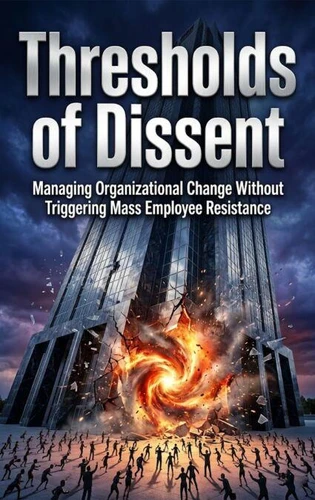
Thresholds of Dissent. Managing Organizational Change Without Triggering Mass Employee Resistance
Par :Formats :
Disponible dans votre compte client Decitre ou Furet du Nord dès validation de votre commande. Le format ePub est :
- Compatible avec une lecture sur My Vivlio (smartphone, tablette, ordinateur)
- Compatible avec une lecture sur liseuses Vivlio
- Pour les liseuses autres que Vivlio, vous devez utiliser le logiciel Adobe Digital Edition. Non compatible avec la lecture sur les liseuses Kindle, Remarkable et Sony
 , qui est-ce ?
Notre partenaire de plateforme de lecture numérique où vous retrouverez l'ensemble de vos ebooks gratuitement
Pour en savoir plus sur nos ebooks, consultez notre aide en ligne ici
C'est si simple ! Lisez votre ebook avec l'app Vivlio sur votre tablette, mobile ou ordinateur :

- Nombre de pages167
- FormatePub
- ISBN978-3-565-45494-5
- EAN9783565454945
- Date de parution23/05/2026
- Protection num.pas de protection
- Taille1 Mo
- Infos supplémentairesepub
- ÉditeurEmphaloz Publishing House
Résumé
This book investigates the critical thresholds at which employee dissent transforms into mass resistance during organizational change initiatives, not as a breakdown in change management but as an inherent tension where efforts to suppress opposition can unintentionally amplify underlying concerns. It explores the fragile balance between fostering open dialogue and maintaining momentum during periods of transformation.
The communication system fundamentally shapes dissent thresholds.
In environments dominated by top down messaging without structured upward channels, concerns accumulate silently until they erupt into broader resistance. By contrast, organizations that employ dialogue rich mechanisms such as regular discussion forums and anonymous sentiment tracking can detect early signals, transforming potential opposition into collaborative problem solving and raising the threshold for disruptive resistance. Second, the feedback integration mechanism determines whether dissent remains constructive or escalates into organized opposition.
Systems that visibly incorporate employee input into change adaptations demonstrate respect and build trust, increasing the threshold for mass resistance. In contrast, organizations that dismiss feedback as mere obstruction lower this threshold by signaling that employee perspectives hold little value, turning skepticism into active resistance. Third, the leadership authenticity system operates through behavioral consistency.
When leaders' actions align with the values they communicate, employees perceive the initiative as legitimate, strengthening trust and increasing resilience during change. Conversely, visible contradictions between rhetoric and conduct, such as promoting austerity while preserving executive privileges, lower resistance thresholds by fostering perceptions of insincerity and narrow self interest.
In environments dominated by top down messaging without structured upward channels, concerns accumulate silently until they erupt into broader resistance. By contrast, organizations that employ dialogue rich mechanisms such as regular discussion forums and anonymous sentiment tracking can detect early signals, transforming potential opposition into collaborative problem solving and raising the threshold for disruptive resistance. Second, the feedback integration mechanism determines whether dissent remains constructive or escalates into organized opposition.
Systems that visibly incorporate employee input into change adaptations demonstrate respect and build trust, increasing the threshold for mass resistance. In contrast, organizations that dismiss feedback as mere obstruction lower this threshold by signaling that employee perspectives hold little value, turning skepticism into active resistance. Third, the leadership authenticity system operates through behavioral consistency.
When leaders' actions align with the values they communicate, employees perceive the initiative as legitimate, strengthening trust and increasing resilience during change. Conversely, visible contradictions between rhetoric and conduct, such as promoting austerity while preserving executive privileges, lower resistance thresholds by fostering perceptions of insincerity and narrow self interest.