Nova Fairchild is an English-language author recognized for lyrical contemporary writing that blends emotional insight with themes of reinvention, creativity, and human connection. Her work often explores the quiet complexities of identity and ambition, combining elegant prose with reflective storytelling that feels both intimate and cinematic.
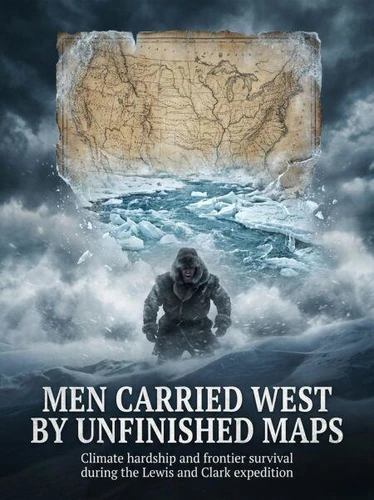
Men Carried West by Unfinished Maps. Climate hardship and frontier survival during the Lewis and Clark expedition
Par :Formats :
Disponible dans votre compte client Decitre ou Furet du Nord dès validation de votre commande. Le format ePub est :
- Compatible avec une lecture sur My Vivlio (smartphone, tablette, ordinateur)
- Compatible avec une lecture sur liseuses Vivlio
- Pour les liseuses autres que Vivlio, vous devez utiliser le logiciel Adobe Digital Edition. Non compatible avec la lecture sur les liseuses Kindle, Remarkable et Sony
 , qui est-ce ?
Notre partenaire de plateforme de lecture numérique où vous retrouverez l'ensemble de vos ebooks gratuitement
Pour en savoir plus sur nos ebooks, consultez notre aide en ligne ici
C'est si simple ! Lisez votre ebook avec l'app Vivlio sur votre tablette, mobile ou ordinateur :

- Nombre de pages172
- FormatePub
- ISBN978-3-565-47844-6
- EAN9783565478446
- Date de parution05/06/2026
- Protection num.pas de protection
- Taille1007 Ko
- Infos supplémentairesepub
- ÉditeurEmphaloz Publishing House
Résumé
The expedition entered the continent believing preparation could overcome distance. Rivers proved otherwise. Ice, disease, collapsing equipment, and uncertain supply chains turned the Lewis and Clark expedition into a prolonged struggle against terrain that resisted every timetable brought from Washington.
Drawing from revised route studies and overlooked logistical records, this narrative focuses on the expedition as a fragile moving system rather than a triumphant march westward.
Canoes failed in dangerous currents, trade goods disappeared faster than expected, and unfamiliar weather patterns disrupted military discipline. The book reconstructs how daily survival depended on improvisation, local diplomacy, and Indigenous knowledge of river systems throughout the Louisiana Territory. The encounters with Native American communities are presented not as isolated meetings but as essential negotiations for food access, navigation, and political passage.
Cultural misunderstandings repeatedly threatened the expedition's stability, especially where American assumptions collided with long-established trade networks. Thomas Jefferson's broader vision of continental expansion remained distant from the exhausting realities faced by men traveling through flooded plains and mountain corridors. Seen through logistics and geography, the journey becomes less a symbol of destiny than a portrait of uncertainty at the edge of state ambition.
Canoes failed in dangerous currents, trade goods disappeared faster than expected, and unfamiliar weather patterns disrupted military discipline. The book reconstructs how daily survival depended on improvisation, local diplomacy, and Indigenous knowledge of river systems throughout the Louisiana Territory. The encounters with Native American communities are presented not as isolated meetings but as essential negotiations for food access, navigation, and political passage.
Cultural misunderstandings repeatedly threatened the expedition's stability, especially where American assumptions collided with long-established trade networks. Thomas Jefferson's broader vision of continental expansion remained distant from the exhausting realities faced by men traveling through flooded plains and mountain corridors. Seen through logistics and geography, the journey becomes less a symbol of destiny than a portrait of uncertainty at the edge of state ambition.