Nova Fairchild is an English-language author recognized for lyrical contemporary writing that blends emotional insight with themes of reinvention, creativity, and human connection. Her work often explores the quiet complexities of identity and ambition, combining elegant prose with reflective storytelling that feels both intimate and cinematic.
Nouveauté
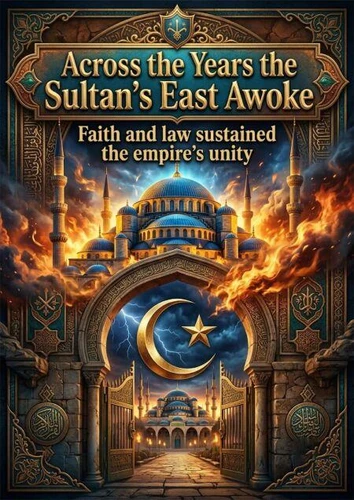
Across the Years the Sultan's East Awoke. Faith and law sustained the empire's unity
Par :Formats :
Disponible dans votre compte client Decitre ou Furet du Nord dès validation de votre commande. Le format ePub est :
- Compatible avec une lecture sur My Vivlio (smartphone, tablette, ordinateur)
- Compatible avec une lecture sur liseuses Vivlio
- Pour les liseuses autres que Vivlio, vous devez utiliser le logiciel Adobe Digital Edition. Non compatible avec la lecture sur les liseuses Kindle, Remarkable et Sony
 , qui est-ce ?
Notre partenaire de plateforme de lecture numérique où vous retrouverez l'ensemble de vos ebooks gratuitement
Pour en savoir plus sur nos ebooks, consultez notre aide en ligne ici
C'est si simple ! Lisez votre ebook avec l'app Vivlio sur votre tablette, mobile ou ordinateur :

- Nombre de pages205
- FormatePub
- ISBN978-3-565-59498-6
- EAN9783565594986
- Date de parution28/07/2026
- Protection num.pas de protection
- Taille1 Mo
- Infos supplémentairesepub
- ÉditeurEmphaloz Publishing House
Résumé
The Ottoman Empire ruled for more than six hundred years not through sheer force alone, but through a system that turned conquered peoples into collaborators, soldiers into administrators, and faith into a tool of state. This book examines how the empire held together such a vast mosaic of languages, religions, and loyalties by designing institutions that made obedience feel like opportunity. The devshirme system took Christian boys and made them the empire's elite.
The millet system let communities govern themselves so long as they paid and prayed in line. And the sultan's law sat above sharia, claiming divine authority while acting with brutal pragmatism. When this architecture began to crack in the nineteenth century, reforms came too fast and too late. The Tanzimat tried to remake the empire as a modern state, but instead revealed how deeply the old contract between ruler and ruled had frayed.
What emerges is not a story of decline, but of a system that worked so well for so long that its creators could not imagine how to replace it. The Ottoman experiment offers a stark lesson about the fragility of any order built on layered dependency and deferred justice. In the end, the empire did not fall to its enemies. It fell to its own inability to become something it had never needed to be.
The millet system let communities govern themselves so long as they paid and prayed in line. And the sultan's law sat above sharia, claiming divine authority while acting with brutal pragmatism. When this architecture began to crack in the nineteenth century, reforms came too fast and too late. The Tanzimat tried to remake the empire as a modern state, but instead revealed how deeply the old contract between ruler and ruled had frayed.
What emerges is not a story of decline, but of a system that worked so well for so long that its creators could not imagine how to replace it. The Ottoman experiment offers a stark lesson about the fragility of any order built on layered dependency and deferred justice. In the end, the empire did not fall to its enemies. It fell to its own inability to become something it had never needed to be.