THE HOUSE OF RUSK: An August Rusk MysteryAugust Rusk has spent most of his life keeping distance between himself and the branch of the Rusk family his uncle escaped. In Iowa, in the old house left to him by Henrik Rusk, August has built a hard-won refuge from bloodline, memory, and the kind of religion that turns cruelty into inheritance. But when Sue Ellen Rusk calls from Briar County with news that a young relative has vanished after publicly refusing the name his family keeps forcing on him, August is pulled back toward the people he has spent years pretending do not belong to him.
Eli Rusk is twenty-one, frightened, stubborn, funny when he can be, and absolutely clear about one thing: his name is Eli. To the Rusk Covenant Church, that name is rebellion. To Pastor Gideon Rusk, it is evidence of worldly corruption. To Naomi Rusk, Gideon's soft-spoken and terrifyingly practical wife, it is a wound that must be corrected before it spreads. After Eli stands in public and says, "That is not my name, " he disappears into a world of family prayer chains, locked church rooms, private restoration rituals, and rural silence.
What begins as a missing-person inquiry becomes something far more dangerous. In Briar County, the Rusks are not merely a family. They are church, bloodline, gossip network, militia, and courthouse influence woven into one. Their prayers sound like warnings. Their concern operates like surveillance. Their love has conditions sharp enough to draw blood. As August and Sue Ellen follow Eli's trail through abandoned cars, church hallways, old baptismal sites, hidden recordings, and family records cut apart by hand, they begin to understand that Eli is not the first person the Rusk family tried to erase.
An older wound waits inside the family history. Mercy Rusk, long dismissed as unstable, rebellious, and touched in the head, begins appearing in fogged glass, old photographs, hymn fragments, and impossible warnings. Her message is simple and devastating: NOT LIZZY. It is not only about Eli. It is about every person the family renamed, silenced, buried, or turned into a cautionary tale so the living could keep calling violence holy.
As the evidence grows, so does the danger. Gideon Rusk does not need to hold a weapon to make men reach for guns. Naomi does not need to raise her voice to make a room obey. When August uncovers proof of Eli's confinement, coercion, and forced renunciation, Gideon calls the clan together through prayer chains, phone calls, and old blood loyalty. Trucks arrive from back roads. Men bring shotguns. Women bring phones, food, and fury.
Teenagers gather in packs, eager to perform the cruelty they have been taught to call conviction. But the dead are no longer willing to stay buried. At the edge of the ruined old Rusk house, where the family's original sin still breathes through rotted wood and wet earth, August must face more than Gideon. He must face the truth that blood does not excuse evil, but neither does distance erase responsibility.
With Sue Ellen beside him, Caleb Rusk breaking under the weight of what he witnessed, Eli's confused ghost struggling to understand why the family still calls him wrong, and Mercy rising at last as witness, August stands against a house that has fed for generations on stolen names. Dark, atmospheric, and emotionally charged, THE HOUSE OF RUSK is a Southern gothic mystery about the violence people commit when they believe God has given them ownership over another human being.
It is a story of haunted bloodlines, rural power, religious control, family silence, and the dead who refuse to let the living keep lying. At its heart is one simple, defiant truth: a name is not a courtesy granted by the powerful. It is a soul's first claim on itself.
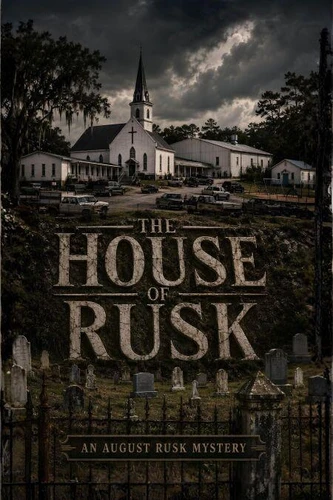
THE HOUSE OF RUSK: An August Rusk MysteryAugust Rusk has spent most of his life keeping distance between himself and the branch of the Rusk family his uncle escaped. In Iowa, in the old house left to him by Henrik Rusk, August has built a hard-won refuge from bloodline, memory, and the kind of religion that turns cruelty into inheritance. But when Sue Ellen Rusk calls from Briar County with news that a young relative has vanished after publicly refusing the name his family keeps forcing on him, August is pulled back toward the people he has spent years pretending do not belong to him.
Eli Rusk is twenty-one, frightened, stubborn, funny when he can be, and absolutely clear about one thing: his name is Eli. To the Rusk Covenant Church, that name is rebellion. To Pastor Gideon Rusk, it is evidence of worldly corruption. To Naomi Rusk, Gideon's soft-spoken and terrifyingly practical wife, it is a wound that must be corrected before it spreads. After Eli stands in public and says, "That is not my name, " he disappears into a world of family prayer chains, locked church rooms, private restoration rituals, and rural silence.
What begins as a missing-person inquiry becomes something far more dangerous. In Briar County, the Rusks are not merely a family. They are church, bloodline, gossip network, militia, and courthouse influence woven into one. Their prayers sound like warnings. Their concern operates like surveillance. Their love has conditions sharp enough to draw blood. As August and Sue Ellen follow Eli's trail through abandoned cars, church hallways, old baptismal sites, hidden recordings, and family records cut apart by hand, they begin to understand that Eli is not the first person the Rusk family tried to erase.
An older wound waits inside the family history. Mercy Rusk, long dismissed as unstable, rebellious, and touched in the head, begins appearing in fogged glass, old photographs, hymn fragments, and impossible warnings. Her message is simple and devastating: NOT LIZZY. It is not only about Eli. It is about every person the family renamed, silenced, buried, or turned into a cautionary tale so the living could keep calling violence holy.
As the evidence grows, so does the danger. Gideon Rusk does not need to hold a weapon to make men reach for guns. Naomi does not need to raise her voice to make a room obey. When August uncovers proof of Eli's confinement, coercion, and forced renunciation, Gideon calls the clan together through prayer chains, phone calls, and old blood loyalty. Trucks arrive from back roads. Men bring shotguns. Women bring phones, food, and fury.
Teenagers gather in packs, eager to perform the cruelty they have been taught to call conviction. But the dead are no longer willing to stay buried. At the edge of the ruined old Rusk house, where the family's original sin still breathes through rotted wood and wet earth, August must face more than Gideon. He must face the truth that blood does not excuse evil, but neither does distance erase responsibility.
With Sue Ellen beside him, Caleb Rusk breaking under the weight of what he witnessed, Eli's confused ghost struggling to understand why the family still calls him wrong, and Mercy rising at last as witness, August stands against a house that has fed for generations on stolen names. Dark, atmospheric, and emotionally charged, THE HOUSE OF RUSK is a Southern gothic mystery about the violence people commit when they believe God has given them ownership over another human being.
It is a story of haunted bloodlines, rural power, religious control, family silence, and the dead who refuse to let the living keep lying. At its heart is one simple, defiant truth: a name is not a courtesy granted by the powerful. It is a soul's first claim on itself.


 , qui est-ce ?