
Pete Cossaboon is a spiritual teacher, bestselling author, and guide devoted to helping others awaken their innate power through sacred wisdom, energy work, and soulful alignment. Drawing from a rich background in religious studies, metaphysics, and mystical traditions, he bridges the worlds of science and spirit with compassion and clarity. His work empowers seekers to remember who they truly are and live in resonance with their divine design.
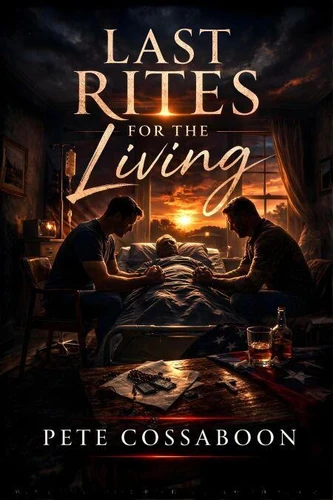
Last Rites for the Living
Par :Formats :
Disponible dans votre compte client Decitre ou Furet du Nord dès validation de votre commande. Le format ePub est :
- Compatible avec une lecture sur My Vivlio (smartphone, tablette, ordinateur)
- Compatible avec une lecture sur liseuses Vivlio
- Pour les liseuses autres que Vivlio, vous devez utiliser le logiciel Adobe Digital Edition. Non compatible avec la lecture sur les liseuses Kindle, Remarkable et Sony
 , qui est-ce ?
Notre partenaire de plateforme de lecture numérique où vous retrouverez l'ensemble de vos ebooks gratuitement
Pour en savoir plus sur nos ebooks, consultez notre aide en ligne ici
C'est si simple ! Lisez votre ebook avec l'app Vivlio sur votre tablette, mobile ou ordinateur :

- FormatePub
- ISBN8233268403
- EAN9798233268403
- Date de parution27/02/2026
- Protection num.pas de protection
- Infos supplémentairesepub
- ÉditeurLinda Balsamo
Résumé
Twelve years ago, Marcus Delaney left Beaumont, Texas-and his father-with no intention of returning. Now his brother has called with the only words that could bring him back. He's dying. Marcus is a hospice nurse in Portland. He has sat beside dozens of strangers as they took their final breaths. He knows the rhythms of decline, the language of morphine, the precise moment when the body begins to let go.
What he does not know is how to sit beside the man who raised him with discipline, silence, and violence-and call it love. Frank Delaney is a former military man, a pillar of his church, a man who does not apologize. In the living room where a belt once rested on the arm of the couch, a hospital bed now stands. The house smells the same. The refineries hum at night. The past has not loosened its grip.
Wade, the younger brother who never left, has been carrying the weight alone-working construction by day, keeping vigil by night. And Nabil, Marcus's husband, steps into a house heavy with history and Confederate bumper stickers, bringing with him coffee, steadiness, and a different way of being a man. As Frank's body begins its final accounting, the brothers are forced to confront what remains of their inheritance: not money, not land, but a rebuilt bookshelf filled with the wrong books.
A silent apology made of wood and time. A father's attempt to give back what he once destroyed. Last Rites for the Living is a novel about the complicated architecture of forgiveness. About what it means to offer professional compassion to a man who was never gentle. About the rituals we perform at the bedside-not only to ease the dying, but to release the living. It explores:The endurance demanded of sonsThe cost of silence in Southern familiesThe tension between faith and harmThe difference between apology and repairThe quiet courage required to stayAs the hours narrow and the breathing changes, Marcus must decide what he is willing to carry forward-and what he will finally lay down.
This is not a story of redemption in the sentimental sense. It is a story of reckoning. Of inheritance. Of the thin line between damage and devotion. Of the moment when a son tells his father, "You can go, " and means it. In the end, what remains is not a perfect apology, nor a healed childhood. It is something smaller. Harder. Truer. The whole estate.
What he does not know is how to sit beside the man who raised him with discipline, silence, and violence-and call it love. Frank Delaney is a former military man, a pillar of his church, a man who does not apologize. In the living room where a belt once rested on the arm of the couch, a hospital bed now stands. The house smells the same. The refineries hum at night. The past has not loosened its grip.
Wade, the younger brother who never left, has been carrying the weight alone-working construction by day, keeping vigil by night. And Nabil, Marcus's husband, steps into a house heavy with history and Confederate bumper stickers, bringing with him coffee, steadiness, and a different way of being a man. As Frank's body begins its final accounting, the brothers are forced to confront what remains of their inheritance: not money, not land, but a rebuilt bookshelf filled with the wrong books.
A silent apology made of wood and time. A father's attempt to give back what he once destroyed. Last Rites for the Living is a novel about the complicated architecture of forgiveness. About what it means to offer professional compassion to a man who was never gentle. About the rituals we perform at the bedside-not only to ease the dying, but to release the living. It explores:The endurance demanded of sonsThe cost of silence in Southern familiesThe tension between faith and harmThe difference between apology and repairThe quiet courage required to stayAs the hours narrow and the breathing changes, Marcus must decide what he is willing to carry forward-and what he will finally lay down.
This is not a story of redemption in the sentimental sense. It is a story of reckoning. Of inheritance. Of the thin line between damage and devotion. Of the moment when a son tells his father, "You can go, " and means it. In the end, what remains is not a perfect apology, nor a healed childhood. It is something smaller. Harder. Truer. The whole estate.
A propos de Pete Cossaboon

Public Beach Access
E-book
3,99 €

3,99 €

3,99 €

Where the Earth Breaks
E-book
3,99 €
3,99 €
3,99 €

3,99 €

The Assassin’s Gentleman
E-book
3,99 €
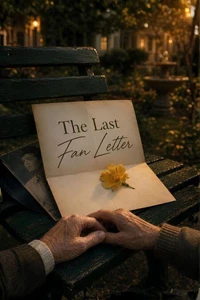
The Last Fan Letter
E-book
3,99 €

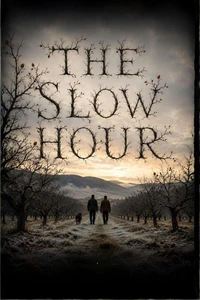
The Slow Hour
E-book
3,99 €

The Last Man At The Gym
E-book
3,99 €
The Careful Animal
E-book
3,99 €
3,99 €

3,99 €
3,99 €