SOLDES
Jusqu'à -70% sur une sélection d'articles*

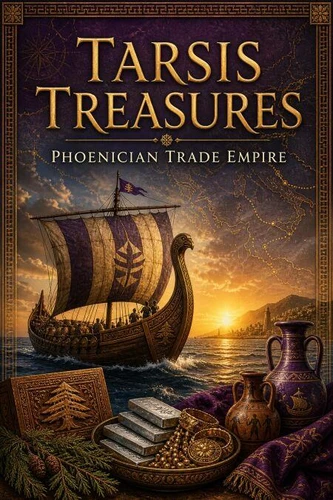
Tarsis Treasures: Phoenician Trade Empire
Par :Formats :
Disponible dans votre compte client Decitre ou Furet du Nord dès validation de votre commande. Le format ePub est :
- Compatible avec une lecture sur My Vivlio (smartphone, tablette, ordinateur)
- Compatible avec une lecture sur liseuses Vivlio
- Pour les liseuses autres que Vivlio, vous devez utiliser le logiciel Adobe Digital Edition. Non compatible avec la lecture sur les liseuses Kindle, Remarkable et Sony
 , qui est-ce ?
Notre partenaire de plateforme de lecture numérique où vous retrouverez l'ensemble de vos ebooks gratuitement
Pour en savoir plus sur nos ebooks, consultez notre aide en ligne ici
C'est si simple ! Lisez votre ebook avec l'app Vivlio sur votre tablette, mobile ou ordinateur :

- FormatePub
- ISBN8235600591
- EAN9798235600591
- Date de parution05/05/2026
- Protection num.pas de protection
- Infos supplémentairesepub
- ÉditeurIoakim Ioakim
Résumé
Tarsis Treasures: Phoenician Trade Empire is a sweeping historical journey into the world of one of antiquity's most remarkable maritime civilizations. From the narrow cedar-lined coast of the eastern Mediterranean, the Phoenicians rose not through vast armies or conquered lands, but through ships, markets, craftsmanship, courage, and commercial genius. Their homeland was small, pressed between the mountains of Lebanon and the sea, yet their influence stretched across the Mediterranean and beyond.
This book explores how cities such as Tyre, Sidon, Byblos, and Arwad became centers of trade, shipbuilding, religion, and luxury production. The Phoenicians mastered the art of turning natural resources and skilled crafts into treasures desired by kings and temples. Cedar wood from Lebanon, purple dye from coastal waters, glassware, ivory, textiles, metalwork, wine, oil, and precious cargoes moved through their hands into the courts and markets of the ancient world.
At the heart of the book stands Tarsis, the mysterious symbol of distant wealth. Associated with far western lands rich in silver, tin, copper, and other resources, Tarsis represents the Phoenician dream of sailing beyond the known horizon in search of treasure and opportunity. Through this dream, the book reveals how the Phoenicians transformed the Mediterranean into a network of routes linking Asia, Africa, and Europe.
The story also follows the growth of Phoenician colonies beyond the homeland. Cyprus, North Africa, Sicily, Sardinia, Spain, and other regions became part of a vast commercial web. The greatest of these colonies was Carthage, daughter of Tyre, which rose into a mighty western power and carried Phoenician traditions into a new age. Through Carthage, the Phoenician spirit of trade, navigation, and expansion reached one of its most powerful expressions.
Beyond goods and wealth, this book highlights the cultural legacy of the Phoenicians. Their alphabet, carried by merchants and sailors across the sea, became one of the most important gifts to world civilization. Through Greek and later Latin adaptation, Phoenician letters helped shape many modern writing systems. Their religion, temples, gods, and rituals also traveled with their traders and settlers, giving sacred meaning to voyages, commerce, and colonial life.
Tarsis Treasures: Phoenician Trade Empire also examines the dangers that surrounded this maritime world. Storms, pirates, rival traders, imperial pressure, sieges, and political change constantly threatened Phoenician cities and ships. Assyria, Babylon, Persia, Greece, and Rome all cast shadows over their independence. Yet despite conquest and decline, the Phoenicians left a legacy far greater than their homeland.
This book is ideal for readers interested in ancient history, maritime trade, archaeology, Mediterranean civilizations, biblical lands, Carthage, early alphabets, and the rise of commercial empires. It tells the story of a small coastal people who used courage, skill, and vision to connect distant worlds. Their greatest treasure was not only silver, cedar, purple dye, or glass, but their power to transform distance into opportunity and trade into history.
This book explores how cities such as Tyre, Sidon, Byblos, and Arwad became centers of trade, shipbuilding, religion, and luxury production. The Phoenicians mastered the art of turning natural resources and skilled crafts into treasures desired by kings and temples. Cedar wood from Lebanon, purple dye from coastal waters, glassware, ivory, textiles, metalwork, wine, oil, and precious cargoes moved through their hands into the courts and markets of the ancient world.
At the heart of the book stands Tarsis, the mysterious symbol of distant wealth. Associated with far western lands rich in silver, tin, copper, and other resources, Tarsis represents the Phoenician dream of sailing beyond the known horizon in search of treasure and opportunity. Through this dream, the book reveals how the Phoenicians transformed the Mediterranean into a network of routes linking Asia, Africa, and Europe.
The story also follows the growth of Phoenician colonies beyond the homeland. Cyprus, North Africa, Sicily, Sardinia, Spain, and other regions became part of a vast commercial web. The greatest of these colonies was Carthage, daughter of Tyre, which rose into a mighty western power and carried Phoenician traditions into a new age. Through Carthage, the Phoenician spirit of trade, navigation, and expansion reached one of its most powerful expressions.
Beyond goods and wealth, this book highlights the cultural legacy of the Phoenicians. Their alphabet, carried by merchants and sailors across the sea, became one of the most important gifts to world civilization. Through Greek and later Latin adaptation, Phoenician letters helped shape many modern writing systems. Their religion, temples, gods, and rituals also traveled with their traders and settlers, giving sacred meaning to voyages, commerce, and colonial life.
Tarsis Treasures: Phoenician Trade Empire also examines the dangers that surrounded this maritime world. Storms, pirates, rival traders, imperial pressure, sieges, and political change constantly threatened Phoenician cities and ships. Assyria, Babylon, Persia, Greece, and Rome all cast shadows over their independence. Yet despite conquest and decline, the Phoenicians left a legacy far greater than their homeland.
This book is ideal for readers interested in ancient history, maritime trade, archaeology, Mediterranean civilizations, biblical lands, Carthage, early alphabets, and the rise of commercial empires. It tells the story of a small coastal people who used courage, skill, and vision to connect distant worlds. Their greatest treasure was not only silver, cedar, purple dye, or glass, but their power to transform distance into opportunity and trade into history.
A propos de Dilip Kumar Agrawal

2,99 €

2,99 €

2,99 €

2,99 €

2,99 €



2,99 €

2,99 €

2,99 €

2,99 €

2,99 €
2,99 €
2,99 €