SOLDES
Jusqu'à -70% sur une sélection d'articles*

Nouveauté
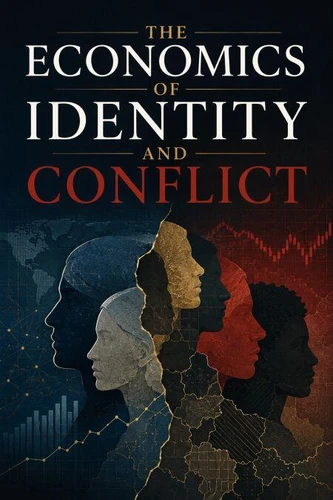
The Economics of Identity and Conflict
Par :Formats :
Disponible dans votre compte client Decitre ou Furet du Nord dès validation de votre commande. Le format ePub est :
- Compatible avec une lecture sur My Vivlio (smartphone, tablette, ordinateur)
- Compatible avec une lecture sur liseuses Vivlio
- Pour les liseuses autres que Vivlio, vous devez utiliser le logiciel Adobe Digital Edition. Non compatible avec la lecture sur les liseuses Kindle, Remarkable et Sony
 , qui est-ce ?
Notre partenaire de plateforme de lecture numérique où vous retrouverez l'ensemble de vos ebooks gratuitement
Pour en savoir plus sur nos ebooks, consultez notre aide en ligne ici
C'est si simple ! Lisez votre ebook avec l'app Vivlio sur votre tablette, mobile ou ordinateur :

- FormatePub
- ISBN8235693869
- EAN9798235693869
- Date de parution24/05/2026
- Protection num.pas de protection
- Infos supplémentairesepub
- ÉditeurIoakim Ioakim
Résumé
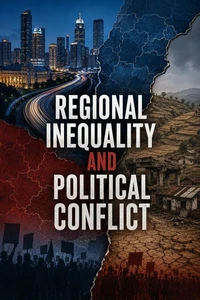
The Economics of Identity and Conflict is a thoughtful and deeply analytical book that explores the powerful relationship between economic inequality, social identity, and collective conflict. It examines how people do not experience poverty, opportunity, land, labour, education, welfare, and development merely as isolated individuals, but as members of communities shaped by caste, class, religion, ethnicity, gender, region, language, migration, and nationality.
The book argues that identity by itself does not create conflict; rather, conflict grows when identity becomes joined with exclusion, humiliation, unequal resources, and political manipulation. This book begins by explaining how identity enters economic life through trust, markets, work, education, property, and social networks. It shows that people's opportunities are often shaped long before they enter the market, through inherited advantages and disadvantages.
A person's name, community, language, gender, region, or caste may influence access to jobs, credit, housing, schooling, and respect. In this way, economic systems can silently reproduce old social hierarchies while appearing neutral on the surface. The book then explores the economic roots of social division. It explains how inequality becomes dangerous when it follows group lines. When one community repeatedly enjoys land, education, employment, public services, and political influence, while another faces poverty, stigma, and neglect, private hardship becomes collective grievance.
Such grievance may develop around land dispossession, labour exploitation, unequal schooling, religious marginalization, caste oppression, ethnic resource control, migration anxiety, gender injustice, and regional imbalance. A major strength of this book is its wide and interconnected approach. It studies land as both property and belonging, labour as both income and dignity, education as both opportunity and social awakening, religion as both moral economy and political force, and welfare as both assistance and citizenship.
It also examines how globalization, capital, technology, and modern markets create new opportunities for some while deepening insecurity for others. The book gives special attention to political elites, showing how leaders may either heal social divisions through justice or inflame them by turning economic hardship into identity-based hatred. The later chapters focus on violence, war economies, peacebuilding, and inclusive political economy.
The book explains that violence is rarely sudden; it is often rooted in long histories of exclusion, fear, and humiliation. It also shows that peace cannot be built through security measures alone. Lasting peace requires jobs, land justice, fair education, social protection, gender equality, regional balance, accountable governance, and inclusive markets. Written in clear and bookish language, The Economics of Identity and Conflict is a valuable work for readers interested in political economy, sociology, development studies, peace studies, public policy, and social justice.
It offers a powerful message: societies become unstable when inequality is joined with humiliation, but they become peaceful when economic justice is joined with dignity. The book ultimately calls for an inclusive future where identity becomes a source of richness, not rivalry, and where development serves every community with fairness and respect.
The book argues that identity by itself does not create conflict; rather, conflict grows when identity becomes joined with exclusion, humiliation, unequal resources, and political manipulation. This book begins by explaining how identity enters economic life through trust, markets, work, education, property, and social networks. It shows that people's opportunities are often shaped long before they enter the market, through inherited advantages and disadvantages.
A person's name, community, language, gender, region, or caste may influence access to jobs, credit, housing, schooling, and respect. In this way, economic systems can silently reproduce old social hierarchies while appearing neutral on the surface. The book then explores the economic roots of social division. It explains how inequality becomes dangerous when it follows group lines. When one community repeatedly enjoys land, education, employment, public services, and political influence, while another faces poverty, stigma, and neglect, private hardship becomes collective grievance.
Such grievance may develop around land dispossession, labour exploitation, unequal schooling, religious marginalization, caste oppression, ethnic resource control, migration anxiety, gender injustice, and regional imbalance. A major strength of this book is its wide and interconnected approach. It studies land as both property and belonging, labour as both income and dignity, education as both opportunity and social awakening, religion as both moral economy and political force, and welfare as both assistance and citizenship.
It also examines how globalization, capital, technology, and modern markets create new opportunities for some while deepening insecurity for others. The book gives special attention to political elites, showing how leaders may either heal social divisions through justice or inflame them by turning economic hardship into identity-based hatred. The later chapters focus on violence, war economies, peacebuilding, and inclusive political economy.
The book explains that violence is rarely sudden; it is often rooted in long histories of exclusion, fear, and humiliation. It also shows that peace cannot be built through security measures alone. Lasting peace requires jobs, land justice, fair education, social protection, gender equality, regional balance, accountable governance, and inclusive markets. Written in clear and bookish language, The Economics of Identity and Conflict is a valuable work for readers interested in political economy, sociology, development studies, peace studies, public policy, and social justice.
It offers a powerful message: societies become unstable when inequality is joined with humiliation, but they become peaceful when economic justice is joined with dignity. The book ultimately calls for an inclusive future where identity becomes a source of richness, not rivalry, and where development serves every community with fairness and respect.
A propos de Dilip Kumar Agrawal

2,99 €
2,99 €

2,99 €

2,99 €

2,99 €

2,99 €

2,99 €

2,99 €
2,99 €
2,99 €


2,99 €