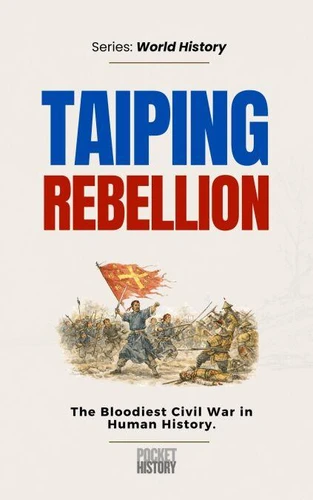
The Taiping Rebellion stands as one of the deadliest and most fascinating conflicts in human history, reshaping China during the final years of the Qing Dynasty. This book explores the origins, rise, and devastating impact of a massive civil war led by Hong Xiuquan, a man who claimed to be the younger brother of Jesus Christ and sought to establish a new heavenly kingdom on Earth. Blending religious vision with political revolution, the Taiping movement challenged the authority of imperial China and attracted millions of followers.
Through detailed narrative and historical analysis, this book traces the rebellion's key events, from its humble beginnings in southern China to the capture of Nanjing, which became the capital of the Taiping Heavenly Kingdom. It examines the internal structure of the movement, its radical social reforms, and the military campaigns that brought it into direct conflict with Qing forces and regional armies.
Beyond the battlefield, the book reveals the broader consequences of the rebellion, including widespread destruction, social upheaval, and the weakening of imperial power that would contribute to the eventual fall of the Qing Dynasty. It also highlights the human cost of the conflict, which claimed tens of millions of lives and left deep scars across Chinese society. Engaging and informative, this book provides readers with a comprehensive understanding of the Taiping Rebellion, offering insight into its causes, its leaders, and its lasting legacy in Chinese and world history.
The Taiping Rebellion stands as one of the deadliest and most fascinating conflicts in human history, reshaping China during the final years of the Qing Dynasty. This book explores the origins, rise, and devastating impact of a massive civil war led by Hong Xiuquan, a man who claimed to be the younger brother of Jesus Christ and sought to establish a new heavenly kingdom on Earth. Blending religious vision with political revolution, the Taiping movement challenged the authority of imperial China and attracted millions of followers.
Through detailed narrative and historical analysis, this book traces the rebellion's key events, from its humble beginnings in southern China to the capture of Nanjing, which became the capital of the Taiping Heavenly Kingdom. It examines the internal structure of the movement, its radical social reforms, and the military campaigns that brought it into direct conflict with Qing forces and regional armies.
Beyond the battlefield, the book reveals the broader consequences of the rebellion, including widespread destruction, social upheaval, and the weakening of imperial power that would contribute to the eventual fall of the Qing Dynasty. It also highlights the human cost of the conflict, which claimed tens of millions of lives and left deep scars across Chinese society. Engaging and informative, this book provides readers with a comprehensive understanding of the Taiping Rebellion, offering insight into its causes, its leaders, and its lasting legacy in Chinese and world history.


 , qui est-ce ?