SOLDES
Jusqu'à -70% sur une sélection d'articles*

Nouveauté
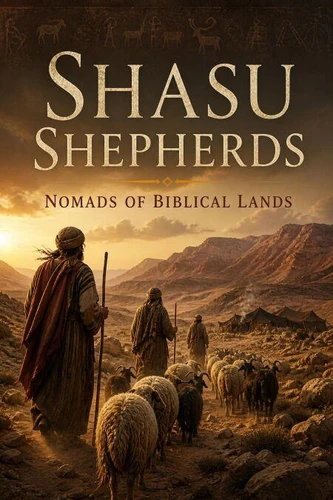
Shasu Shepherds: Nomads of Biblical Lands
Par :Formats :
Disponible dans votre compte client Decitre ou Furet du Nord dès validation de votre commande. Le format ePub est :
- Compatible avec une lecture sur My Vivlio (smartphone, tablette, ordinateur)
- Compatible avec une lecture sur liseuses Vivlio
- Pour les liseuses autres que Vivlio, vous devez utiliser le logiciel Adobe Digital Edition. Non compatible avec la lecture sur les liseuses Kindle, Remarkable et Sony
 , qui est-ce ?
Notre partenaire de plateforme de lecture numérique où vous retrouverez l'ensemble de vos ebooks gratuitement
Pour en savoir plus sur nos ebooks, consultez notre aide en ligne ici
C'est si simple ! Lisez votre ebook avec l'app Vivlio sur votre tablette, mobile ou ordinateur :

- FormatePub
- ISBN8235921580
- EAN9798235921580
- Date de parution05/05/2026
- Protection num.pas de protection
- Infos supplémentairesepub
- ÉditeurIoakim Ioakim
Résumé
Shasu Shepherds: Nomads of Biblical Lands is a vivid historical journey into the forgotten world of the Shasu, the ancient pastoral nomads who moved through the deserts, mountains, and borderlands of the southern Levant. Known mainly from Egyptian records, the Shasu were people of tents, flocks, wells, seasonal routes, clan loyalties, and wilderness survival. They lived in regions later filled with biblical memory-Sinai, Edom, Seir, the Negev, southern Canaan, Transjordan, and the dry corridors between Egypt and Asia.
This book brings the Shasu out of the shadows of ancient inscriptions and presents them as living human communities. They were not merely raiders or enemies of Egypt, as imperial records sometimes portrayed them. They were shepherds, families, chiefs, women, children, warriors, traders, guides, and worshippers. Their lives were shaped by the constant search for pasture and water, the protection of animals, the authority of elders, and the fragile balance between freedom and danger.
The book explores how the Shasu survived in harsh lands where water was precious and movement was necessary. It describes their camps, tents, domestic life, family structures, tribal leadership, desert knowledge, and relations with settled societies. It also examines their encounters with Egypt, whose scribes preserved their name while often viewing them through the suspicious eyes of empire. Through these records, the reader sees the tension between nomadic freedom and royal control.
A major theme of the book is the Shasu connection with the biblical world. The Shasu lived in the same landscapes where biblical stories speak of shepherds, wells, wilderness journeys, sacred mountains, tribal identity, and encounters with Egypt. While the book avoids careless claims, it carefully discusses the debated references to the "Shasu of Yhw, " a phrase that may connect the Shasu world with early traditions surrounding the divine name Yahweh.
This mystery gives the Shasu special importance in discussions of biblical origins and southern religious traditions. The book also shows that history is not made only by kings, armies, temples, and cities. It is also shaped by people who left few monuments but carried memory through movement. The Shasu preserved knowledge of wells, routes, mountains, seasons, and sacred places. Their society was not built of stone, but of kinship, oath, hospitality, honor, and survival wisdom.
Shasu Shepherds: Nomads of Biblical Lands is ideal for readers interested in ancient Near Eastern history, biblical backgrounds, archaeology, nomadic societies, and the hidden peoples who shaped sacred landscapes. It offers a richly written portrait of life on the edge of empire, where desert shepherds moved through lands of dust and stone, carrying flocks, stories, sacred names, and the enduring memory of the wilderness.
This book brings the Shasu out of the shadows of ancient inscriptions and presents them as living human communities. They were not merely raiders or enemies of Egypt, as imperial records sometimes portrayed them. They were shepherds, families, chiefs, women, children, warriors, traders, guides, and worshippers. Their lives were shaped by the constant search for pasture and water, the protection of animals, the authority of elders, and the fragile balance between freedom and danger.
The book explores how the Shasu survived in harsh lands where water was precious and movement was necessary. It describes their camps, tents, domestic life, family structures, tribal leadership, desert knowledge, and relations with settled societies. It also examines their encounters with Egypt, whose scribes preserved their name while often viewing them through the suspicious eyes of empire. Through these records, the reader sees the tension between nomadic freedom and royal control.
A major theme of the book is the Shasu connection with the biblical world. The Shasu lived in the same landscapes where biblical stories speak of shepherds, wells, wilderness journeys, sacred mountains, tribal identity, and encounters with Egypt. While the book avoids careless claims, it carefully discusses the debated references to the "Shasu of Yhw, " a phrase that may connect the Shasu world with early traditions surrounding the divine name Yahweh.
This mystery gives the Shasu special importance in discussions of biblical origins and southern religious traditions. The book also shows that history is not made only by kings, armies, temples, and cities. It is also shaped by people who left few monuments but carried memory through movement. The Shasu preserved knowledge of wells, routes, mountains, seasons, and sacred places. Their society was not built of stone, but of kinship, oath, hospitality, honor, and survival wisdom.
Shasu Shepherds: Nomads of Biblical Lands is ideal for readers interested in ancient Near Eastern history, biblical backgrounds, archaeology, nomadic societies, and the hidden peoples who shaped sacred landscapes. It offers a richly written portrait of life on the edge of empire, where desert shepherds moved through lands of dust and stone, carrying flocks, stories, sacred names, and the enduring memory of the wilderness.
A propos de Dilip Kumar Agrawal



2,99 €

2,99 €

2,99 €

2,99 €



2,99 €

2,99 €

2,99 €

2,99 €

2,99 €

2,99 €

2,99 €



2,99 €