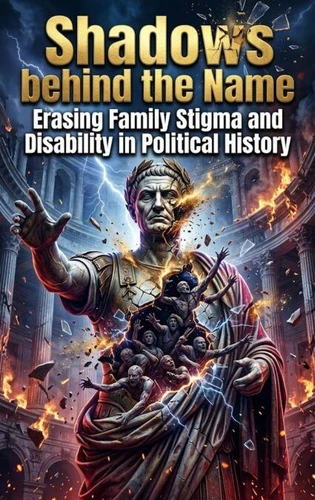
Shadows behind the Name. Erasing Family Stigma and Disability in Political History
Par :Formats :
Disponible dans votre compte client Decitre ou Furet du Nord dès validation de votre commande. Le format ePub est :
- Compatible avec une lecture sur My Vivlio (smartphone, tablette, ordinateur)
- Compatible avec une lecture sur liseuses Vivlio
- Pour les liseuses autres que Vivlio, vous devez utiliser le logiciel Adobe Digital Edition. Non compatible avec la lecture sur les liseuses Kindle, Remarkable et Sony
 , qui est-ce ?
Notre partenaire de plateforme de lecture numérique où vous retrouverez l'ensemble de vos ebooks gratuitement
Pour en savoir plus sur nos ebooks, consultez notre aide en ligne ici
C'est si simple ! Lisez votre ebook avec l'app Vivlio sur votre tablette, mobile ou ordinateur :

- Nombre de pages166
- FormatePub
- ISBN978-3-565-41004-0
- EAN9783565410040
- Date de parution14/04/2026
- Protection num.pas de protection
- Taille2 Mo
- Infos supplémentairesepub
- ÉditeurEmphaloz Publishing House
Résumé
Behind every political biography lies a silence - the names not spoken, the family members hidden, the bodies deemed unfit for public memory. For centuries, disability was not merely a medical condition but a stain that political dynasties feared could unravel their legacies. Families concealed their disabled members from public life, driven by shame and the relentless pressure of a society that equated worth with physical and mental capacity.
This book traces the quiet erasures embedded in political history - the figures who were institutionalized, the relatives who vanished from official records, the heirs who were written out of dynastic narratives.
It examines how stigma functioned not only as a social force but as a political instrument: shaping succession, silencing dissent, and rewriting the past for the comfort of those in power. From the deliberate concealment practiced by political elites to the structural invisibility imposed upon disabled families across Europe and beyond, these stories reveal a hidden architecture of exclusion. Even leaders who themselves lived with disability - including those who carefully managed their public image to suppress any association with "abnormal" conditions - reinforced the very stigma that crushed ordinary families. To read political history through the lens of disability is to encounter a different kind of power: fragile, fearful, and deeply human.
The silences speak as loudly as the monuments.
It examines how stigma functioned not only as a social force but as a political instrument: shaping succession, silencing dissent, and rewriting the past for the comfort of those in power. From the deliberate concealment practiced by political elites to the structural invisibility imposed upon disabled families across Europe and beyond, these stories reveal a hidden architecture of exclusion. Even leaders who themselves lived with disability - including those who carefully managed their public image to suppress any association with "abnormal" conditions - reinforced the very stigma that crushed ordinary families. To read political history through the lens of disability is to encounter a different kind of power: fragile, fearful, and deeply human.
The silences speak as loudly as the monuments.