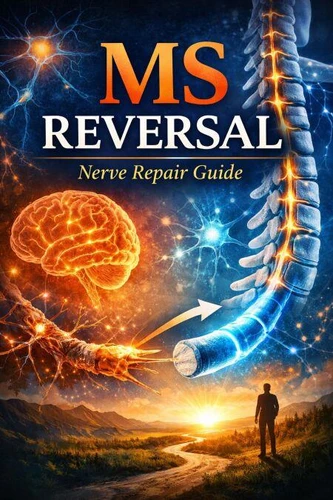
MS Reversal: Nerve Repair Guide
Par :Formats :
Disponible dans votre compte client Decitre ou Furet du Nord dès validation de votre commande. Le format ePub est :
- Compatible avec une lecture sur My Vivlio (smartphone, tablette, ordinateur)
- Compatible avec une lecture sur liseuses Vivlio
- Pour les liseuses autres que Vivlio, vous devez utiliser le logiciel Adobe Digital Edition. Non compatible avec la lecture sur les liseuses Kindle, Remarkable et Sony
 , qui est-ce ?
Notre partenaire de plateforme de lecture numérique où vous retrouverez l'ensemble de vos ebooks gratuitement
Pour en savoir plus sur nos ebooks, consultez notre aide en ligne ici
C'est si simple ! Lisez votre ebook avec l'app Vivlio sur votre tablette, mobile ou ordinateur :

- FormatePub
- ISBN8235746046
- EAN9798235746046
- Date de parution19/04/2026
- Protection num.pas de protection
- Infos supplémentairesepub
- ÉditeurIoakim Ioakim
Résumé
MS Reversal: Nerve Repair Guide is a compassionate, practical, and deeply informative guide for anyone seeking to understand multiple sclerosis beyond fear, confusion, and hopelessness. Written in clear yet bookish language, this book explores the reality of MS as a neurological condition that affects the brain, spinal cord, mobility, cognition, energy, mood, and daily independence. Rather than offering false promises or miracle claims, it presents a realistic and encouraging roadmap for protecting the nervous system, improving function, and supporting the body's natural capacity for adaptation and recovery.
The book begins by explaining what multiple sclerosis is, how it develops, and why it affects people so differently. It carefully examines immune dysfunction, inflammation, demyelination, axonal injury, and the biological roots of symptoms such as fatigue, weakness, numbness, balance problems, and brain fog. Readers are guided through the early signs of the disease, the diagnostic process, and the difference between relapsing and progressive forms of MS.
From there, the book moves into a thoughtful discussion of what "reversal" can honestly mean in the context of this complex condition-not as a simplistic cure, but as a process of protecting nerve function, encouraging repair, slowing decline, and rebuilding daily capability. A major strength of this book is its whole-person approach. It addresses not only medical treatment and disease-modifying therapies, but also rehabilitation, exercise, nutrition, fatigue management, sleep, stress control, mobility retraining, cognitive support, and emotional healing.
It shows how the brain can adapt through neuroplasticity, how movement can preserve strength and coordination, how food and hydration can support energy and overall health, and how structured routines can make life with MS more stable and manageable. The book also offers guidance on rebuilding balance, protecting mental clarity, and coping with the emotional burden of fear, grief, anxiety, and identity change.
Beyond symptoms and science, MS Reversal: Nerve Repair Guide speaks directly to the lived experience of chronic illness. It explores the impact of MS on work, family life, intimacy, relationships, and self-worth. It helps readers understand that healing is not limited to symptom disappearance, but also includes restored confidence, stronger resilience, wiser self-care, and renewed purpose. The book encourages patients to become active participants in their own care while remaining grounded in evidence, realistic expectations, and compassionate self-understanding.
The final chapters turn toward the future of MS research, including remyelination, stem cell science, neuroprotection, and emerging approaches to nerve repair. Yet the book never loses sight of the present. It closes by helping readers build a personal roadmap for living with MS in a disciplined, hopeful, and practical way. This is not merely a book about illness. It is a guide to living intelligently and courageously with a wounded but still responsive nervous system.
For readers seeking clarity, support, and meaningful hope, this book offers both knowledge and strength.
The book begins by explaining what multiple sclerosis is, how it develops, and why it affects people so differently. It carefully examines immune dysfunction, inflammation, demyelination, axonal injury, and the biological roots of symptoms such as fatigue, weakness, numbness, balance problems, and brain fog. Readers are guided through the early signs of the disease, the diagnostic process, and the difference between relapsing and progressive forms of MS.
From there, the book moves into a thoughtful discussion of what "reversal" can honestly mean in the context of this complex condition-not as a simplistic cure, but as a process of protecting nerve function, encouraging repair, slowing decline, and rebuilding daily capability. A major strength of this book is its whole-person approach. It addresses not only medical treatment and disease-modifying therapies, but also rehabilitation, exercise, nutrition, fatigue management, sleep, stress control, mobility retraining, cognitive support, and emotional healing.
It shows how the brain can adapt through neuroplasticity, how movement can preserve strength and coordination, how food and hydration can support energy and overall health, and how structured routines can make life with MS more stable and manageable. The book also offers guidance on rebuilding balance, protecting mental clarity, and coping with the emotional burden of fear, grief, anxiety, and identity change.
Beyond symptoms and science, MS Reversal: Nerve Repair Guide speaks directly to the lived experience of chronic illness. It explores the impact of MS on work, family life, intimacy, relationships, and self-worth. It helps readers understand that healing is not limited to symptom disappearance, but also includes restored confidence, stronger resilience, wiser self-care, and renewed purpose. The book encourages patients to become active participants in their own care while remaining grounded in evidence, realistic expectations, and compassionate self-understanding.
The final chapters turn toward the future of MS research, including remyelination, stem cell science, neuroprotection, and emerging approaches to nerve repair. Yet the book never loses sight of the present. It closes by helping readers build a personal roadmap for living with MS in a disciplined, hopeful, and practical way. This is not merely a book about illness. It is a guide to living intelligently and courageously with a wounded but still responsive nervous system.
For readers seeking clarity, support, and meaningful hope, this book offers both knowledge and strength.
A propos de Dilip Kumar Agrawal



2,99 €

2,99 €

2,99 €

2,99 €

2,99 €



2,99 €

2,99 €

2,99 €

2,99 €

2,99 €

2,99 €



2,99 €