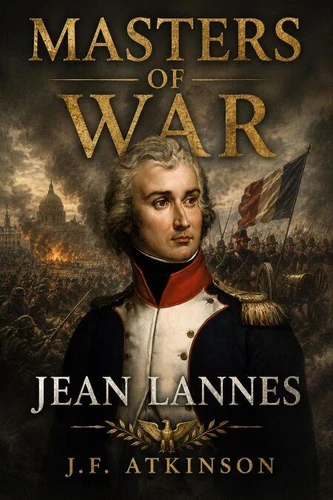
On 14 June 1807, at the river town of Friedland in East Prussia, Marshal Jean Lannes held the French left with twenty-six thousand men against a Russian army of nearly fifty thousand. He held it for eight hours. He held it with counter-attacks, with aggressive disruption of every Russian advance, with the sheer force of a commander who had decided that the position would not break. When Napoleon arrived with the main force and delivered the blow that destroyed the Russian army and ended the War of the Fourth Coalition, the decisive battle he won had been made possible by eight hours of Lannes standing in the way of what should have overwhelmed him.
This was not unusual. It was simply Tuesday, for Jean Lannes. Born in 1769 in the hilltop Gascon town of Lectoure, the son of a farrier and an apprentice cloth-dyer, Jean Lannes walked out of his provincial life in 1792 as a volunteer soldier of the Republic and never stopped walking forward. In seventeen years of continuous active service he fought in the Pyrenees, Italy, Egypt, Syria, Germany, Poland, Spain, and Austria.
He was wounded more times than the records fully capture. He rose from private soldier to Marshal of the Empire. He crossed the Great St. Bernard Pass at the head of Napoleon's advance guard, ran onto the bridge at Lodi under fourteen guns, held the French left at Marengo for five hours while the battle was being lost elsewhere, won an independent victory at Montebello against two-to-one odds without orders, held Pultusk against forty thousand Russians with seventeen thousand of his own in a December snowstorm, and served as the man Napoleon called irreplaceable across every campaign of the Grande Armée's greatest years. He was also, in equal measure, a man: hot-tempered and prodigally generous, a father who wrote imperfectly spelled letters to his children from the Polish winter, a friend who alone among all the marshals addressed the Emperor with the familiar tu and told him what he actually thought rather than what he wanted to hear.
He found the Spanish war morally repugnant and said so directly to Napoleon's face. He was tired of fighting and intended to come home when the business was finished. The business was never finished. He died at forty, nine days after the grapeshot at Aspern-Essling took his legs, with Napoleon weeping at his bedside and the Grande Armée in grief. Jean Lannes: The Giant of the Grande Armée is the most comprehensive account of his life and military career ever written in English, a narrative that follows him from Lectoure to the Danube, from the anonymous volunteer of 1792 to the greatest corps commander in the history of Napoleonic warfare.
Drawing on the full range of primary and secondary sources, it presents Lannes with the completeness and the honesty he deserves: the soldier and the man, the extraordinary and the human, the campaigns and their cost. This is the biography of a giant who was found and who grew and who gave everything he had to the age that made him possible, and who remains, two centuries later, exactly what Napoleon said he was.
On 14 June 1807, at the river town of Friedland in East Prussia, Marshal Jean Lannes held the French left with twenty-six thousand men against a Russian army of nearly fifty thousand. He held it for eight hours. He held it with counter-attacks, with aggressive disruption of every Russian advance, with the sheer force of a commander who had decided that the position would not break. When Napoleon arrived with the main force and delivered the blow that destroyed the Russian army and ended the War of the Fourth Coalition, the decisive battle he won had been made possible by eight hours of Lannes standing in the way of what should have overwhelmed him.
This was not unusual. It was simply Tuesday, for Jean Lannes. Born in 1769 in the hilltop Gascon town of Lectoure, the son of a farrier and an apprentice cloth-dyer, Jean Lannes walked out of his provincial life in 1792 as a volunteer soldier of the Republic and never stopped walking forward. In seventeen years of continuous active service he fought in the Pyrenees, Italy, Egypt, Syria, Germany, Poland, Spain, and Austria.
He was wounded more times than the records fully capture. He rose from private soldier to Marshal of the Empire. He crossed the Great St. Bernard Pass at the head of Napoleon's advance guard, ran onto the bridge at Lodi under fourteen guns, held the French left at Marengo for five hours while the battle was being lost elsewhere, won an independent victory at Montebello against two-to-one odds without orders, held Pultusk against forty thousand Russians with seventeen thousand of his own in a December snowstorm, and served as the man Napoleon called irreplaceable across every campaign of the Grande Armée's greatest years. He was also, in equal measure, a man: hot-tempered and prodigally generous, a father who wrote imperfectly spelled letters to his children from the Polish winter, a friend who alone among all the marshals addressed the Emperor with the familiar tu and told him what he actually thought rather than what he wanted to hear.
He found the Spanish war morally repugnant and said so directly to Napoleon's face. He was tired of fighting and intended to come home when the business was finished. The business was never finished. He died at forty, nine days after the grapeshot at Aspern-Essling took his legs, with Napoleon weeping at his bedside and the Grande Armée in grief. Jean Lannes: The Giant of the Grande Armée is the most comprehensive account of his life and military career ever written in English, a narrative that follows him from Lectoure to the Danube, from the anonymous volunteer of 1792 to the greatest corps commander in the history of Napoleonic warfare.
Drawing on the full range of primary and secondary sources, it presents Lannes with the completeness and the honesty he deserves: the soldier and the man, the extraordinary and the human, the campaigns and their cost. This is the biography of a giant who was found and who grew and who gave everything he had to the age that made him possible, and who remains, two centuries later, exactly what Napoleon said he was.

 , qui est-ce ?