SOLDES
Jusqu'à -70% sur une sélection d'articles*

Nouveauté
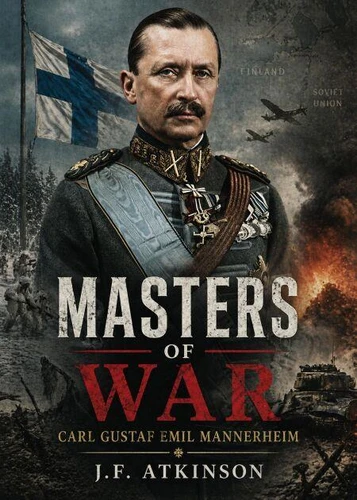
Masters of War: Carl Gustaf Emil Mannerheim. Masters of War, #42
Par :Formats :
Disponible dans votre compte client Decitre ou Furet du Nord dès validation de votre commande. Le format ePub est :
- Compatible avec une lecture sur My Vivlio (smartphone, tablette, ordinateur)
- Compatible avec une lecture sur liseuses Vivlio
- Pour les liseuses autres que Vivlio, vous devez utiliser le logiciel Adobe Digital Edition. Non compatible avec la lecture sur les liseuses Kindle, Remarkable et Sony
 , qui est-ce ?
Notre partenaire de plateforme de lecture numérique où vous retrouverez l'ensemble de vos ebooks gratuitement
Pour en savoir plus sur nos ebooks, consultez notre aide en ligne ici
C'est si simple ! Lisez votre ebook avec l'app Vivlio sur votre tablette, mobile ou ordinateur :

- FormatePub
- ISBN8233201592
- EAN9798233201592
- Date de parution25/06/2026
- Protection num.pas de protection
- Infos supplémentairesepub
- ÉditeurLinda Balsamo
Résumé
The extraordinary story of the greatest defensive commander in modern military history, a man who preserved a nation's independence against impossible odds. In the winter of 1939, Field Marshal Carl Gustaf Emil Mannerheim faced a stark mathematical reality: the Soviet Union possessed 126 divisions, over 10, 000 tanks, and a population of 170 million. Finland could field perhaps 16 division-equivalents, fewer than thirty armored vehicles, and counted barely 3.7 million souls.
By every conventional measure, Finland's conquest was inevitable. One hundred and five days later, Finland remained independent. This is the story of how one man's military genius turned certain defeat into survival, and in doing so, demonstrated that wars are not won on spreadsheets alone. Born into Swedish-Finnish nobility in 1867, Mannerheim spent thirty years in the service of Imperial Russia, fighting in Manchuria, conducting a legendary two-year intelligence mission across Asia on horseback, and rising to Major General in the Tsar's cavalry.
When revolution shattered the Russian Empire, he returned to a newly independent Finland torn by civil war and forged a peasant militia into a victorious army. But his greatest test came two decades later, when Stalin's war machine invaded Finland in 1939. At age seventy-two, Mannerheim assumed supreme command and orchestrated one of history's most brilliant defensive campaigns. Through tactical innovations like the devastating motti encirclement tactics, exploitation of terrain and winter conditions, and leadership that inspired ordinary soldiers to extraordinary feats, Finnish forces inflicted catastrophic casualties on Soviet armies, destroying entire divisions at Suomussalmi and Tolvajärvi, holding the Mannerheim Line against overwhelming assault, and making Finland's conquest so costly that Stalin accepted negotiated peace rather than total victory.
The Winter War was only part of Mannerheim's legacy. During the subsequent Continuation War (1941-1944), he navigated the treacherous alliance with Nazi Germany while protecting Finnish Jews from deportation, refused German demands to advance on Leningrad despite military advantage, and orchestrated Finland's exit from the war at precisely the moment when terms remained acceptable, preserving independence while avoiding Germany's fate.
As President during the war's final year, he transformed from warrior to statesman, managing the Soviet Control Commission and guiding Finland through occupation to eventual sovereignty. Drawing on extensive military records, strategic documents, and battlefield analyses, this volume reveals how Mannerheim combined tactical brilliance with strategic wisdom, professional military skill with sophisticated political judgment, and uncompromising standards with pragmatic flexibility.
His career spanned cavalry charges in Manchuria to mechanized warfare in World War II, from building armies from nothing to commanding in four separate conflicts across three decades.
By every conventional measure, Finland's conquest was inevitable. One hundred and five days later, Finland remained independent. This is the story of how one man's military genius turned certain defeat into survival, and in doing so, demonstrated that wars are not won on spreadsheets alone. Born into Swedish-Finnish nobility in 1867, Mannerheim spent thirty years in the service of Imperial Russia, fighting in Manchuria, conducting a legendary two-year intelligence mission across Asia on horseback, and rising to Major General in the Tsar's cavalry.
When revolution shattered the Russian Empire, he returned to a newly independent Finland torn by civil war and forged a peasant militia into a victorious army. But his greatest test came two decades later, when Stalin's war machine invaded Finland in 1939. At age seventy-two, Mannerheim assumed supreme command and orchestrated one of history's most brilliant defensive campaigns. Through tactical innovations like the devastating motti encirclement tactics, exploitation of terrain and winter conditions, and leadership that inspired ordinary soldiers to extraordinary feats, Finnish forces inflicted catastrophic casualties on Soviet armies, destroying entire divisions at Suomussalmi and Tolvajärvi, holding the Mannerheim Line against overwhelming assault, and making Finland's conquest so costly that Stalin accepted negotiated peace rather than total victory.
The Winter War was only part of Mannerheim's legacy. During the subsequent Continuation War (1941-1944), he navigated the treacherous alliance with Nazi Germany while protecting Finnish Jews from deportation, refused German demands to advance on Leningrad despite military advantage, and orchestrated Finland's exit from the war at precisely the moment when terms remained acceptable, preserving independence while avoiding Germany's fate.
As President during the war's final year, he transformed from warrior to statesman, managing the Soviet Control Commission and guiding Finland through occupation to eventual sovereignty. Drawing on extensive military records, strategic documents, and battlefield analyses, this volume reveals how Mannerheim combined tactical brilliance with strategic wisdom, professional military skill with sophisticated political judgment, and uncompromising standards with pragmatic flexibility.
His career spanned cavalry charges in Manchuria to mechanized warfare in World War II, from building armies from nothing to commanding in four separate conflicts across three decades.
A propos de J.F. Atkinson

12,49 €
12,49 €
12,49 €
12,49 €
12,49 €
11,99 €
11,99 €
13,99 €
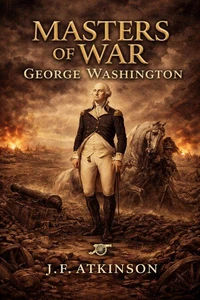
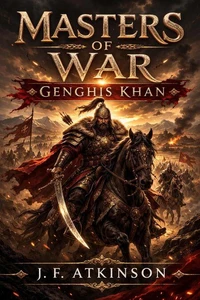
12,49 €
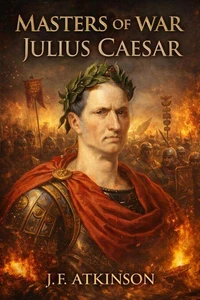
12,49 €