In the summer of 1940, as Nazi Germany's Luftwaffe prepared to obliterate the Royal Air Force and clear the skies for invasion, Britain's survival depended on one man's vision, a vision that had taken four years to build and would be tested over 114 desperate days. Air Chief Marshal Hugh Dowding was not a warrior in the traditional mold. Reserved, methodical, and often called "Stuffy" by those who misunderstood his quiet intensity, he was the antithesis of the charismatic, aggressive commanders celebrated in military history.
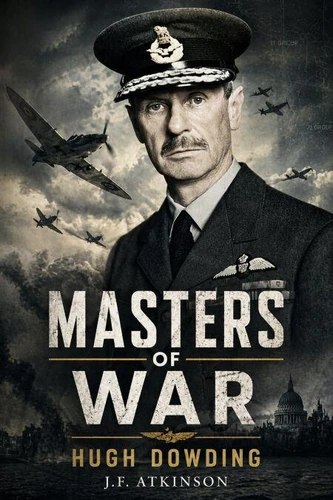
Yet this unassuming Scotsman created the world's first integrated air defense system and orchestrated one of the most decisive victories in military history, a victory so complete that within months of achieving it, he was quietly dismissed from command. Masters of War: Hugh Dowding is a comprehensive examination of military genius in its most unexpected form. This deeply researched biography traces Dowding's journey from Victorian schoolboy to artillery officer, from early aviation pioneer to the architect of an unprecedented defensive network that combined radar technology, fighter aircraft, communications systems, and human judgment into a seamless whole, the Dowding System.
This is not a hagiography. The book examines Dowding's limitations, his difficult relationships with superiors and subordinates, his perceived lack of aggression, his controversial tactical decisions with the same rigor it applies to his achievements. It places him in comparative context with other great commanders of the Second World War, analyzing what made his approach unique and why his particular genius was perfectly suited to the challenge he faced.
More than a biography, this is a study in how wars are actually won: through years of unglamorous preparation, through the courage to stand alone on matters of principle, through systematic thinking rather than dramatic gestures, and through the integration of emerging technology with operational art. It examines how defensive operations, often dismissed as passive and uninspiring, can be intellectually demanding and strategically decisive.
From the radar stations along Britain's coast to the operations rooms where information became action, from the sector stations coordinating squadrons to the high-level strategic decisions that preserved fighter strength for the decisive moment, this book reveals the architecture of victory. It shows how one man's vision of warfare as a systematic, technological, and fundamentally solvable problem saved a nation and influenced military thought for generations.
In the end, Hugh Dowding's story is a reminder that history's most important battles are sometimes won before they are fought in the quiet determination to prepare properly, to think clearly, and to stand firm when all pressure points toward surrender or compromise. Britain's survival in 1940 was not a miracle. It was the result of one man's systematic genius, deployed at the moment when it mattered most.
In the summer of 1940, as Nazi Germany's Luftwaffe prepared to obliterate the Royal Air Force and clear the skies for invasion, Britain's survival depended on one man's vision, a vision that had taken four years to build and would be tested over 114 desperate days. Air Chief Marshal Hugh Dowding was not a warrior in the traditional mold. Reserved, methodical, and often called "Stuffy" by those who misunderstood his quiet intensity, he was the antithesis of the charismatic, aggressive commanders celebrated in military history.
Yet this unassuming Scotsman created the world's first integrated air defense system and orchestrated one of the most decisive victories in military history, a victory so complete that within months of achieving it, he was quietly dismissed from command. Masters of War: Hugh Dowding is a comprehensive examination of military genius in its most unexpected form. This deeply researched biography traces Dowding's journey from Victorian schoolboy to artillery officer, from early aviation pioneer to the architect of an unprecedented defensive network that combined radar technology, fighter aircraft, communications systems, and human judgment into a seamless whole, the Dowding System.
This is not a hagiography. The book examines Dowding's limitations, his difficult relationships with superiors and subordinates, his perceived lack of aggression, his controversial tactical decisions with the same rigor it applies to his achievements. It places him in comparative context with other great commanders of the Second World War, analyzing what made his approach unique and why his particular genius was perfectly suited to the challenge he faced.
More than a biography, this is a study in how wars are actually won: through years of unglamorous preparation, through the courage to stand alone on matters of principle, through systematic thinking rather than dramatic gestures, and through the integration of emerging technology with operational art. It examines how defensive operations, often dismissed as passive and uninspiring, can be intellectually demanding and strategically decisive.
From the radar stations along Britain's coast to the operations rooms where information became action, from the sector stations coordinating squadrons to the high-level strategic decisions that preserved fighter strength for the decisive moment, this book reveals the architecture of victory. It shows how one man's vision of warfare as a systematic, technological, and fundamentally solvable problem saved a nation and influenced military thought for generations.
In the end, Hugh Dowding's story is a reminder that history's most important battles are sometimes won before they are fought in the quiet determination to prepare properly, to think clearly, and to stand firm when all pressure points toward surrender or compromise. Britain's survival in 1940 was not a miracle. It was the result of one man's systematic genius, deployed at the moment when it mattered most.

 , qui est-ce ?