SOLDES
Jusqu'à -70% sur une sélection d'articles*

Nouveauté
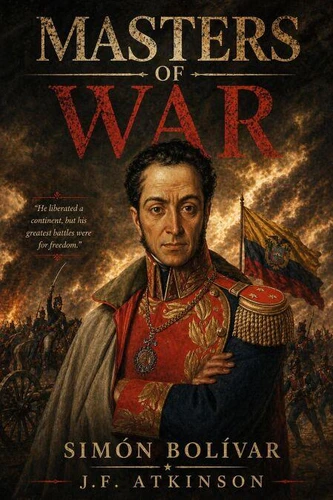
Masters of War: Simón Bolívar. Masters of War, #40
Par :Formats :
Disponible dans votre compte client Decitre ou Furet du Nord dès validation de votre commande. Le format ePub est :
- Compatible avec une lecture sur My Vivlio (smartphone, tablette, ordinateur)
- Compatible avec une lecture sur liseuses Vivlio
- Pour les liseuses autres que Vivlio, vous devez utiliser le logiciel Adobe Digital Edition. Non compatible avec la lecture sur les liseuses Kindle, Remarkable et Sony
 , qui est-ce ?
Notre partenaire de plateforme de lecture numérique où vous retrouverez l'ensemble de vos ebooks gratuitement
Pour en savoir plus sur nos ebooks, consultez notre aide en ligne ici
C'est si simple ! Lisez votre ebook avec l'app Vivlio sur votre tablette, mobile ou ordinateur :

- FormatePub
- ISBN8235785069
- EAN9798235785069
- Date de parution20/06/2026
- Protection num.pas de protection
- Infos supplémentairesepub
- ÉditeurIoakim Ioakim
Résumé
He liberated six nations. He defeated an empire. He crossed mountains that killed his men and horses. Then he died in exile, convinced he had failed. Simón Bolívar stands among history's most remarkable military commanders, a general who liberated more territory than Napoleon conquered, who built armies from nothing after catastrophic defeats, and who achieved victories against impossible odds across some of the world's most punishing terrain.
Yet his story remains largely unknown outside Latin America, overshadowed in the English-speaking world by European commanders who operated with far greater resources and faced far less daunting challenges. Masters of War: Simón Bolívar examines the military genius of the man who freed South America from Spanish rule. This is not a conventional biography concerned with political ideology or nation-building.
Instead, it focuses exclusively on Bolívar as a military commander: his strategic vision, tactical innovations, leadership under adversity, and ability to achieve the impossible through audacity and brilliance. Bolívar's military career was forged in failure. He lost his first command at Puerto Cabello in 1812. He watched the First Venezuelan Republic collapse. He fled into exile twice, seemingly finished.
But each defeat taught lessons that transformed him from an inexperienced creole aristocrat into a master of revolutionary warfare. By 1819, he had developed a strategic understanding that allowed him to conceive the inconceivable: marching an army across the Andes Mountains at 13, 000 feet, through terrain where altitude sickness killed men and horses, where there was no firewood for warmth, where the route was barely a trail.
The crossing succeeded, catching Spanish forces completely by surprise. The subsequent Battle of Boyacá liberated Colombia and demonstrated that Bolívar had become one of the era's most formidable commanders. Bolívar's campaigns spanned 2.5 million square miles, larger than Western Europe, across terrain ranging from Caribbean coastal plains to Andean peaks, from tropical rainforests to high-altitude plateaus.
He fought in Venezuela's burning llanos against royalist cavalry, in Ecuador's volcanic highlands, in Peru's disease-ridden coastal regions, and across Colombia's diverse geography. He commanded armies built from heterogeneous elements: creole officers, pardo soldiers, llanero cavalry, indigenous fighters, British and Irish veterans of the Napoleonic Wars. He integrated these diverse forces into effective combined-arms armies capable of defeating professional Spanish troops.
He coordinated operations across thousands of miles when communications were measured in weeks. His tactical repertoire was extraordinary. At Boyacá, he used mountain terrain to mask his approach and achieve decisive surprise. At Carabobo, he executed a flanking maneuver through supposedly impassable ground to shatter the Spanish line. At Junín, he commanded a purely cavalry battle, sabers and lances only, no firearms that demonstrated superior discipline and horsemanship.
At Ayacucho, through his subordinate Sucre, he destroyed the last major Spanish army in South America in a mountain battle that ranks among the decisive engagements of the nineteenth century. Masters of War: Simón Bolívar provides what no previous English-language work has attempted: a rigorous, objective analysis of Bolívar purely as a military commander, comparable to the treatment given to Napoleon, Wellington, or Grant.
It examines his campaigns with detailed tactical and strategic analysis, supported by maps and orders of battle. It compares his achievements with other great commanders assessing where he excelled and where he fell short.
Yet his story remains largely unknown outside Latin America, overshadowed in the English-speaking world by European commanders who operated with far greater resources and faced far less daunting challenges. Masters of War: Simón Bolívar examines the military genius of the man who freed South America from Spanish rule. This is not a conventional biography concerned with political ideology or nation-building.
Instead, it focuses exclusively on Bolívar as a military commander: his strategic vision, tactical innovations, leadership under adversity, and ability to achieve the impossible through audacity and brilliance. Bolívar's military career was forged in failure. He lost his first command at Puerto Cabello in 1812. He watched the First Venezuelan Republic collapse. He fled into exile twice, seemingly finished.
But each defeat taught lessons that transformed him from an inexperienced creole aristocrat into a master of revolutionary warfare. By 1819, he had developed a strategic understanding that allowed him to conceive the inconceivable: marching an army across the Andes Mountains at 13, 000 feet, through terrain where altitude sickness killed men and horses, where there was no firewood for warmth, where the route was barely a trail.
The crossing succeeded, catching Spanish forces completely by surprise. The subsequent Battle of Boyacá liberated Colombia and demonstrated that Bolívar had become one of the era's most formidable commanders. Bolívar's campaigns spanned 2.5 million square miles, larger than Western Europe, across terrain ranging from Caribbean coastal plains to Andean peaks, from tropical rainforests to high-altitude plateaus.
He fought in Venezuela's burning llanos against royalist cavalry, in Ecuador's volcanic highlands, in Peru's disease-ridden coastal regions, and across Colombia's diverse geography. He commanded armies built from heterogeneous elements: creole officers, pardo soldiers, llanero cavalry, indigenous fighters, British and Irish veterans of the Napoleonic Wars. He integrated these diverse forces into effective combined-arms armies capable of defeating professional Spanish troops.
He coordinated operations across thousands of miles when communications were measured in weeks. His tactical repertoire was extraordinary. At Boyacá, he used mountain terrain to mask his approach and achieve decisive surprise. At Carabobo, he executed a flanking maneuver through supposedly impassable ground to shatter the Spanish line. At Junín, he commanded a purely cavalry battle, sabers and lances only, no firearms that demonstrated superior discipline and horsemanship.
At Ayacucho, through his subordinate Sucre, he destroyed the last major Spanish army in South America in a mountain battle that ranks among the decisive engagements of the nineteenth century. Masters of War: Simón Bolívar provides what no previous English-language work has attempted: a rigorous, objective analysis of Bolívar purely as a military commander, comparable to the treatment given to Napoleon, Wellington, or Grant.
It examines his campaigns with detailed tactical and strategic analysis, supported by maps and orders of battle. It compares his achievements with other great commanders assessing where he excelled and where he fell short.
A propos de J.F. Atkinson

12,49 €
12,49 €
12,49 €
12,49 €
11,99 €
11,99 €
13,99 €

12,49 €
12,49 €
11,99 €