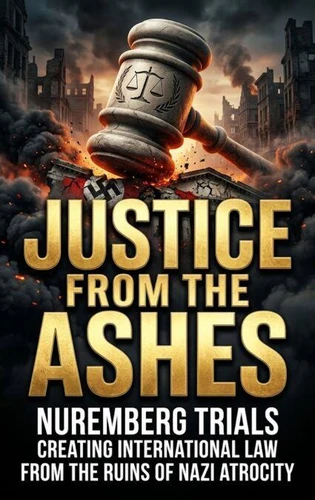
Justice from the Ashes. Nuremberg Trials Creating International Law From the Ruins of Nazi Atrocity
Par :Formats :
Disponible dans votre compte client Decitre ou Furet du Nord dès validation de votre commande. Le format ePub est :
- Compatible avec une lecture sur My Vivlio (smartphone, tablette, ordinateur)
- Compatible avec une lecture sur liseuses Vivlio
- Pour les liseuses autres que Vivlio, vous devez utiliser le logiciel Adobe Digital Edition. Non compatible avec la lecture sur les liseuses Kindle, Remarkable et Sony
 , qui est-ce ?
Notre partenaire de plateforme de lecture numérique où vous retrouverez l'ensemble de vos ebooks gratuitement
Pour en savoir plus sur nos ebooks, consultez notre aide en ligne ici
C'est si simple ! Lisez votre ebook avec l'app Vivlio sur votre tablette, mobile ou ordinateur :

- Nombre de pages196
- FormatePub
- ISBN978-3-565-46073-1
- EAN9783565460731
- Date de parution26/05/2026
- Protection num.pas de protection
- Taille1 Mo
- Infos supplémentairesepub
- ÉditeurEmphaloz Publishing House
Résumé
This book traces how courtroom reckoning amid devastation forged enduring principles of accountability, transforming selective retribution into universal norms. It probes the tension between victors' adjudication and foundational legal innovation, where defeated power met allied judgment in a fragile new order. Three processes stand central: individual criminality that pierced sovereign immunity, establishing personal liability under international norms; crimes against humanity that codified peacetime atrocities as prosecutable offenses; and procedural precedent that balanced retribution with evidentiary rigor, influencing tribunals from Tokyo to The Hague.
The Major War Criminals Trial at Nuremberg not only judged Axis leaders but embedded aggression as the supreme international crime, reshaping statecraft through law rather than conquest alone. Subsequent trials extended this framework across medical experiments, economic plunder, and host nation collaboration. German and European readers encounter here a mirror to postwar identity, where legal rupture from totalitarianism sustains democratic vigilance.
The Major War Criminals Trial at Nuremberg not only judged Axis leaders but embedded aggression as the supreme international crime, reshaping statecraft through law rather than conquest alone. Subsequent trials extended this framework across medical experiments, economic plunder, and host nation collaboration. German and European readers encounter here a mirror to postwar identity, where legal rupture from totalitarianism sustains democratic vigilance.