A shopkeeper's heir who innovated amid retail slumps, sharing self-help for bold decisions, business models from retail revolutions, and histories of merchant dynasties through the ages.
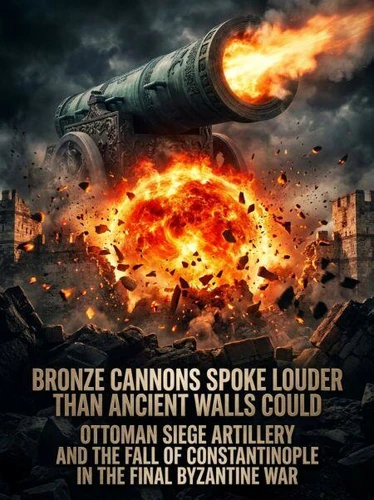
Bronze Cannons Spoke Louder Than Ancient Walls Could. Ottoman siege artillery and the fall of Constantinople in the final Byzantine war
Par :Formats :
Disponible dans votre compte client Decitre ou Furet du Nord dès validation de votre commande. Le format ePub est :
- Compatible avec une lecture sur My Vivlio (smartphone, tablette, ordinateur)
- Compatible avec une lecture sur liseuses Vivlio
- Pour les liseuses autres que Vivlio, vous devez utiliser le logiciel Adobe Digital Edition. Non compatible avec la lecture sur les liseuses Kindle, Remarkable et Sony
 , qui est-ce ?
Notre partenaire de plateforme de lecture numérique où vous retrouverez l'ensemble de vos ebooks gratuitement
Pour en savoir plus sur nos ebooks, consultez notre aide en ligne ici
C'est si simple ! Lisez votre ebook avec l'app Vivlio sur votre tablette, mobile ou ordinateur :

- Nombre de pages212
- FormatePub
- ISBN978-3-565-47796-8
- EAN9783565477968
- Date de parution05/06/2026
- Protection num.pas de protection
- Taille1 Mo
- Infos supplémentairesepub
- ÉditeurEmphaloz Publishing House
Résumé
For centuries, the walls of Constantinople symbolized the endurance of the Byzantine world. Built to withstand invasion after invasion, the Theodosian defenses protected the city through generations of warfare. In 1453, however, gunpowder artillery altered the balance between fortification and destruction forever.
This book examines the technological transformation that reshaped siege warfare during the Ottoman conquest of Constantinople.
Massive bronze cannons shattered defensive assumptions rooted in medieval military architecture, demonstrating that even the strongest walls could no longer guarantee survival against concentrated artillery bombardment. The fall of the city marked a decisive turning point in military history. The narrative also explores the strategic planning behind the Ottoman campaign under Sultan Mehmed II. Engineers, artillery specialists, and logistical coordination became as important as battlefield courage itself.
Siege warfare increasingly depended on industrial preparation, supply systems, and technological adaptation. Constantinople emerges here not simply as a conquered city, but as the place where medieval military traditions collided with the emerging realities of early modern warfare.
Massive bronze cannons shattered defensive assumptions rooted in medieval military architecture, demonstrating that even the strongest walls could no longer guarantee survival against concentrated artillery bombardment. The fall of the city marked a decisive turning point in military history. The narrative also explores the strategic planning behind the Ottoman campaign under Sultan Mehmed II. Engineers, artillery specialists, and logistical coordination became as important as battlefield courage itself.
Siege warfare increasingly depended on industrial preparation, supply systems, and technological adaptation. Constantinople emerges here not simply as a conquered city, but as the place where medieval military traditions collided with the emerging realities of early modern warfare.
A propos de Fiona Morse
24,99 €