A shopkeeper's heir who innovated amid retail slumps, sharing self-help for bold decisions, business models from retail revolutions, and histories of merchant dynasties through the ages.
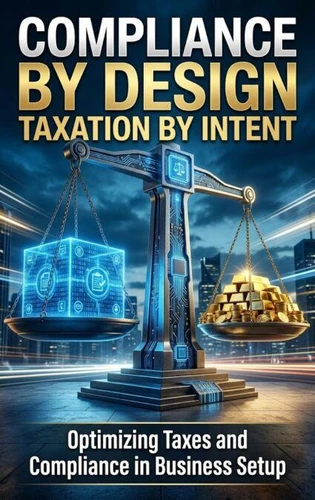
Compliance by Design, Taxation by Intent. Optimizing Taxes and Compliance in Business Setup
Par :Formats :
Disponible dans votre compte client Decitre ou Furet du Nord dès validation de votre commande. Le format ePub est :
- Compatible avec une lecture sur My Vivlio (smartphone, tablette, ordinateur)
- Compatible avec une lecture sur liseuses Vivlio
- Pour les liseuses autres que Vivlio, vous devez utiliser le logiciel Adobe Digital Edition. Non compatible avec la lecture sur les liseuses Kindle, Remarkable et Sony
 , qui est-ce ?
Notre partenaire de plateforme de lecture numérique où vous retrouverez l'ensemble de vos ebooks gratuitement
Pour en savoir plus sur nos ebooks, consultez notre aide en ligne ici
C'est si simple ! Lisez votre ebook avec l'app Vivlio sur votre tablette, mobile ou ordinateur :

- Nombre de pages184
- FormatePub
- ISBN978-3-565-40168-0
- EAN9783565401680
- Date de parution11/04/2026
- Protection num.pas de protection
- Taille2 Mo
- Infos supplémentairesepub
- ÉditeurEmphaloz Publishing House
Résumé
The decisions made at the moment of business formation carry tax consequences that compound silently for years. Entity structure, tax elections, compensation design, and compliance architecture are not administrative details - they are strategic choices that determine how much of every dollar earned the business actually retains. For first-time and early-stage business owners, the cost of structural misalignment is rarely visible at launch, but becomes acutely apparent at tax time, during audits, or at the point of scaling.
This book examines the full tax and compliance landscape of business setup: from the foundational choice between sole proprietorship, partnership, LLC, S-corporation, and C-corporation - each carrying distinct implications for self-employment tax, pass-through treatment, and owner liability - to the more nuanced decisions around Qualified Business Income (QBI) deductions, R&E cost expensing, and retirement plan contributions that reduce taxable income while building long-term financial resilience.
It also maps the 2026 regulatory environment shaped by the One Big Beautiful Bill Act (OBBBA), which has revived key provisions and reshaped how businesses approach depreciation, capitalization, and entity-level planning.
It also maps the 2026 regulatory environment shaped by the One Big Beautiful Bill Act (OBBBA), which has revived key provisions and reshaped how businesses approach depreciation, capitalization, and entity-level planning.
A propos de Fiona Morse


24,99 €