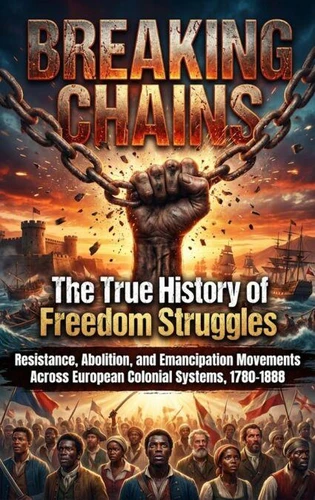
Breaking Chains: The True History of Freedom Struggles. Resistance, Abolition, and Emancipation Movements Across European Colonial Systems, 1780-1888
Par :Formats :
Disponible dans votre compte client Decitre ou Furet du Nord dès validation de votre commande. Le format ePub est :
- Compatible avec une lecture sur My Vivlio (smartphone, tablette, ordinateur)
- Compatible avec une lecture sur liseuses Vivlio
- Pour les liseuses autres que Vivlio, vous devez utiliser le logiciel Adobe Digital Edition. Non compatible avec la lecture sur les liseuses Kindle, Remarkable et Sony
 , qui est-ce ?
Notre partenaire de plateforme de lecture numérique où vous retrouverez l'ensemble de vos ebooks gratuitement
Pour en savoir plus sur nos ebooks, consultez notre aide en ligne ici
C'est si simple ! Lisez votre ebook avec l'app Vivlio sur votre tablette, mobile ou ordinateur :

- Nombre de pages237
- FormatePub
- ISBN978-3-565-24618-2
- EAN9783565246182
- Date de parution14/02/2026
- Protection num.pas de protection
- Taille2 Mo
- Infos supplémentairesepub
- ÉditeurEmphaloz Publishing House
Résumé
The abolition of slavery across European empires resulted not from parliamentary enlightenment but from sustained resistance by enslaved people themselves, combined with economic pressures, military calculations, and decades of organizing by abolitionists who faced violent opposition. From Caribbean plantation revolts to transatlantic networks smuggling testimony into European capitals, from maroon communities establishing independent societies to formerly enslaved individuals purchasing family members' freedom, these struggles reshaped legal frameworks and challenged the foundations of colonial economies.
This book examines the diverse strategies through which enslaved people and their allies fought for freedom across British, French, Spanish, Dutch, and Portuguese colonial territories.
Drawing on plantation records, court documents, abolitionist correspondence, and oral histories preserved by descendant communities, it traces how resistance evolved from individual escape and work slowdowns to organized rebellions, legal challenges, and international advocacy campaigns. Each chapter explores a specific dimension of freedom struggles: the Haitian Revolution's defeat of European armies and establishment of the first Black republic, the British abolitionist movement's mobilization of consumer boycotts and parliamentary pressure, maroon societies negotiating treaties with colonial authorities, enslaved people using imperial courts to challenge ownership claims, and the gradual abolition processes that often maintained coercive labor systems under different names.
Drawing on plantation records, court documents, abolitionist correspondence, and oral histories preserved by descendant communities, it traces how resistance evolved from individual escape and work slowdowns to organized rebellions, legal challenges, and international advocacy campaigns. Each chapter explores a specific dimension of freedom struggles: the Haitian Revolution's defeat of European armies and establishment of the first Black republic, the British abolitionist movement's mobilization of consumer boycotts and parliamentary pressure, maroon societies negotiating treaties with colonial authorities, enslaved people using imperial courts to challenge ownership claims, and the gradual abolition processes that often maintained coercive labor systems under different names.
A propos de Thalia Brookstone












8,99 €