SOLDES
Jusqu'à -70% sur une sélection d'articles*

Nouveauté
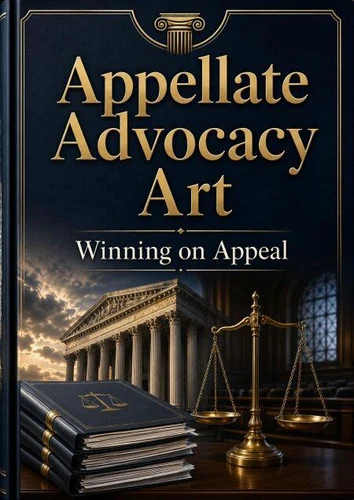
Appellate Advocacy Art: Winning on Appeal
Par :Formats :
Disponible dans votre compte client Decitre ou Furet du Nord dès validation de votre commande. Le format ePub est :
- Compatible avec une lecture sur My Vivlio (smartphone, tablette, ordinateur)
- Compatible avec une lecture sur liseuses Vivlio
- Pour les liseuses autres que Vivlio, vous devez utiliser le logiciel Adobe Digital Edition. Non compatible avec la lecture sur les liseuses Kindle, Remarkable et Sony
 , qui est-ce ?
Notre partenaire de plateforme de lecture numérique où vous retrouverez l'ensemble de vos ebooks gratuitement
Pour en savoir plus sur nos ebooks, consultez notre aide en ligne ici
C'est si simple ! Lisez votre ebook avec l'app Vivlio sur votre tablette, mobile ou ordinateur :

- FormatePub
- ISBN8231237043
- EAN9798231237043
- Date de parution21/05/2026
- Protection num.pas de protection
- Infos supplémentairesepub
- ÉditeurWalzone Press
Résumé
Appellate Advocacy Art: Winning on Appeal is a thoughtful and practical guide to the refined discipline of appellate law. This book explores the art of persuading higher courts through reason, record, precedent, structure, and ethical advocacy. Unlike trial practice, where witnesses, evidence, and courtroom drama often dominate, appellate advocacy depends upon focused legal issues, careful preservation, persuasive briefs, and disciplined oral argument.
This book presents appeal not as a second trial, but as a formal process of legal review where the advocate must show why a judgment should be corrected, affirmed, modified, or remanded. The book begins by explaining the true nature of appeals and the important difference between trial courts and appellate courts. It shows that appellate judges do not usually reweigh evidence or hear witnesses again; instead, they examine the record to determine whether legal error occurred and whether that error affected the outcome.
The reader is guided through the essential decision of whether to appeal, including the importance of evaluating appealability, deadlines, costs, risks, standards of review, preservation, and meaningful remedies. A major strength of this book is its emphasis on the appellate record. The record is presented as the foundation of every appeal, the official memory of the case, and the source from which all appellate arguments must arise.
The book explains how objections, motions, transcripts, exhibits, rulings, and judgments shape the possibilities of review. It also teaches the importance of selecting winning issues, avoiding weak or excessive claims, and framing questions in a way that helps the appellate court understand the real legal problem. The book gives special attention to standards of review, legal research, and the theory of the appeal.
It explains how de novo review, abuse of discretion, clear error, substantial evidence, harmless error, and plain error can determine the strength of appellate arguments. It also demonstrates how careful research into statutes, precedent, procedural rules, and adverse authority gives an appeal its legal force. Through the development of a clear appellate theory, the advocate learns to unite facts, law, and remedy into one persuasive vision.
The chapters on brief writing, statement of facts, legal argument, opposing briefs, and oral argument provide practical guidance for the working advocate. The book explains how to write with clarity, organize arguments effectively, cite the record accurately, answer counterarguments, prepare for judicial questions, and speak with confidence before appellate judges. It also stresses that oral argument is not a theatrical speech, but a disciplined conversation with the court.
Ethics forms a central theme throughout the work. The book reminds readers that appellate advocacy requires candor, fairness, professional responsibility, and respect for the court. It warns against common mistakes such as raising too many issues, exaggerating facts, ignoring unfavorable authority, misunderstanding standards of review, and failing to show prejudice. Appellate Advocacy Art: Winning on Appeal is ideal for lawyers, law students, legal researchers, and readers interested in the higher craft of legal persuasion.
It presents appellate practice as both an intellectual art and a public duty, showing that true success on appeal comes from clarity, discipline, integrity, and the ability to make justice legally unavoidable.
This book presents appeal not as a second trial, but as a formal process of legal review where the advocate must show why a judgment should be corrected, affirmed, modified, or remanded. The book begins by explaining the true nature of appeals and the important difference between trial courts and appellate courts. It shows that appellate judges do not usually reweigh evidence or hear witnesses again; instead, they examine the record to determine whether legal error occurred and whether that error affected the outcome.
The reader is guided through the essential decision of whether to appeal, including the importance of evaluating appealability, deadlines, costs, risks, standards of review, preservation, and meaningful remedies. A major strength of this book is its emphasis on the appellate record. The record is presented as the foundation of every appeal, the official memory of the case, and the source from which all appellate arguments must arise.
The book explains how objections, motions, transcripts, exhibits, rulings, and judgments shape the possibilities of review. It also teaches the importance of selecting winning issues, avoiding weak or excessive claims, and framing questions in a way that helps the appellate court understand the real legal problem. The book gives special attention to standards of review, legal research, and the theory of the appeal.
It explains how de novo review, abuse of discretion, clear error, substantial evidence, harmless error, and plain error can determine the strength of appellate arguments. It also demonstrates how careful research into statutes, precedent, procedural rules, and adverse authority gives an appeal its legal force. Through the development of a clear appellate theory, the advocate learns to unite facts, law, and remedy into one persuasive vision.
The chapters on brief writing, statement of facts, legal argument, opposing briefs, and oral argument provide practical guidance for the working advocate. The book explains how to write with clarity, organize arguments effectively, cite the record accurately, answer counterarguments, prepare for judicial questions, and speak with confidence before appellate judges. It also stresses that oral argument is not a theatrical speech, but a disciplined conversation with the court.
Ethics forms a central theme throughout the work. The book reminds readers that appellate advocacy requires candor, fairness, professional responsibility, and respect for the court. It warns against common mistakes such as raising too many issues, exaggerating facts, ignoring unfavorable authority, misunderstanding standards of review, and failing to show prejudice. Appellate Advocacy Art: Winning on Appeal is ideal for lawyers, law students, legal researchers, and readers interested in the higher craft of legal persuasion.
It presents appellate practice as both an intellectual art and a public duty, showing that true success on appeal comes from clarity, discipline, integrity, and the ability to make justice legally unavoidable.
A propos de Dilip Kumar Agrawal



2,99 €

2,99 €

2,99 €

2,99 €
2,99 €



2,99 €

2,99 €

2,99 €
2,99 €

2,99 €
2,99 €



2,99 €