Dernière sortie
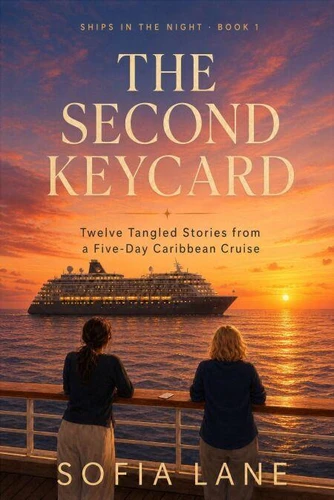
The Second Keycard
Twelve strangers. One ship. Five days in which every story tangles with the one next door. The ship in this novel is fictional. The inspiration, however, is very real. We are not naming her-partly because this is fiction, and partly because half the fun is seeing whether you recognise her. Perhaps the long promenade, the surf simulator, the theatre crowds, the casino lights, the early-morning coffee stations and the strange geography of a floating city will seem familiar.
If you have sailed on her, you may smile. If you have not, you may start checking cruise prices before chapter three. Ellen Price boards alone with a second keycard she cannot bring herself to throw away-a stubborn scrap of plastic still printed with her almost-ex-husband's name. She did not mean to keep it. She is not sure why she cannot put it down. She is not the only one carrying something she did not pack on purpose.
On the pool deck, a man white-knuckles his way through a surf-simulator waiver he never actually read, while the woman beside him corrects him without looking up. Two strangers keep claiming the same empty seats at the nightly show and cannot decide whether it is coincidence or invitation. A son wears his late father's suit to formal dinner and discovers that grief does not care about dress codes.
A housekeeping attendant folds towel animals with more tenderness than anyone tips for. A daughter keeps telling her mother she is fine-until the word stops working. Elsewhere, a couple slips away to the one deck where nobody checks a wedding ring. A door left unlocked at five-thirty becomes a decision neither of them intended to make. A retiree spins a slot machine eight hundred times, looking for something no jackpot could ever give him.
A bartender's unbreakable rule finally meets a customer worth breaking it for. And two people who cannot sleep keep finding each other at sunrise, each carrying the same two coffees. Across five days at sea, their lives brush, collide and quietly alter one another. A kindness in one story becomes a rescue in another. A passing joke returns with unexpected weight. A stranger glimpsed in the background may already be living through the moment that changes everything.
On the final morning, they all go ashore carrying a little less than they arrived with-and a little more than they expected. The Second Keycard is the first book in Ships in the Night, a series of interconnected voyages in which every passenger's ordinary holiday becomes someone else's unforgettable story. These are stories about the strangers who happen to be exactly the right strangers: the people you meet when you are far enough from your real life to finally tell the truth about it.
Warm, wry and quietly devastating, this collection is for anyone who has ever boarded a ship-or a new chapter-alone and discovered that "alone" did not last as long as expected. Perfect for readers who enjoy:. Interconnected stories with recurring characters and hidden links. Found-family warmth between people who may never meet again. Bittersweet contemporary fiction with humour woven through the ache.
Slice-of-life romance and subtle emotional payoffs. Stories that become richer once you know how the threads connectCome aboard. Everyone here is carrying something. Some of them are about to set it down. This is an independent work of fiction. The ship, cruise line, characters and events are fictional and are not affiliated with, authorised by, sponsored by or endorsed by any real cruise company.
If you have sailed on her, you may smile. If you have not, you may start checking cruise prices before chapter three. Ellen Price boards alone with a second keycard she cannot bring herself to throw away-a stubborn scrap of plastic still printed with her almost-ex-husband's name. She did not mean to keep it. She is not sure why she cannot put it down. She is not the only one carrying something she did not pack on purpose.
On the pool deck, a man white-knuckles his way through a surf-simulator waiver he never actually read, while the woman beside him corrects him without looking up. Two strangers keep claiming the same empty seats at the nightly show and cannot decide whether it is coincidence or invitation. A son wears his late father's suit to formal dinner and discovers that grief does not care about dress codes.
A housekeeping attendant folds towel animals with more tenderness than anyone tips for. A daughter keeps telling her mother she is fine-until the word stops working. Elsewhere, a couple slips away to the one deck where nobody checks a wedding ring. A door left unlocked at five-thirty becomes a decision neither of them intended to make. A retiree spins a slot machine eight hundred times, looking for something no jackpot could ever give him.
A bartender's unbreakable rule finally meets a customer worth breaking it for. And two people who cannot sleep keep finding each other at sunrise, each carrying the same two coffees. Across five days at sea, their lives brush, collide and quietly alter one another. A kindness in one story becomes a rescue in another. A passing joke returns with unexpected weight. A stranger glimpsed in the background may already be living through the moment that changes everything.
On the final morning, they all go ashore carrying a little less than they arrived with-and a little more than they expected. The Second Keycard is the first book in Ships in the Night, a series of interconnected voyages in which every passenger's ordinary holiday becomes someone else's unforgettable story. These are stories about the strangers who happen to be exactly the right strangers: the people you meet when you are far enough from your real life to finally tell the truth about it.
Warm, wry and quietly devastating, this collection is for anyone who has ever boarded a ship-or a new chapter-alone and discovered that "alone" did not last as long as expected. Perfect for readers who enjoy:. Interconnected stories with recurring characters and hidden links. Found-family warmth between people who may never meet again. Bittersweet contemporary fiction with humour woven through the ache.
Slice-of-life romance and subtle emotional payoffs. Stories that become richer once you know how the threads connectCome aboard. Everyone here is carrying something. Some of them are about to set it down. This is an independent work of fiction. The ship, cruise line, characters and events are fictional and are not affiliated with, authorised by, sponsored by or endorsed by any real cruise company.